
A quiet masterpiece that, from a formal point of view, breaks the paradigm of the jidaigeki genre, at least in comparison with Uchide’s Tsukigata Hanpeita from a decade earlier, taking theatrical drama to its performative limits and, for some neophytes to this type of cinema, such as this reviewer, giving the impression—at times, in certain scenes—of a lyricism similar to the delight of genuine operatic arias, but in others, of listening to the characters’ slightly hollow dialogue, as if instead of a film set, the pacifist samurai and his sceptical compatriots, reluctant to go to war, were standing in front of the proscenium and at some point the curtain was about to fall on the first act, or the second. Throughout history, those who publicly defended peace, such as Gandhi, Martin Luther King Jr., and even Lennon, have ironically ended up being eliminated by the violence they sought to repudiate during their lives.
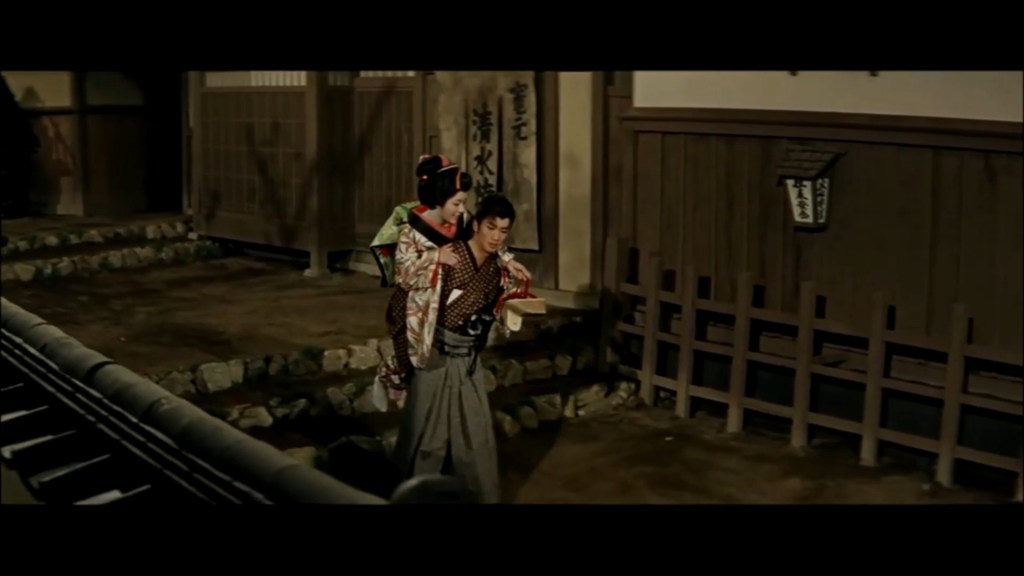
This will be the case with Tsukigata, who never gave up on making the alliance between the Choshu and Satsuma clans a reality, but they had not yet finished devising their plan when Mimawari-gum’s group stormed the palace, decimating the Choshu ronin. Immediately, a vote was taken to go against Okudaira and his forces to take revenge. Tsukigata stopped them and warned them to wait for a better opportunity when Mimawari and Shinsen would not be able to counterattack immediately and everything would end in a river of blood.
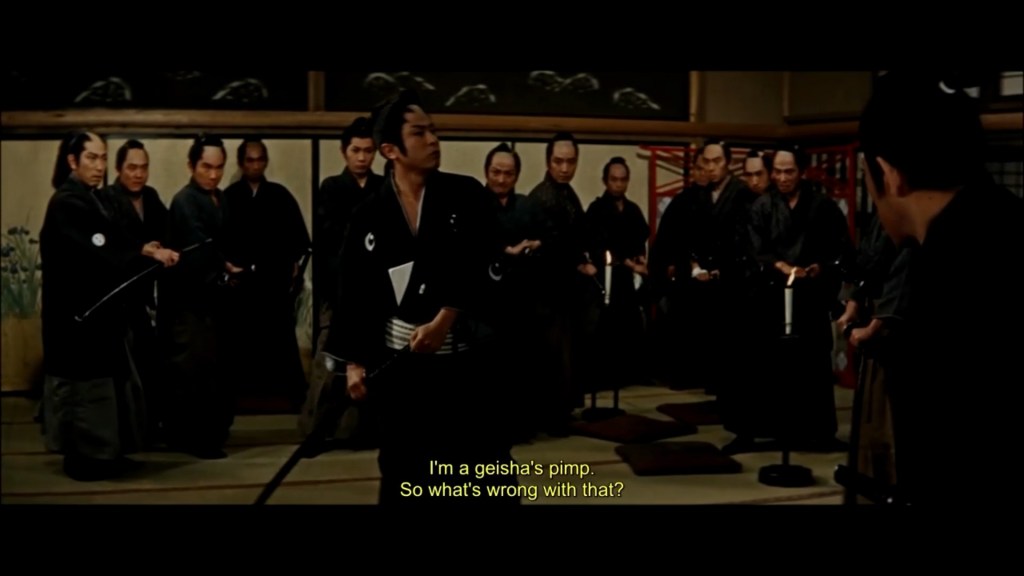
Despite ignoring his words, the committee decided to wait. Meanwhile, the young Hayase leaves the Mimawari group because he claims he does not belong there. His group curses him but lets him go, and Hayase visits the beautiful Utagiku, who introduces him to Tsukigata. From then on, Hayase confides in the impassive ronin that he also wants to find peace and harmony, like him, and tells him of his desire to be taken in by him. Unfortunately, the Mimawari group mistakenly assumes that Tsukigata brainwashed the boy to lure him into his clan, and when they protest face to face, there are more deaths as Tsukigata intones his unmistakable refrain and wields his sword while seated.
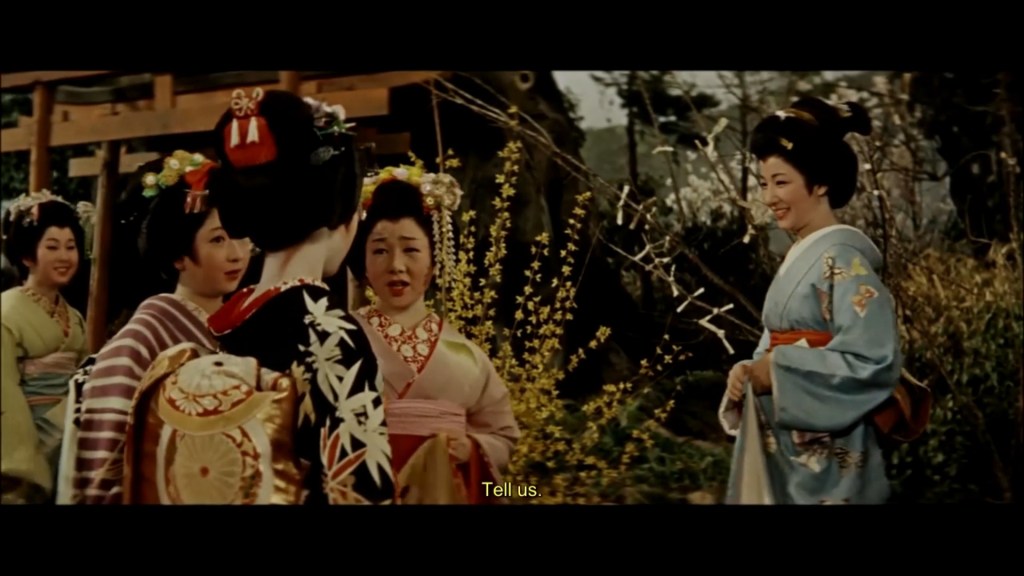
Okudaira demands an explanation, surrounding him in the middle of the night. Although he prefers peace, Tsukigata defends himself and reminds us of Publius Flavius Vegetius’s ancient phrase, ‘si vis pacem, para bellum’ (if you want peace, prepare for war), and thus passes the sword through the raging Mimawari (0:36:49), a fact that will only bring more war. Soon after, Okudaira’s cousin, a certain Komiyama, arrives to take revenge, and they hatch a plan to ambush him.

The character of Tsukigata Hanpeita is emblematic and certainly subversive. In the scene where he gets drunk and is surrounded by his government comrades, he tells them, “I have never been drunk and lost myself in liquor until now, but look at you sober men, you walk at whatever pace and in whatever direction you are told. What have you drunk to lose your sense of conscience?” (0:44:20) The ronin is hurt; everywhere he turns, he must betray what he swears to love, peace; he must kill, and the last corpse, that of Okudaira, has spilled the last drop from the cup. Now he also feels like the pimp of a geisha, damn it! The scene with Somehachi, without Horoya Abe’s score making him look bad, is reminiscent of a premonitory lament from those immortal works that history has left us with Bizet or Verdi.

The hero is tired and completely vulnerable in the room of Okudari’s wife or concubine. In fact, the woman takes the katana and the ronin’s pitiful words and indecision end up disarming her without the need for physical violence. Tsukigata bids farewell to Umematsu in a way and sends a letter to the young Hayase, which will arrive too late, just like him with the others. The final sequence sweeps away the mob of swords against him, but the tip of a spear wounds him. Bleeding and convulsing, still in a strange state of shock or trance, he almost raises his sword against his companions, including Hayase, who arrives late and sees the trail of dead bodies. Simply lyrical slaughter and a clearly tragic ending; it could not be otherwise without betraying Vegecio’s wise irony. A masterpiece, and I’m glad it’s not so widely seen; it’s not easy to understand its rhythm, which precedes the tragic action.

 Pantagruel´s liquor
Leave a reply to pk world 🌎 Cancel reply