
This is what makes a gem: when, in the same period (which is only a moment), the world is so quickly dehumanised—whether by war, as will happen here, or by disappointment in human relations—and yet feelings blossom wildly on a ‘cliff’ (sea/mountain) of improbabilities—the fisherman’s loss, the ceremony on the seventh day of the eighth lunar month, the memory of the childhood offence—and love is not wasted, not even by the fleetingness of the unexpected reunion between the shy Takuji and the manly-spirited Kiyono with her visibly spontaneous resolutions. The torrid romance is reminiscent of the platonic courtship of children because we see them frolicking on the seashore, sometimes bathing on the beach, sometimes running terrified on the railway tracks when the metal giant whistles as it passes by, and kissing; sprinkled with Japanese New Wave but without losing its neorealism:the shots are more than 15 seconds long, portraying the dreamlike pre-war environment of both the fishing industry and the rural salt farms when Takuji is asked to enlist within three days.
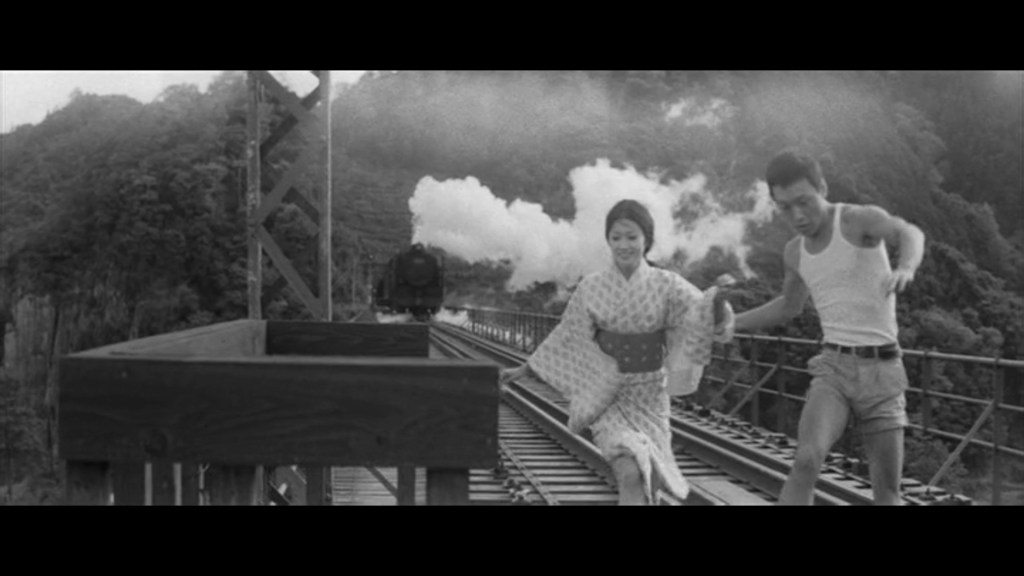
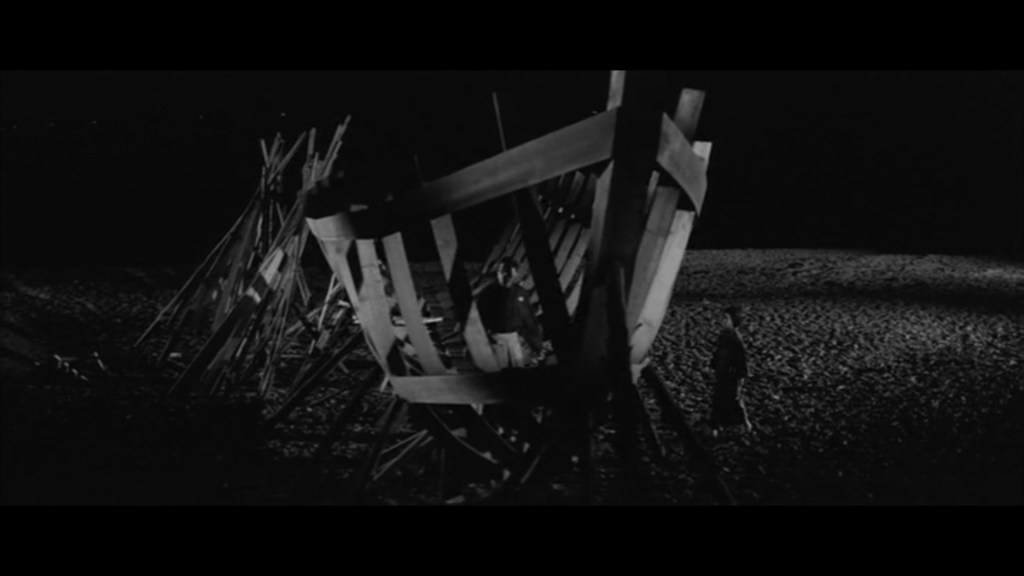
Kiyono does not see him off at the train station for this first separation, which will last three years. Upon his return, after 52 letters, they get married. The same will not happen the next time, when World War II breaks out and he has to go to the front. The night before, next to the wooden boat that Taku has promised to build when he returns, the couple unravels their fears in a pale night light and contrasting emulsion. The dreaded happens: Takuji is wounded in the thigh, and the letter that reaches Kiyono asks her to go to Sasebo Hospital to fetch him. The image is depressing. The doctor suggests amputation to save his life, but Kiyono, true to her usual courage, will take the risk for him. His leg will not be cut off. And so it was that Kiyono triumphed again after the former soldier’s long recovery. Their days in the mountains, alone, were no different from when they first met, living their friendship to the fullest before their unconditional love as a couple.
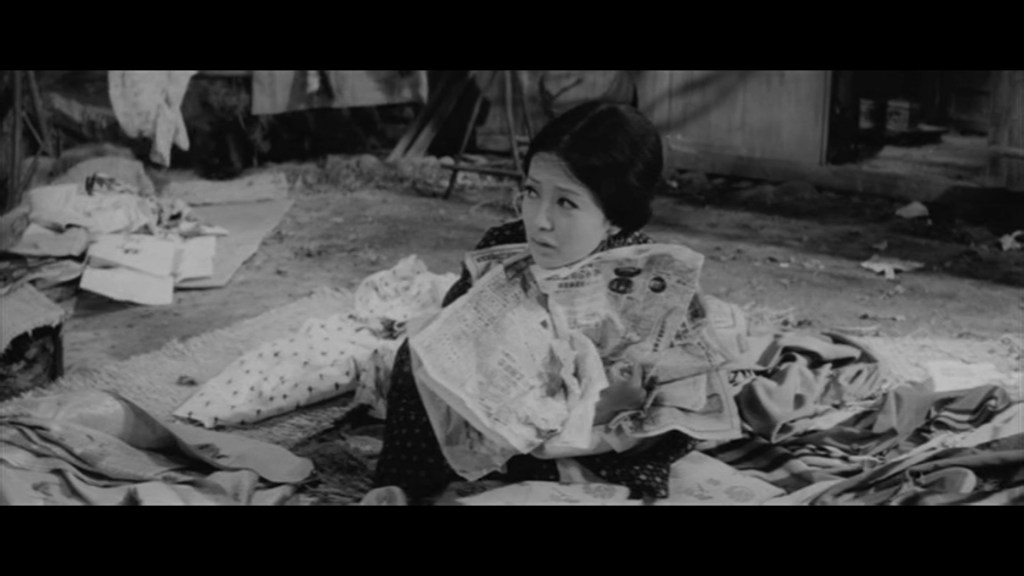
The changes of season, spring, summer, winter, are perfectly accentuated photographically. Fishermen and other friends of the family from the coast visit Takuji from time to time and grumble under their breath about the woman of Heike descent who has isolated a good fisherman and great soldier, wasting him in that shack in the mountains while others die fulfilling their duty to their country by going to the front, such as Yasuko’s husband. Listening to them, Takuji dismisses them for not respecting his wife, but he needs to know how his mother is doing. The drama becomes more and more absorbing with each passing moment. Especially because we witness how a beautiful relationship—as I said, one of friendship and conjugal love—gradually deteriorates, and in a fit of anger and selfishness, she tries to grab an axe or katana and threatens her husband, saying that the leg he wears is more hers than Takuji’s and that she did not have it repaired so that he could return to his old ways at the front. It was Kiyono herself who aptly compared the looks of the men as they leave on the train to those of madmen. It is their way of opposing or repudiating a false obligation to a pipe dream called country and honour. Why dwell on it when Falstaff’s alcoholic catechism has already said it so well? Compare Act V, Scene 1. Mutatis mutandis, the prince’s drunken friend in Shakespeare’s Henry IV says that ‘duty and honour are but words, and he adds, they are but air in the lungs when spoken.
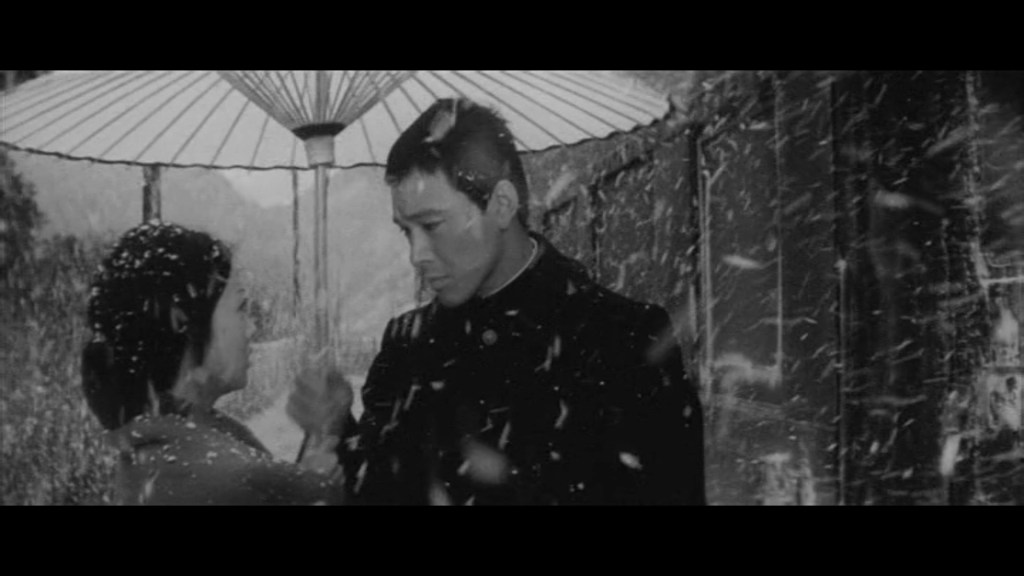
They will not give me back a leg or an arm’. Shakespeare did not hold back here, because a simple drunkard friend of the future king says this and it makes perfect sense. What is worse, in another part of the same play, Hotspur has a name and bases his fury and trench warfare on honour.
And so he will lose his life. Just as Takuji will lose his. He asks Kiyono to accompany him ‘downstairs,’ but she is terrified because, symbolically, the house on the mountain is like a refuge from bullets and war that protects them as a married couple. When Takuji visits his home, he is informed that a letter has arrived asking him to re-enlist. Returning to the mountain with his wife, because she did not accompany him, he cannot find a way to tell her that he is going to war. Then, seeing that everything is useless, he calls Kiyono and, using a metaphor about his horse tied up outside in the courtyard, explains that just as the animal, without a load or work to do, is reduced to a useless piece of furniture, so he must imperatively participate in the war. We already know the ending. Fortunately, one day it ends. She accompanied him twice, but the third time she did not allow him to return, and unfortunately the war was coming to an end. What followed was Kiyono’s coma and then, with the news confirmed, the return to the sea. There were no more masks to wear. Her sister Ayano barely managed to see her for the last time, her head bowed, and beg her in vain.


 Pantagruel´s liquor
Leave a reply to Tránsitos y saqueos Cancel reply