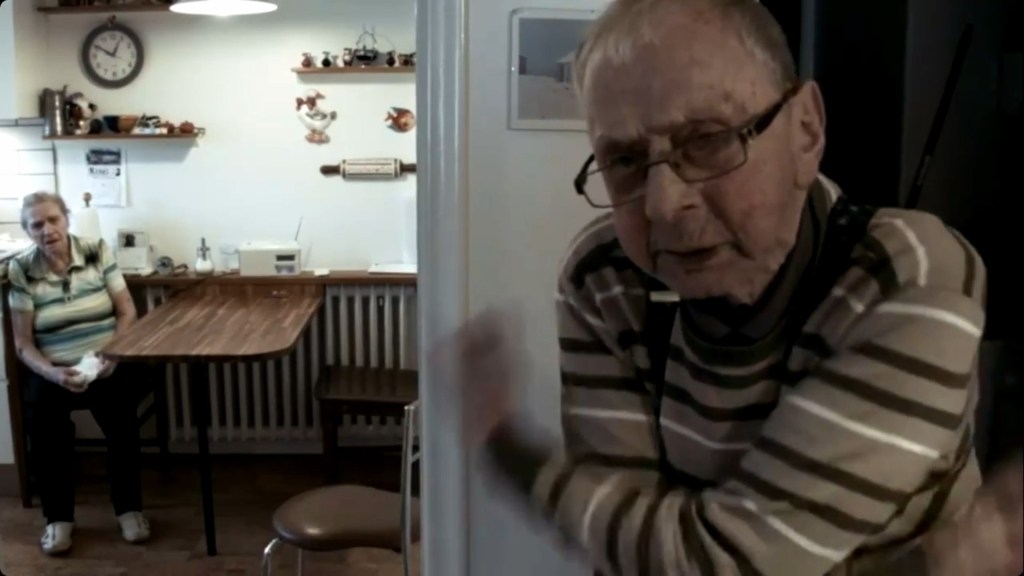
It has been a long time since I have enjoyed a documentary gem with such metaphysical depth and mysticism: prima facie, it is an extremely intimate and genuine thanatological gift from the director to someone like his own grandfather, the lighthouse keeper Trausti Breiðfjörð (b. 1918), who will turn 100 alongside Hulda Jónsdóttir. But in addition to serving as a brief log of the months and days of both elderly people, the documentary lodges itself carefully in the soul of the viewer, as well as in that of both grandparents, as it merges—with quasi-nonagenarian narrative skill—their everyday lives imbued with the cosmogonic mysteries of the Icelandic epic poems of the 9th century, to which they allude through Hulda’s ingrained habit of reading rare books and thinking about her grandfather, and Trausti’s contemplation of the rocks in the water as if they were a fish tank, never missing a day.
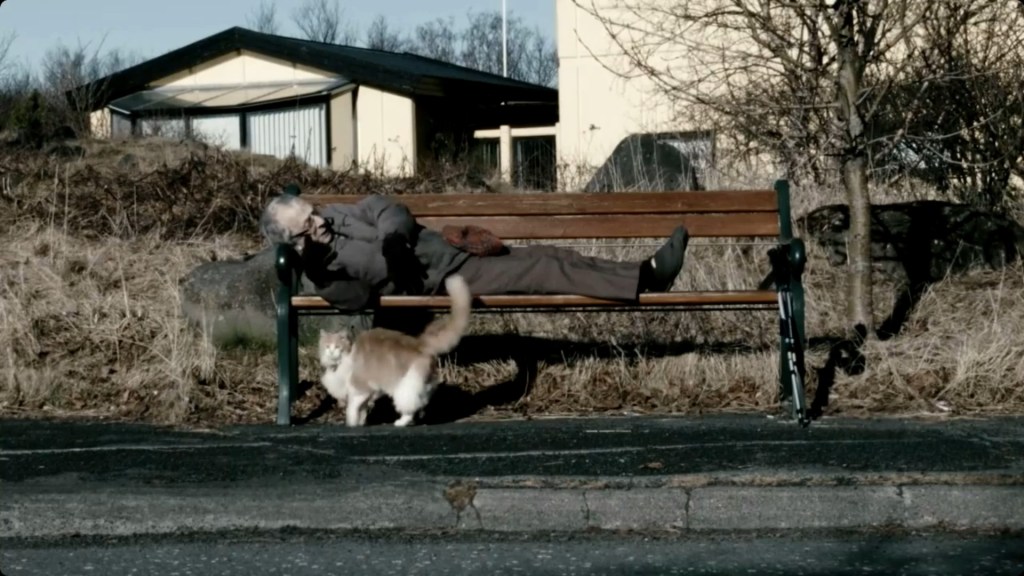
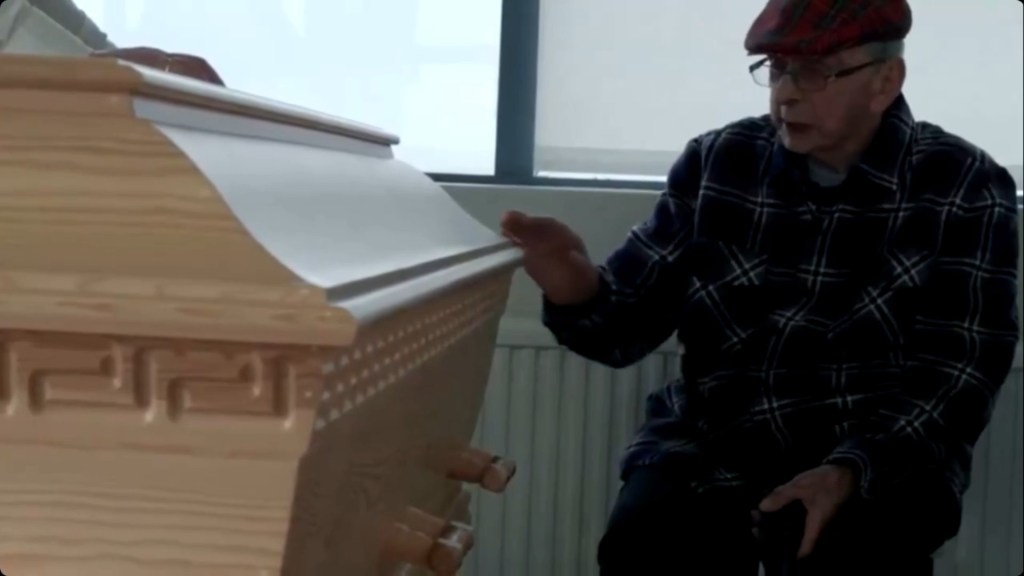
This is alluded to through Hulda’s long-standing habit of reading rare books and thinking about her grandfather, and Trausti’s habit of contemplating the rocks in the water as if they were a fish tank, without failing to sing ancient songs that capture all the fascination of the magical ritual literature of the elves. The wonderful thing is that in the 62-minute arc of the work, the director sketches out the existential DNA of his grandparents. Trausti, for example, has already purchased his coffin in advance, but he is concerned about the messages from his last ones, ‘lest the elves disagree with him continuing to live.’
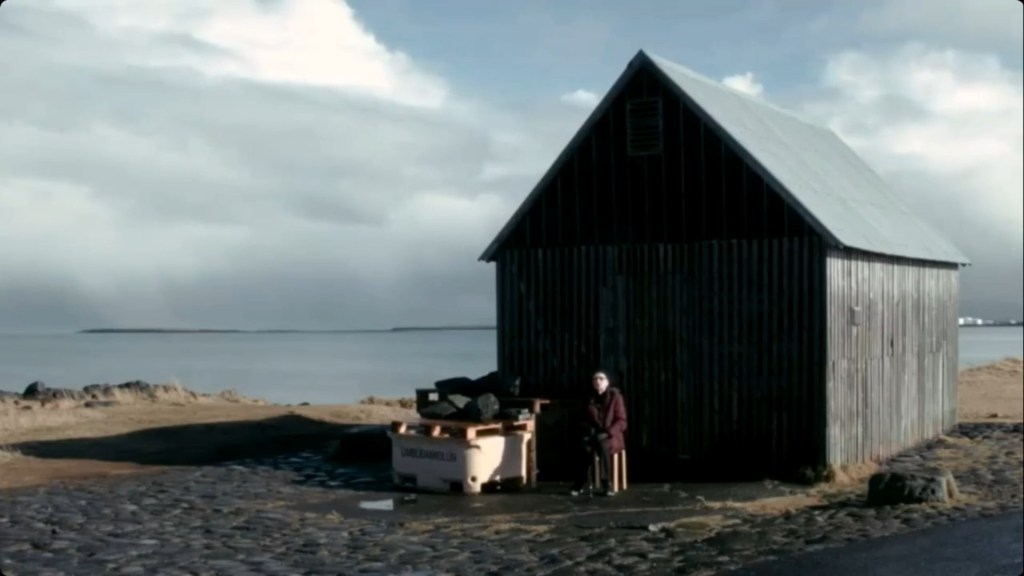
He has sung in various places, but now Trausti is having breakfast and it is he who hears the song that refers to Ólafur Liljurós; the chorus says in Icelandic ‘Glíðan lagði, byrinn undan björgunum fram. Velkominn Ólafur Liljurós,..’ Ólafur, a Christian knight, long before the medieval Crusades, which were still at least two centuries away, is seduced by an elf “álfkona” to join the community of elves, or álfahús, while travelling through the mountainous cliffs of björgum fram.
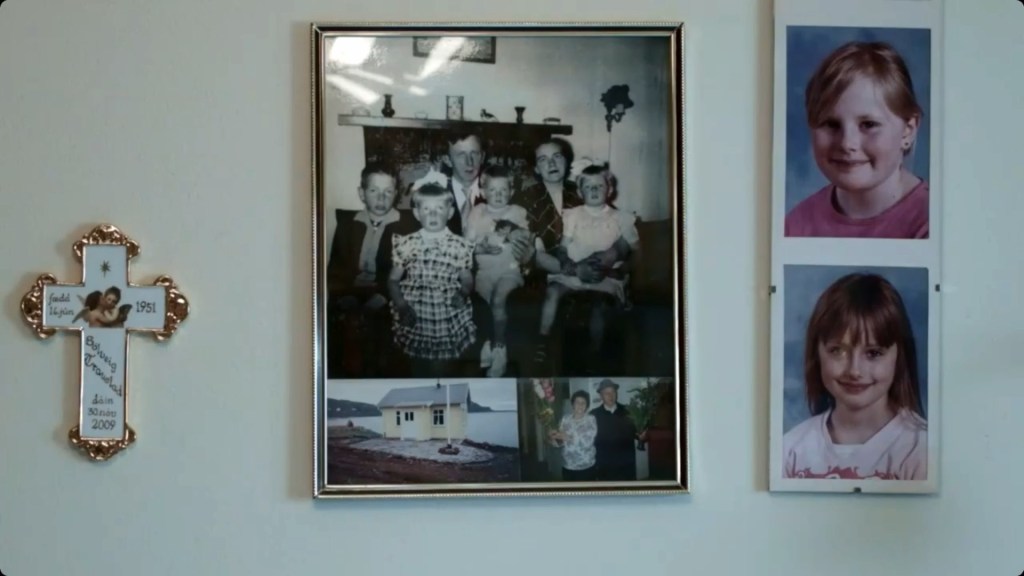
Due to his Christian faith, he rejects the elf who appeared to him with her golden hair and bowl of mead. For his rejection of the fantasy world, he is stabbed and dies three hours later, symbolising the conflict between faith and mythical temptation. The recurring refrain in Ólafur’s song, ‘byrinn undan björgunum fram’, refers to the gentle breeze under the cliffs, a common setting for Icelandic elven ballads. His wife Hulda (b. 1921), on the other hand, thinks of her grandfather and would like to put books in his coffin because she remembers her father giving her the biography of Ingimundur, who was influenced by the elves.
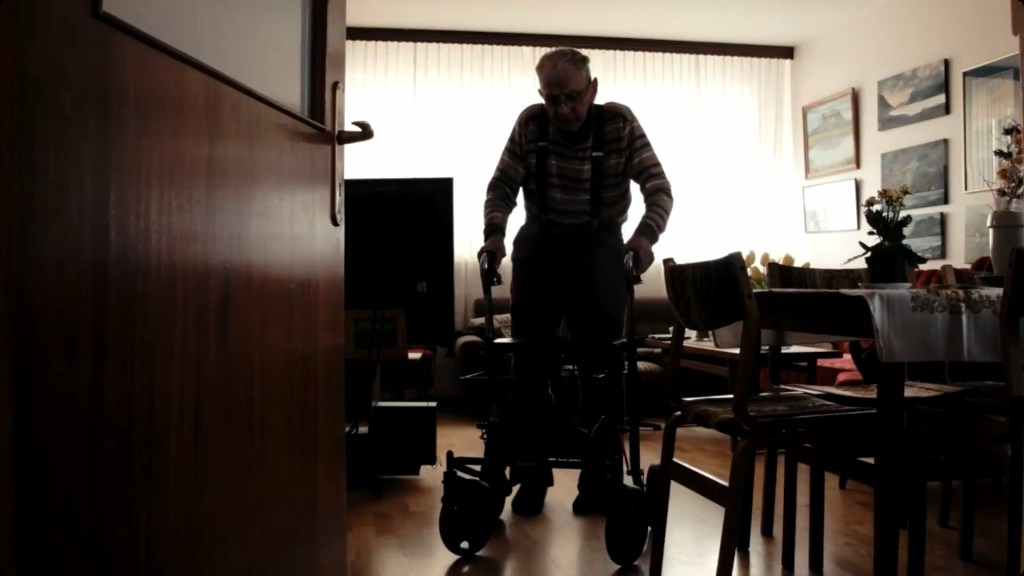
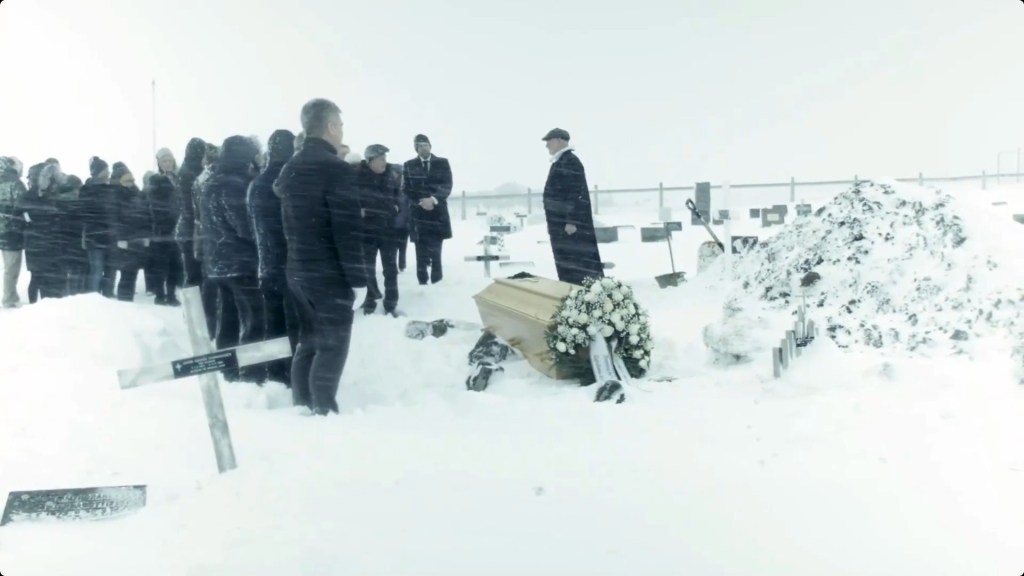
Trausti does not read anything and thinks that these are nonsense. He says, ‘Books are rubbish and useless.’ Hulda reads an excerpt from one of her books and the clear dividing line between the mystical and the real becomes evident: ‘There was only one bitch, a werewolf, a western flag and a tongue twister. The devil of marriage, many lovers, many tried to tame her but no one could defeat her. Death spoke to her, some of us had to be silent for a moment. Even so, far away with more souls, first in heaven I give thanks for the bowls, of course. Peter Bond gets along well with most people. He understands the shepherds, but Kella gets carried away by the storm, her head shines, the enemy’s composition is like tulle.’ But the end is a discreet celebration for the hundred-year-old man we see diminishing in health, walking with a cane, then a walker or walking frame, and finally in bed, checked on by the nurse. Reality and folklore envelop a magnificent piece of thanatology. I recommend it, and don’t miss the funeral song, the centuries-old Icelandic song for a man of a century! Wonderful.


Leave a Reply