I would have thought this nonsense was written by Michel Deville, even though it has the hilarious wit of Bertrand Blier. A 26-year-old office worker obeys the request of a dying stranger in a car park, whom he decides to help rob, to run to 81 Monceau Street to warn Brazetti, whom he also does not know, that they have stolen the briefcase with the loot, but after the shootout, before leaving, a car driven by a beautiful lady stops and, we can guess that she will say ‘get in’, and incidentally, this is the first correct inference made by this reviewer since the spontaneous and exquisite film began;
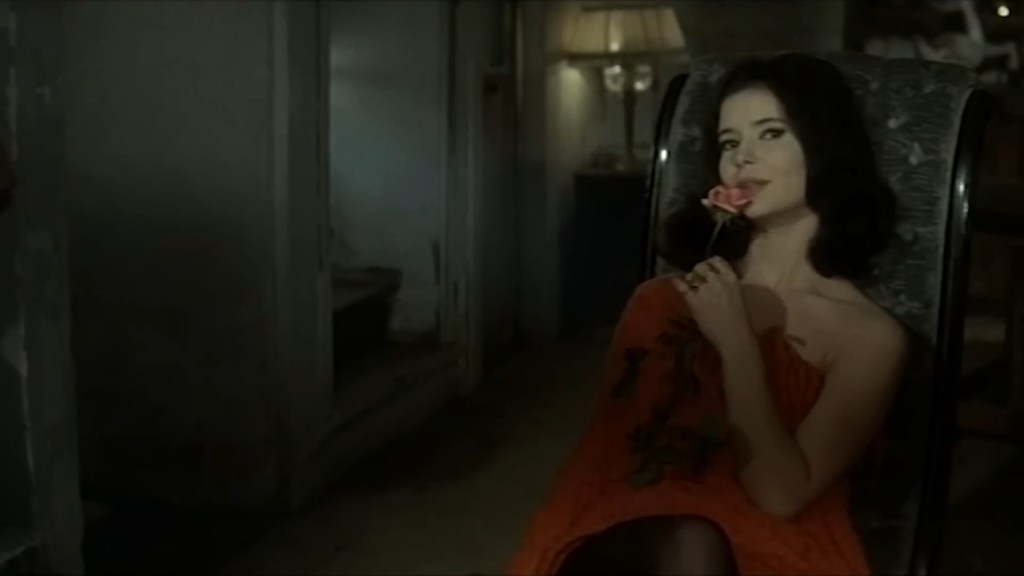
Rafael gets into the car blindly obeying, just as he obeyed his own instinct without question a week earlier when he followed Bartleby’s untimely call ‘I would prefer not to’ (neither go to work nor continue his routine), so very similar to the character in Perec’s Un homme qui dort, one fine day he got out of his car in the middle of traffic and decided not to continue with his boring and arithmetically predictable life. That’s how he met someone who invited him to take part in a robbery, and thanks to the theft of 800 million in diamonds from Schrank, he met Electra, the aforementioned driver.
A brief taste https://www.youtube.com/watch?v=x9fA_4_QAJc
After a few days, he met the mastermind behind the robbery, Alphene, who used Zebio as an expert in safes because the jewels would only be available for 48 hours where they were stolen. In fact, Alphiene eliminated Eric in front of the others when Rafael pretended to know Eric by heart, using the privileged information that Electra had given him.

They would have continued together as a gangster brotherhood, but an armed group started shooting at Alphene’s house due to Federico’s betrayal while Rafael and Electra were about 900 feet from the mansion. There was a shootout, people were killed, and before dying, Alphene gave them the secret location of the stolen goods, supposedly in a safe in Monte Carlo. The problem is that the bloodthirsty Federico is always hot on their heels, first on foot, until Electra gets tired, then on a motorbike, then in a car and later by train to Montluçon, Nice and so on.

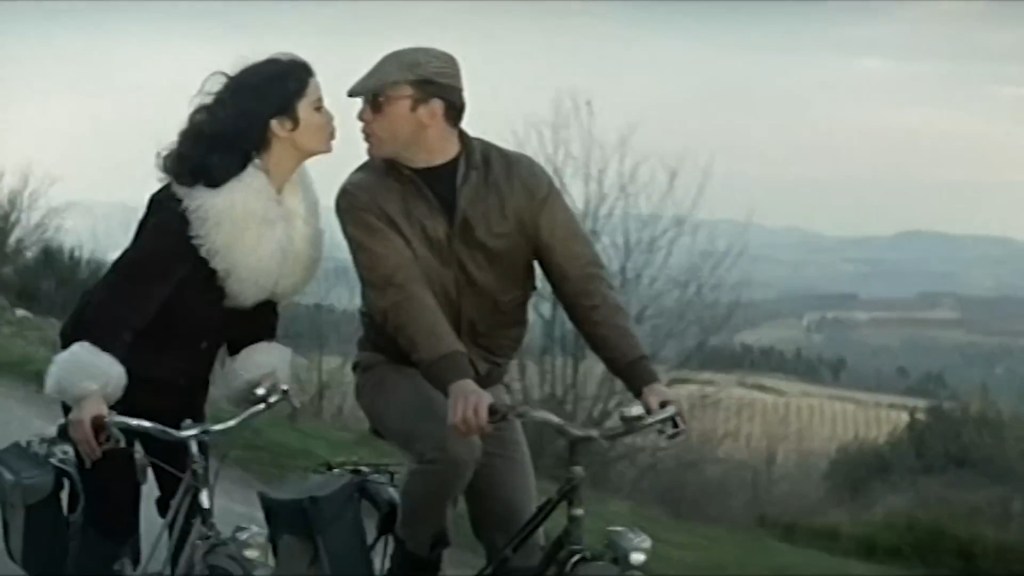
The sequences with Marie-José Nat and Trintignant in the countryside riding bicycles in a torrid (though fake, as we will see at the end) romance in which she, the femme fatale, repeats over and over again that he should use his share of the 800 million to go live in Ireland, where there is no extradition, are beautiful. They kissed, they loved each other, they fell out and then they enjoyed the fair and the merry-go-rounds and were chased by motorised police, and was it all a lie by the agent or informer Electra? Phew, I thought she would betray him, but as a villain for money and not as an agent of justice, which is what I call a very good performance of meta-falseness, that is, an actress portraying the falseness of an agent who represents or acts as a villain.
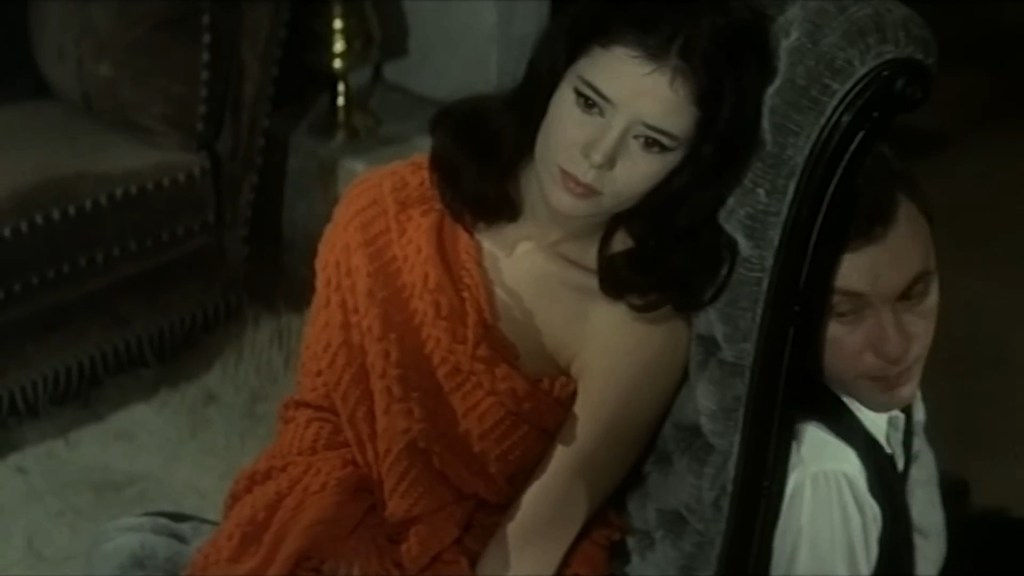
The motorised police, one of them killed Federico in the melee, and the other was shot dead by Raphael himself. Somehow, between lifts and hitchhiking, he made it to Monte Carlo, ran to the cashier and was intercepted by officers in trench coats who chased him down the panoramic boulevard of Monte Carlo, then shot him, and he still had a couple of seconds to see the femme fatale in the distance. Thus ended the sad journey of improvisation of the 26-year-old man who never thought he would spend his life in an office. Did he want adventure? He got it at the price of his life.
 Pantagruel´s liquor
Leave a comment