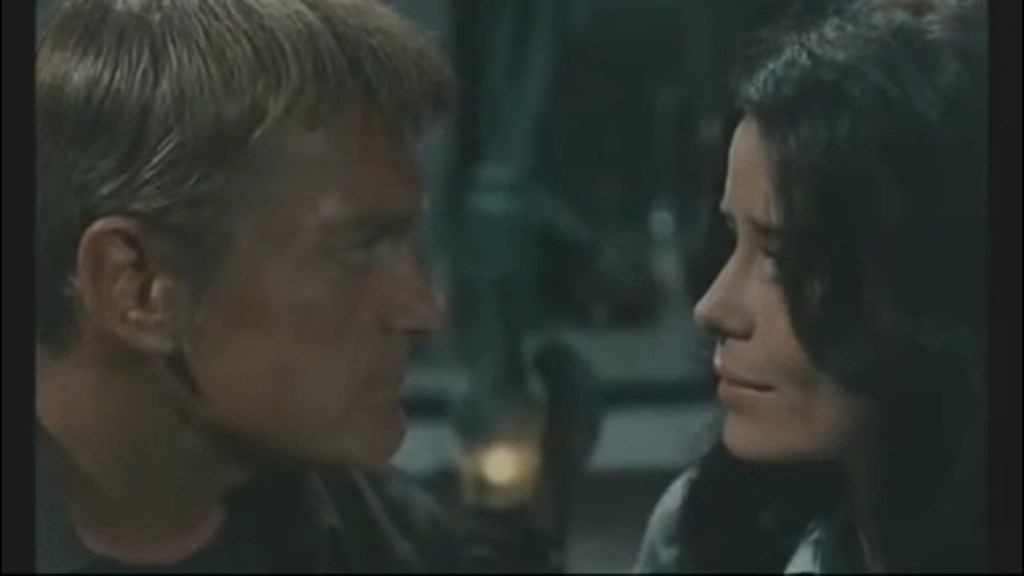
I know I’m going to sound like I’m going over the pessimistic outlines, but if I were to tabulate the economy of cliché-free reasoning involved in a romance, a western, or in this case a noir, I would probably only see films labelled as avant-garde, but perhaps the backlash I would receive would be no less annoying when I realised that this would then fall into the cliché of the avant-garde narrative thread of improvised works in which the meaning of what is said in the sequences (and perhaps in the film as a whole) is irrelevant, and all that matters is that a familiar pattern is not followed. Let’s see: (A) robbery on a train, I know, I know, (Aa) something goes wrong, or (Ab) one robber or thug betrays the other in the middle of the carriage or train; there will be a “good guy” and a “bad guy” because a few moments ago it didn’t matter a damn that they were thieves, but we won’t forgive the “bad guy” for betraying the ‘good guy’ and escaping with the diamonds, so (B) I know, I know, there will be a hero who is labelled an anti-hero because heroes do ‘good’, and here Manu (Marais) will do good when he was doing evil by robbing the train.
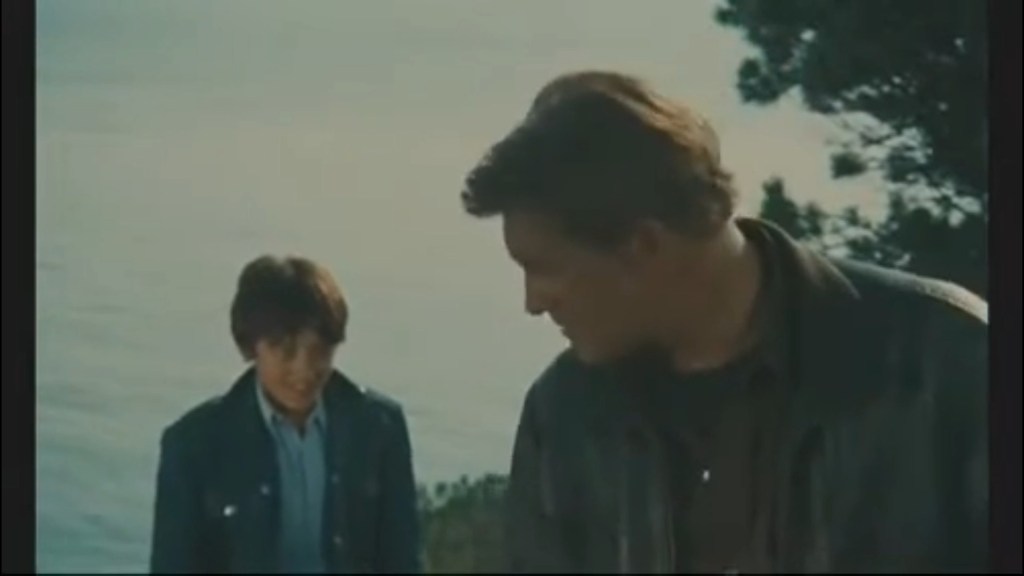
When he escapes, I know, I know what’s coming (C) he hides in a cabin where (Ca) there will be a single woman with her precocious son, or preferably a widow to imply more repressed emotional needs, and (Cb) the peasant woman (Marie-José Nat) will help Manu for free, but no one understands that this will happen because of the sex appeal between the two of them, especially Marie-José Nat, but because of love for what is right, right?
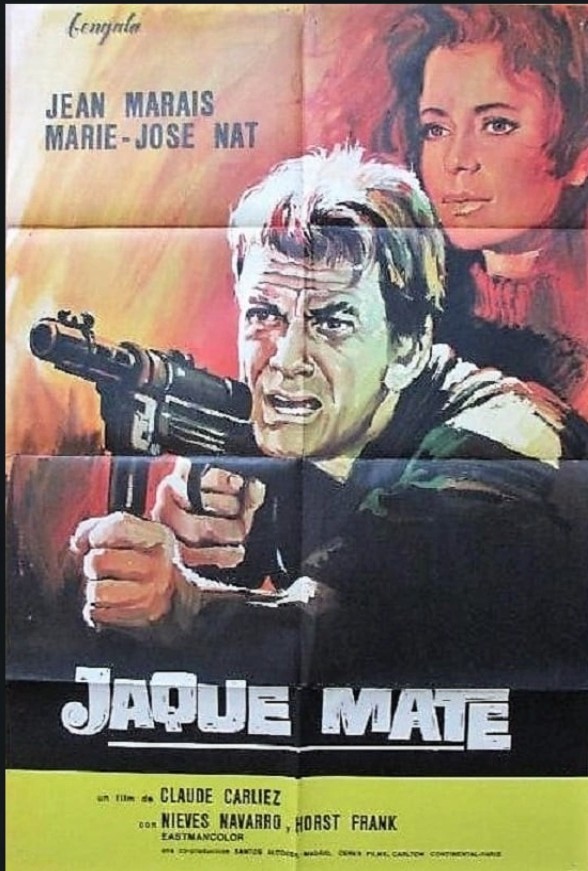
The accomplices in the robbery, especially the despicable Rolf, are furious to find out where the diamonds are, and Manu won’t tell them because he’s hiding in the cabin. This brings us to cliché (D), the femme fatale, Silvia de Lambre, the bad girl for whom the crooks are dying (literally, understandably), and whom José, the son of a prostitute, goes to find in Barcelona at Manu’s request, 23 miles from the cabin, and shows her the hiding place. While the antihero is desired by the landlady and the femme fatale Sylvie, Rolf kills Max at point-blank range for sleeping with Sylvie as an accomplice. Meanwhile, Toccelli, the eccentric millionaire who is in cahoots with Sylvie, sends his henchmen in a boat to machine-gun and throw grenades at Manu and Rolf, who are diving to retrieve the sunken diamonds. They succeed, although they almost die in the melee. Toccelli pursues them closely because he knows they have already retrieved the diamonds, but he is unable to control Sylvie, who arrives at the cabin by surprise and is perplexed to see that Manu and José’s peasant mother have had sex.

She shows her the three parts of the diamonds, but Toccelli’s henchmen arrive and, together with Rolf, a shootout ensues towards the cabin, which includes the helicopter and a police plane that arrives a few minutes later. One of the hitmen kills Toccelli himself for being forced to risk his life against Manu and his shots. He flees, but the police arrive and Manu has ordered José to take the jeep and take his mother away. The police shoot from the plane and Manu offers to surrender and tell them where he hid the diamonds if they let the jeep pass. The police accept, but the orders from the ground to the plane are not relayed, and as the shooting continues, Manu shoots at the police. The plane lets the jeep escape, but Manu dies and tells the police for a few seconds where the 500 stones with the jewels are hidden. A thrilling but predictable ending.

 Pantagruel´s liquor
Leave a comment