
You have to be old school to appreciate this post-war noir, whose peculiarities do not exactly include police suspense or mystery with fingerprints and the like. On the contrary, the strange moral ambiguity, as well as the gloomy atmosphere and the motives behind the characters’ ambitions, will be unravelled by journalists rather than revealed by detectives from Yokohama or Tokyo.
I love Rentaro Mikuri. Listen to how his voice breaks when he reprimands the woman who believed he did NOT love her. https://www.youtube.com/watch?v=nzQViYBXL5s
No matter how hard police chief Oyamada tries to hide the disappearance three days earlier of an American deserter named Robert, the fuse will be lit by an impertinent, alcoholic but tenacious journalist who has just spent the night at the Club Queen bar to witness (though he didn’t know it yet) of an accomplice in the murder of the strange international spy whose body will be discovered in the morning. He spent the night with the singer Emi, who shows that she loves him, without being loved in return. Could that be why her songs are so beautiful and her tone so plaintive, which, incidentally, I have not been able to identify musically?
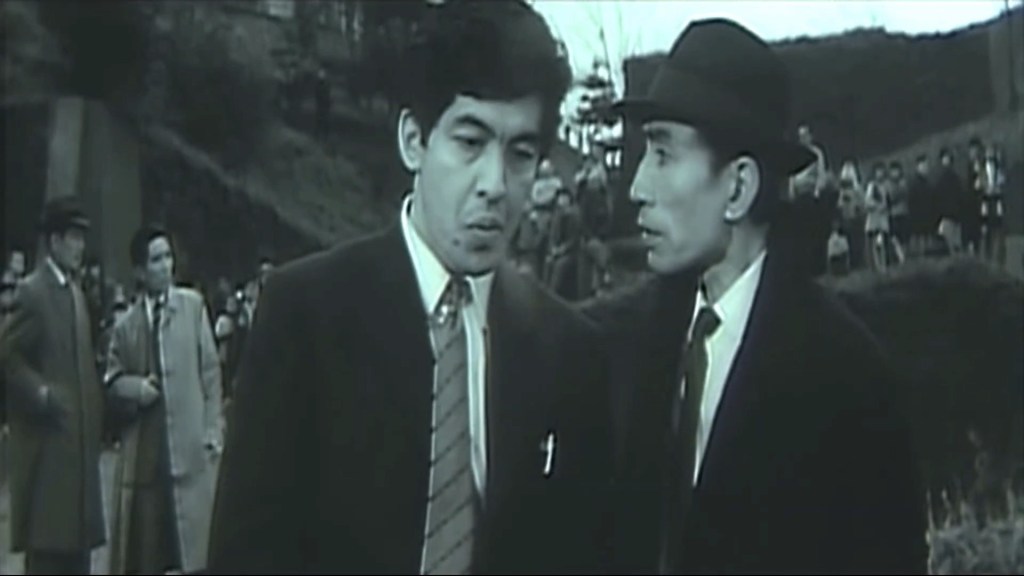
When the body of policeman Sasaki is found the next day, Nagasa is determined to link the crime to the disappearance of the American and the subsequent discovery of his body. Since the police give him no clues because they don’t have any, it is the journalists who make the discoveries. For example, reporter Senpai locates the bar where the American was last seen with an unidentified woman. Meanwhile, strange radio waves are detected off the bay and they believe they have found some kind of criminal activity – although nothing clear – from the dead Roberts’ papers. Kurosaki, the owner of Club Queen, is arrested but released a few hours later due to lack of evidence, and Nagase is assigned Nikasu, an assistant and former colleague. Little by little, the memory of Emi arriving on the rainy night after the incident and the death of the victims comes to mind, and he seeks to question the singer, but his discomfort prevents him from doing so. However, it was worth going to her apartment because he found her photograph on the boat. A major plot hole: would the woman who was in his boat and witnessed the deaths of police officers, one of whom was American, use her selfie from that tragic night? Nagasa locates the photo and investigates until he finds a boatman, whose son remembers renting his own boat to the beautiful Emi, forced by his boss, who supports her, the owner of the Queen Club. It’s a shame that when Emi wants to abandon her bad friends and leave the club, old Kurosaki won’t let her.
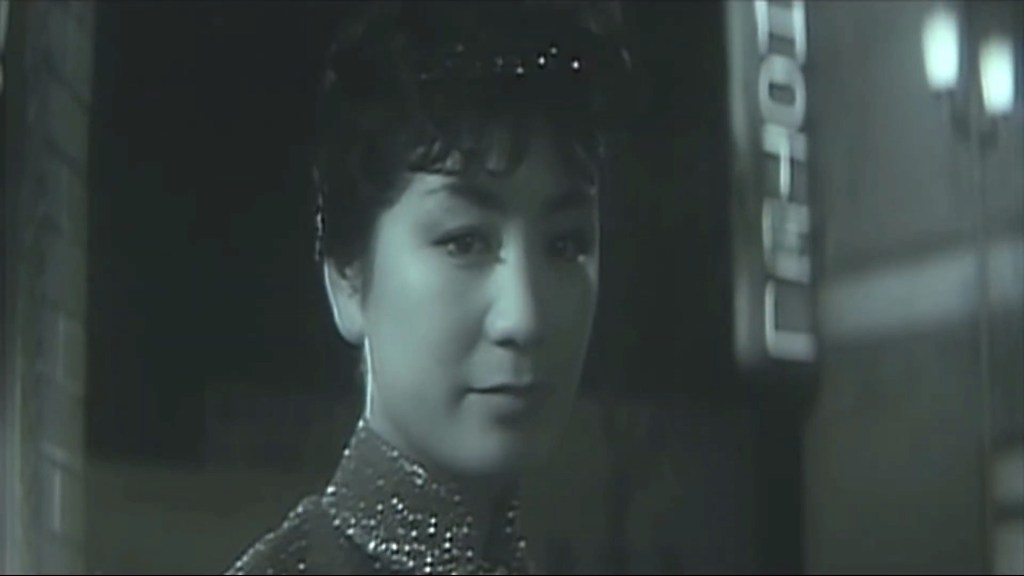
The ending is a chase and very painful because, although Emi pushes the old man who was holding her hostage while escaping from the police, she dies from a gunshot wound because she did not throw her gun to the ground on that fateful day, which, incidentally, will be crowned with disappointment for Nagasa the next day when nothing by Roberts is published. Sekigawa’s disappointing tone regarding the world of clandestine operations in post-war Japan is clear.
 Pantagruel´s liquor
Leave a comment