
It is difficult for viewers not to feel a natural emotional connection with the relationship between Ukichi and Saku, as the two-hour film is justified by an elegant and rhythmic narrative that reflects the mutual feelings that gradually grow between the two silk spinners on the slopes of Mount Shizugatake. Not only are the scenes of silk working and hand-spinning delightful, but so too are the cinematic aspects of Lake Biwa and Yogo and, as is customary in Japan, the legend of the tears that were shed to compose these lakeside beauties. The weak point of the film is, of course, the cliché of the man in love who must go to the front as a driver to look after the horses, and the beautiful lady who lives working and swears to wait; promises are made and blah, blah, blah. But this is only in the first quarter of the story, because then comes the twist of fate, which is also nothing new: the elderly Nagauta, a wealthy man who visits the workshops of Kidauyu Momose, the silk merchant for whom Saku, an old shamisen maker, works, is so impressed by Saku’s beauty that he does not hesitate to invite her to practise for him in Kyoto.
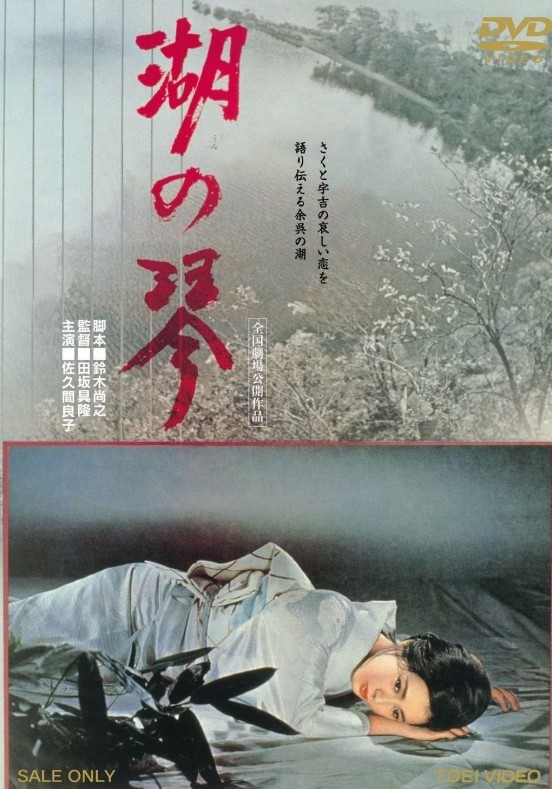
Everything vanished when Saku actually returns to Nishiyama for a few days and bursts into tears when he sees Ukichi. Ukichi confesses his plan to set up on his own as a small silk merchant and marry her, but first he wants to visit his family. The next morning, Saku has disappeared. Ukichi finds her in the barn, where she has hanged herself with the same ropes that Ukichi had used. Ukichi understood the message, placed her in a box and carried it uphill to the cliffs facing Lake Yogo. He tied himself to the makeshift coffin, thus sealing the story that, sadly, never came to fruition between them. Both sink to the bottom and will spin together forever.
 Pantagruel´s liquor
Leave a comment