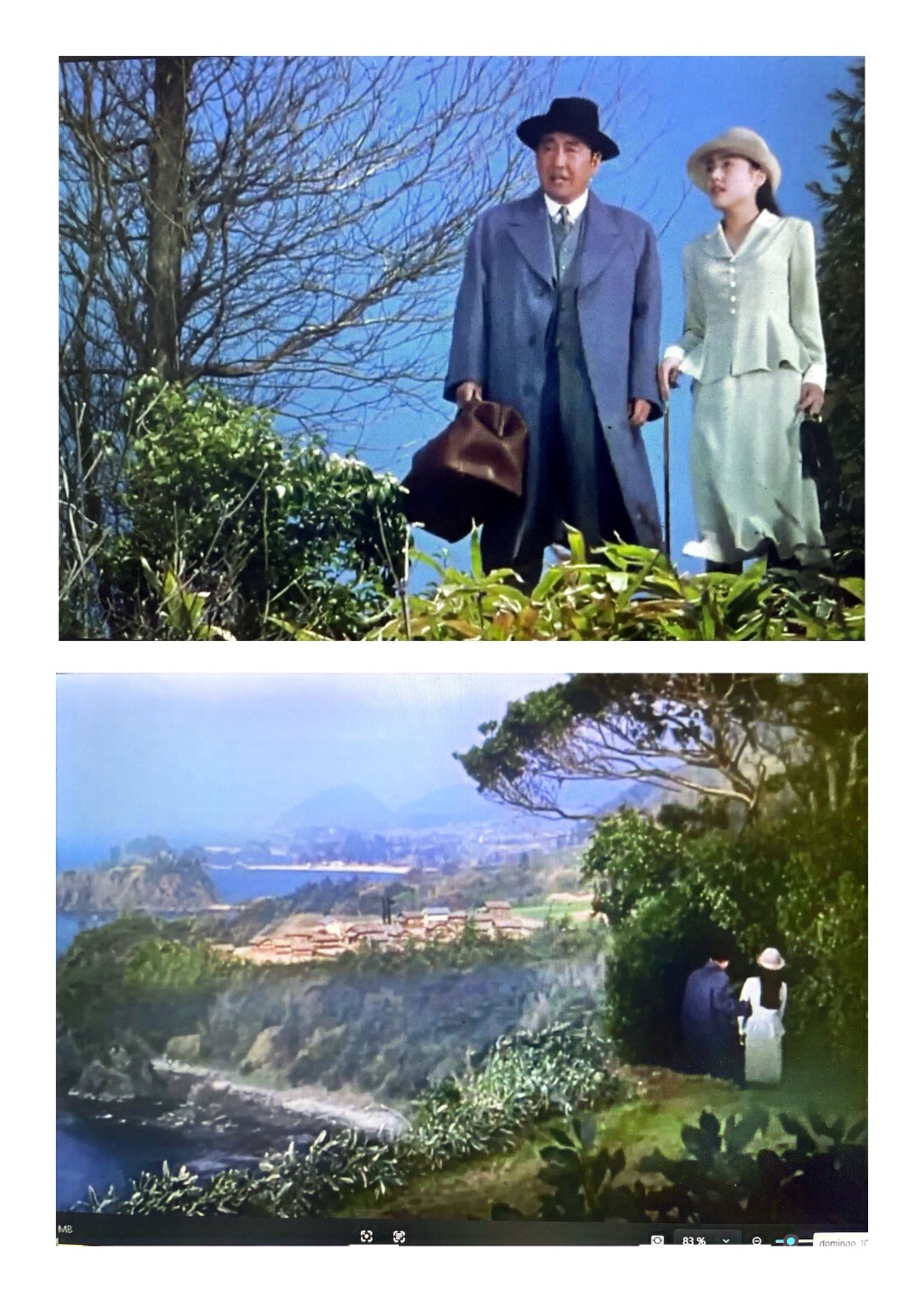
I cannot even imagine the pain and suffering of the sake businessman Izo, who went from such great joy at seeing his daughter grow up—finally, after eight stillborn babies—and even naming her Retsu, which means fierce, strong, intense, to then, a few years later in Taisho 15 (1926), having his eight-year-old daughter diagnosed with retinitis pigmentosa, an irreversible hereditary disease that causes blindness. The grandmother begins a journey to 33 temples in Echigo to make a pilgrimage to Bodhitastva Kannon because one must trust in the gods and not in doctors.
watch a brief intro https://www.youtube.com/watch?v=dg_uQM0q4Jc
The settings for the staging are majestic, seeing how Retsu is instructed, ‘This is the Kameda Hara River, after crossing the bridge we will arrive at Shinetsu Station…’ until, just as she is about to enter school, the girl bursts into anger at having to wear those silly glasses and be the first to do so.
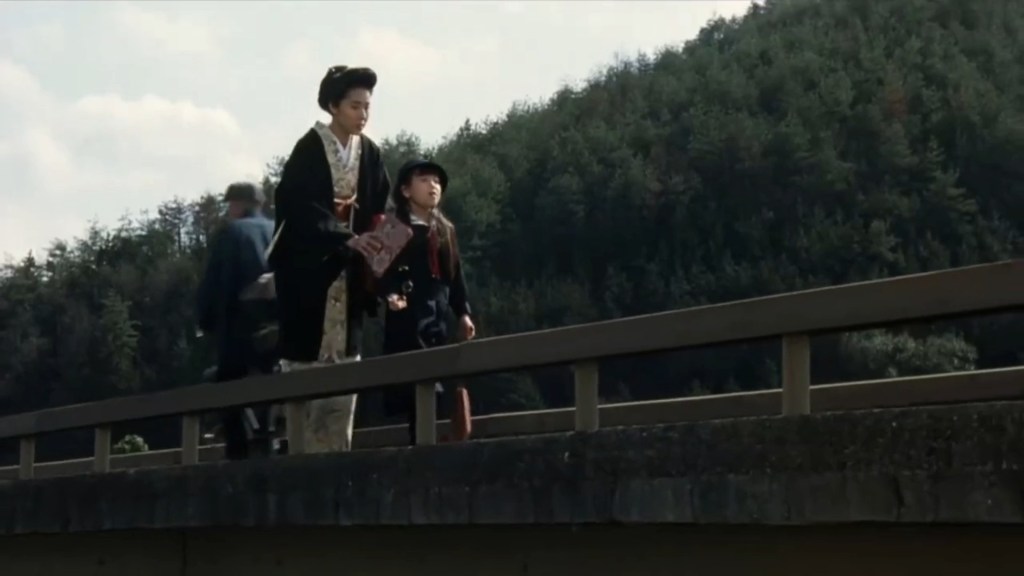
The grandmother returns almost dying but achieves her goal, which gives the mother the courage to make the pilgrimage herself. Unfortunately, at the eleventh temple in Daifukuji, she collapses and falls unconscious, dying in Enzan Hospital. When her aunt decides to return to Shibatu, the girl goes mad with grief and rushes to the station to stop her from leaving because she doesn’t want anyone else as a mother except her aunt. Ryota, the young man assigned to watch over the little girl at the sake brewery, saves her life on the train tracks. The scene is exquisitely emotional, with the girl running and then being carried by the young man, barely older than her, preventing her aunt from leaving for Shibatu and staying away for years.
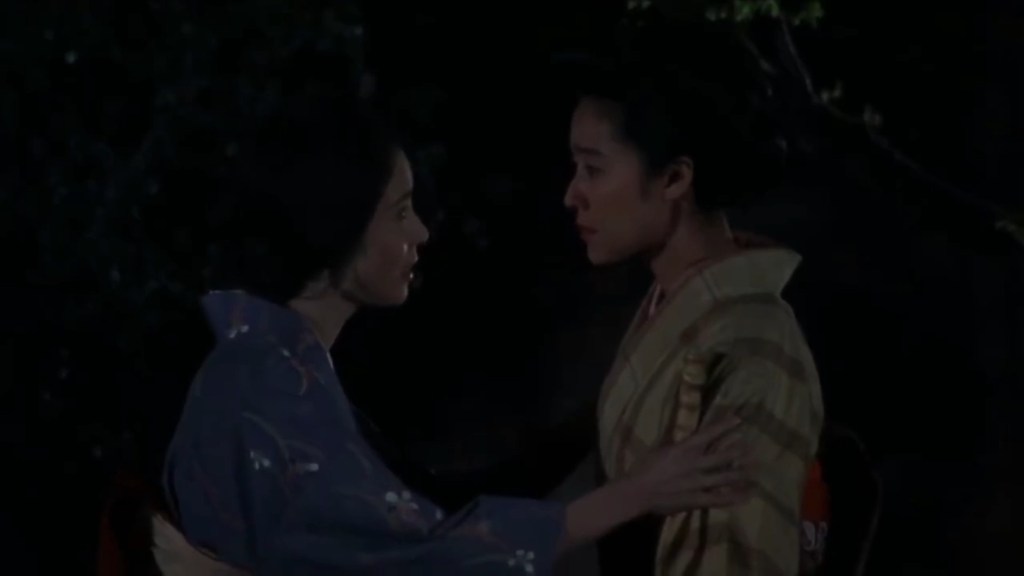
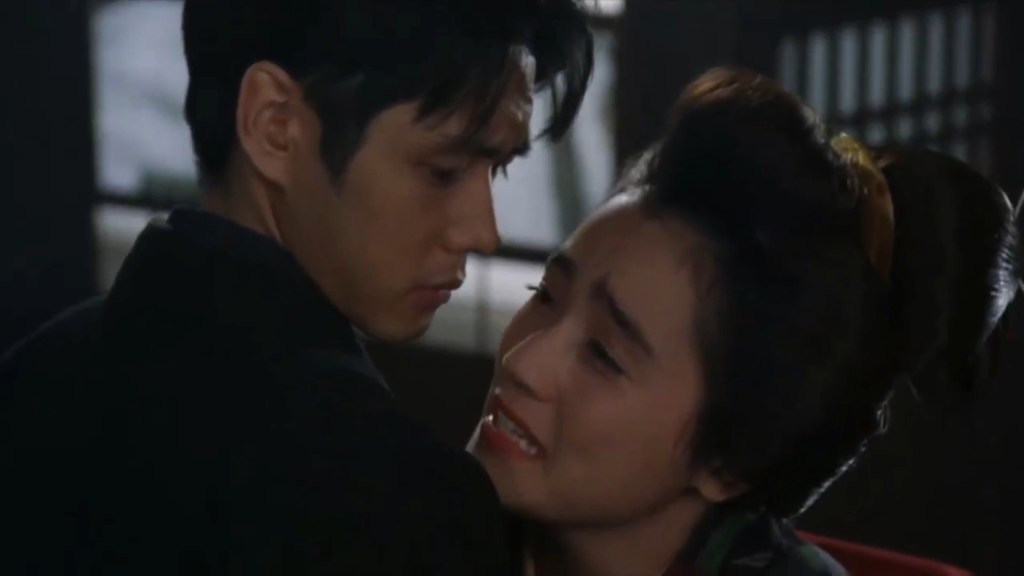
The story jumps forward ten years to Showa 11, just after Kitayama’s wedding, when unfortunately his progressive blindness worsens, and he sees less and less until he cannot even see things during the day. To make matters worse, Joichiro, Izo’s only son, slips on the wet rocks at the edge of the huge house, due to the maid’s carelessness, and dies, leaving behind the family distillery, which was named after him. Izo is heartbroken. Izo plans to close the sake brewery, and the turning point of the film comes right here, when the young Retsu insists on taking over the management of the Kura, which means warehouse (hence the title of the film) of the family distillery, despite her blindness and, above all, despite the tradition that female goddesses sleep or live inside the kura, which would prevent a woman from entering the premises as it is considered a bad omen. Her father stubbornly opposes her, but shortly afterwards, father and daughter visit the Matsuo Taisha Shrine, where Retsu kisses the knees of the patron goddess of the place and asks her to allow her to live off the management and production of the distillery, which is about to close down. She confesses this to her father as they leave the shrine. Just as she arrives in Nozomi, she meets Ryota again, who is now a Sengoku-gura officer in Fushima, but his condescension and kindness, as Retsu herself will remember, are intact. He allows her to touch him with her hands as if he were blind, especially his face, and there is no mention of her falling in love with him until an incident at the distillery almost causes Izo to sell everything again. Oseki-san appears pregnant in the kura and the girl hints that Ryota is the father, which drives Retsu crazy with anger and jealousy. The girl has an abortion anyway, but Izo’s plans to sell remain unchanged, while the boy they have distrusted and looked upon with shame leaves his village, saying goodbye. Retsu can no longer hide her affection for the boy and, despite her father’s opposition and a snowstorm, she sets off with her walking stick to the train station and then, the hardest part, walks through the falling snow but receives her mother’s aura and manages to reach her destination. The father and Saho come to her, and the boy reaffirms his intention to marry her, inheriting everything, while the father and Saho plan to live in a small cabin. A moving story, full of thorns. A girl who almost died at birth, loses her grandmother and mother, then gradually loses her sight and almost dies trying to reach her aunt, who raises her and was about to lose the only love that motivated her. A beautiful film. I recommend it. I cannot praise highly enough the effusive and harmonious soundtrack by Takayuki Hattori and Masashi Sada.
 Pantagruel´s liquor
Leave a comment