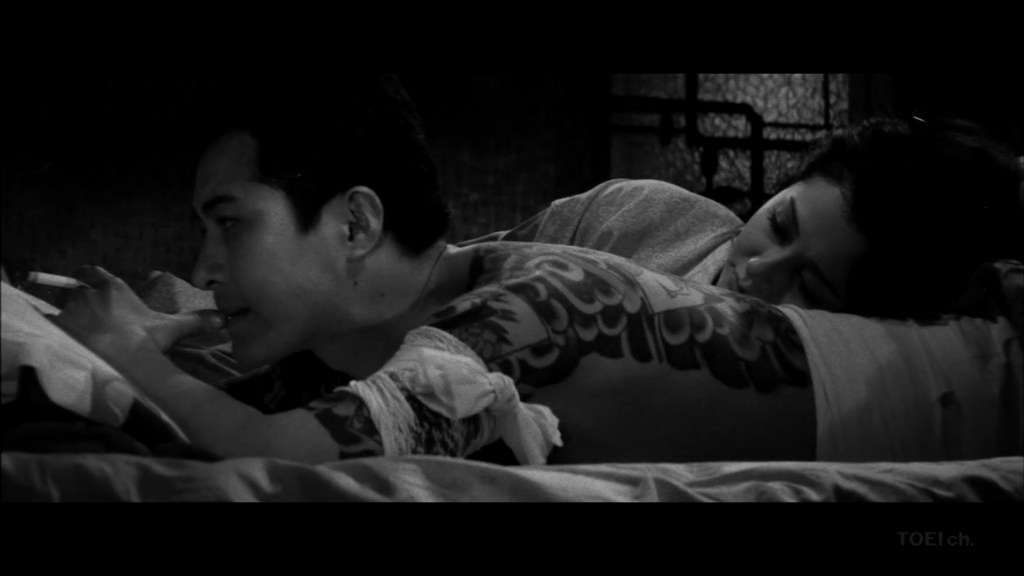
As in a nineteenth-century romantic tragedy, the events in this complex work are determined, just as in real life—and this is why it departs from the ninkyo eiga genre, even though it contains the traditional code of justice, honour and sacrifice—both (a) by chance and (b) by moral retractability (what is right depends on who does it and for what reasons it is “wrong”), which is caused by emotional transience.
I share a taste…https://aqueronte72.com/wp-content/uploads/2025/07/desktop-2025-07-31-02-51-39-p.-m.mp4
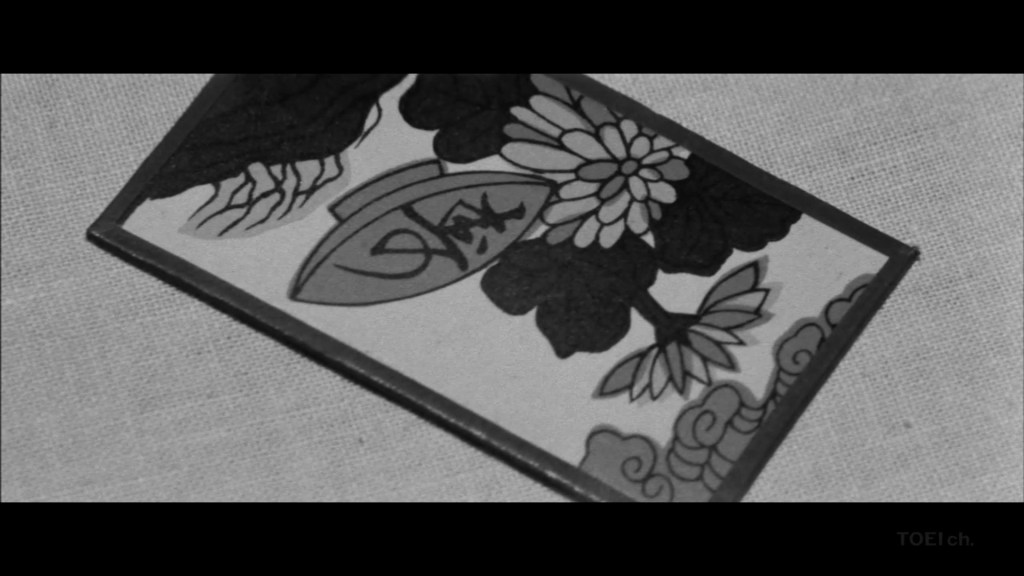
Without (a), Kitagawa Ryuichi, the wandering hanafuda (flower card) player, would not have met, in that beautiful October with its red leaves, although fateful, the con artist Umeko and her old partner in crime. In any case, Takeo Watanabe’s repetitive but melodious soundtrack is worthy of fanfare for the special strumming of the strings with the arrangements, particularly in sequences such as the snowy night scene.
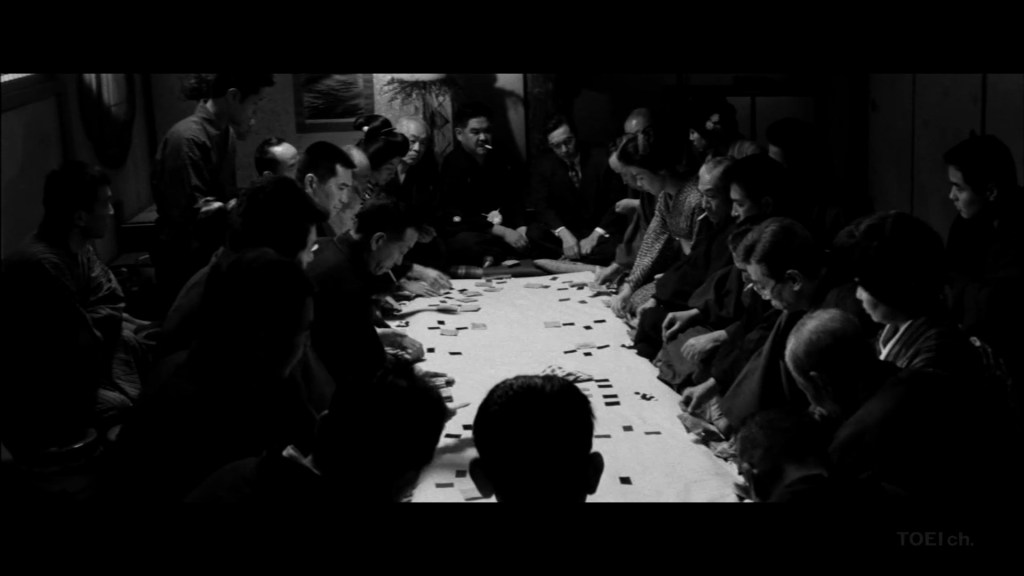
We know enough about Ryuichi’s scruples to understand that he would never cheat at cards like the woman who has made such an impression on him, and I am also sure that in almost any circumstance he would find a snitch despicable, but when he meets Umeko again, he does not hesitate to betray Detective Akiba, who persists in his efforts to arrest the beautiful hanafuda card shark once and for all. Voilà, moral opacity; the discrepancy with the codes of rightness when we humans privilege our passions.
With this amoral password, we must observe the pragmatism of life defended by the old man -Moto-, Umeko’s partner with the injured hand: “I’ve specialised in gambling since I was young, and no matter what you say about codes of honour and righteousness, in the world of competition, it’s all about luck and talent. Not even Buddha himself realised this, ha ha ha” (0:33:08).
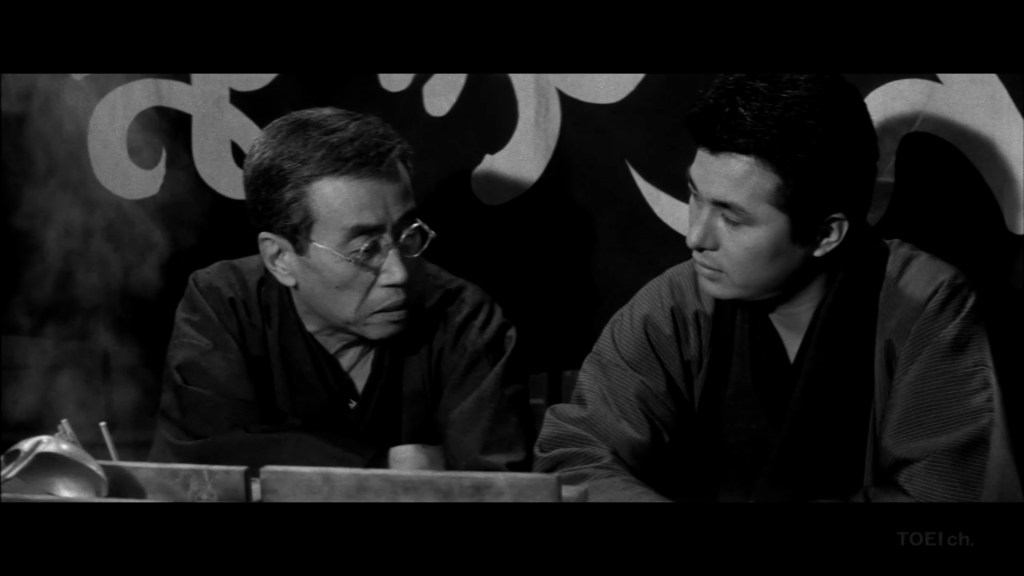
The film is fabulously filled with ambiguous scenes typical of the Showa era, such as a despicable stepfather like Kasugai who tries by all means to have sex with his adopted daughter Hisae; an adopted daughter who is desperate to have the visiting regular customer Ryuichi, enough to get rid of the foreign player’s girlfriend with violent methods. They are ambushed by two men, beaten and driven out of town.A former yakuza gambler who, on more than one occasion in the story, recalls that he had no father or mother to look after him as a child and fully justifies his loyalty to his boss even though he mistreats him because of the code of loyalty, a card player in love with Umeko but with a deep respect for the old man -Moto- who always accompanies her -whether as her father or her husband-. Little by little, old Kasugai’s hatred for Ryuichi intensifies.
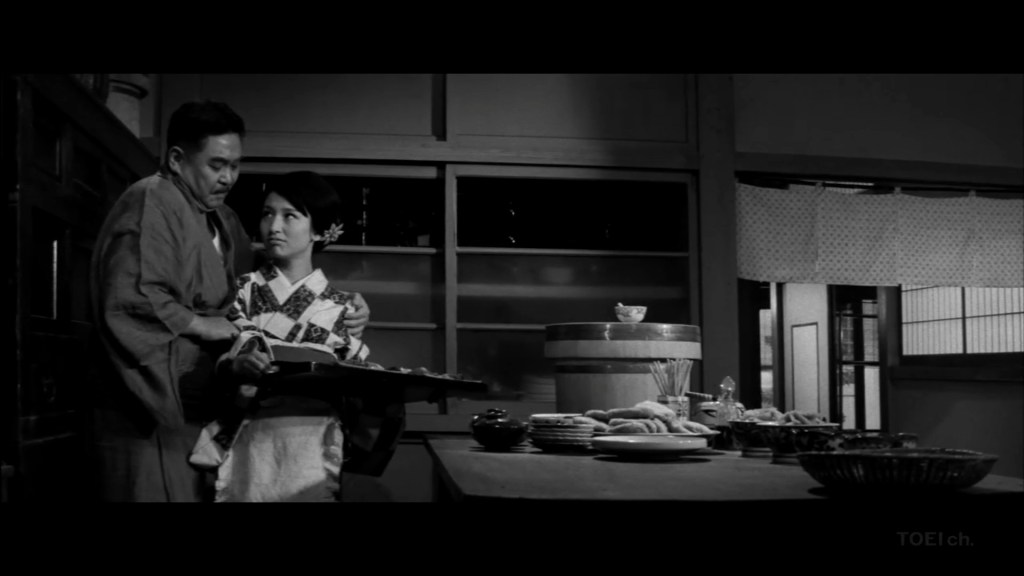
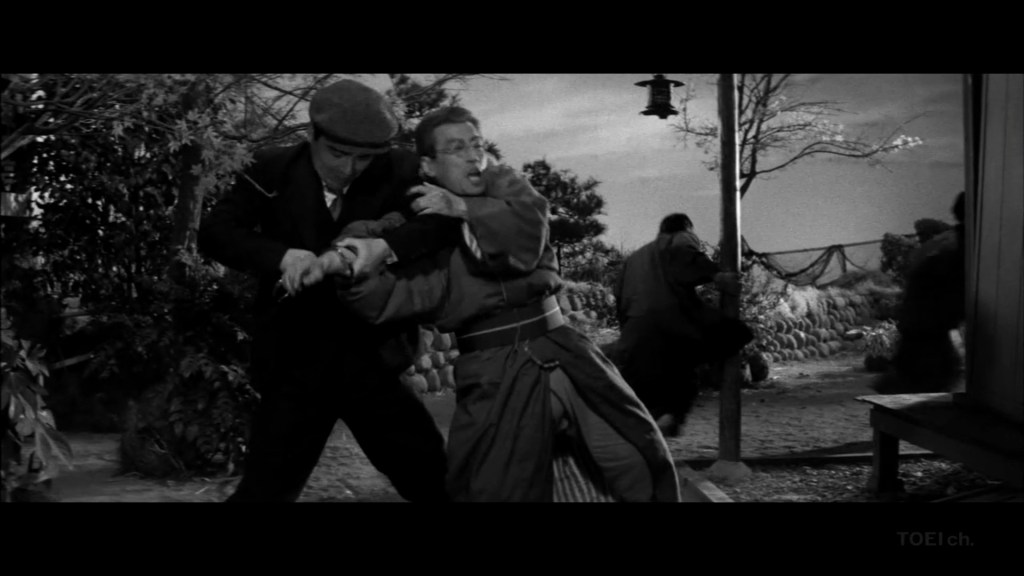
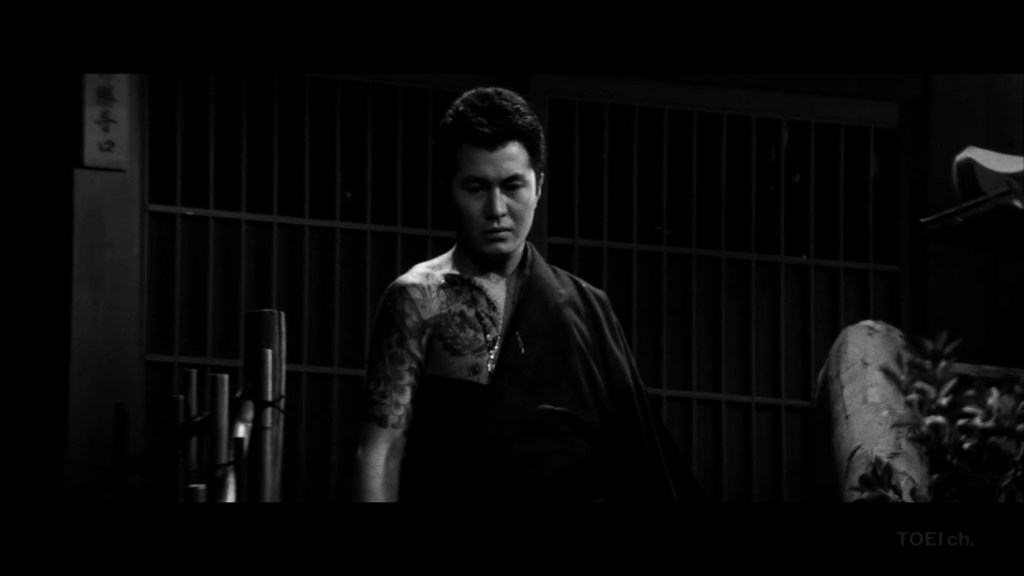
Kasugai, almost always accompanied by the ambitious military man Kimura, who also desires Hisae at all costs, gives him his daughter, but only because he wants to make Umeko his own. When Kasugai realises that he has no attraction or reasonable chance with Umeko, he tries to win over the card cheat by using Ryuichi. They set up a game of hanafuda and agree that the winner will get the beautiful Umeko. The lustful Kasugai takes the woman for granted, given the reputation for success that precedes the former yakuza Ryuichi. However, old Moto manages to defeat the young man and, after Kasugai leaves in a rage, Moto shows him the teacup that Umeko brought him halfway through the game, through which she cheated by seeing the cards, causing both of them to burst out laughing. Despite everything, Commander Kimura, now related to Kasugai, sends soldiers to teach the old man a lesson and they kill him. Neither Umeko nor Ryuichi will ever forgive him for that. Kasugai tries to cut Ryuichi with his sword when he defends Moto’s honour. Defending himself, he kills Kasugai and the corrupt detective Akiba cleans everything up, but in the end Ryuichi returns for Kimura and this time he doesn’t get away. A scene recommended for those who love the ‘gore’ genre, as arms fly and blood spurts everywhere.
 Pantagruel´s liquor
Leave a comment