
As if it were made by amateurs, both in terms of the script and the direction, and that aspect—the unpredictability—is precisely what makes this saga so valuable (to me, of course). Twelve Furyo Bancho films were made, all of the same crazy nature, as if the story had been improvised during filming, absurd as if the production ‘didn’t care’ that the viewer didn’t care that, in order to entertain, the plot completely disregarded urban realism and credibility, not only of the common behaviour patterns of gangs and bikers, but of general common sense. No way. For me, there are moments for Tarkovsky and his filmic asceticism, and others for popcorn and yakuza or bikers, moments for the Grand Inquisitor giving a Judas kiss in The Brothers Karamazov and others for Alan Moore. In this instalment, as soon as they are released from prison – supposedly by mistake – where they shared a cell with Akiyama Tetsuo, the hijacker of a jet whose eye dances crookedly, they take their motorcycles and literally hit the streets to sell miracle products.
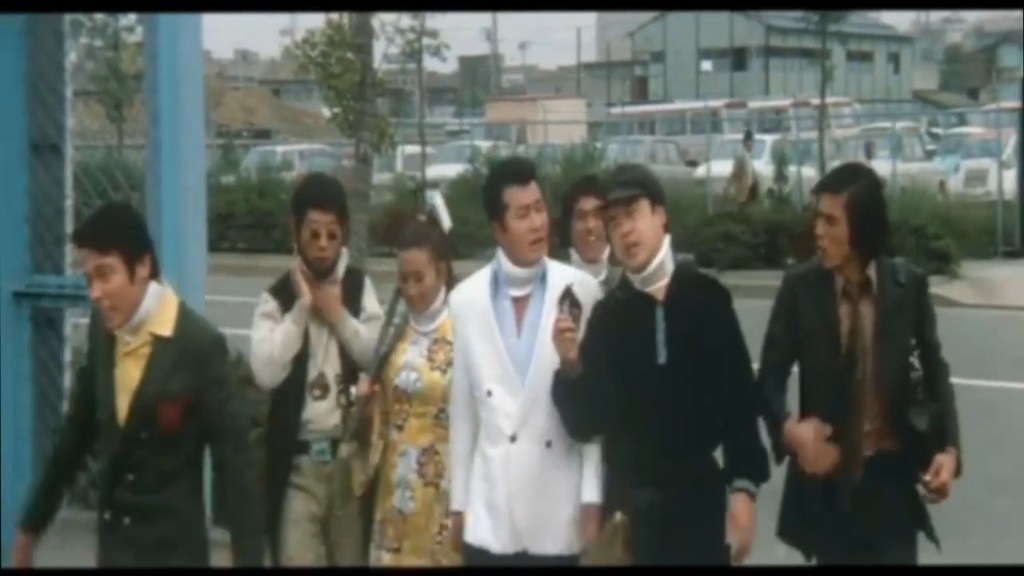
These charlatans sell miracle products such as Hanebare, ‘Renaru’, supposedly for better sex even as you age. ‘If you think Renaru is just powder, you’re wrong, Hawaii is a long way from the Senkaku Islands,’ they say, or ‘Eat Kamemara rice, consumed by King Kamehameha’. While they are being chased away, either by members of the yakuza for interfering in their territory or by urban police officers, for the illegality of their street trading, the destitute man who has joined them and was defecating in the hidden bathroom where they are staying to eat is run over by a truck. The driver, Sami, gets out and they are accompanied to the owner of the truck company, Mr. Naga, whom they blackmail for compensation.
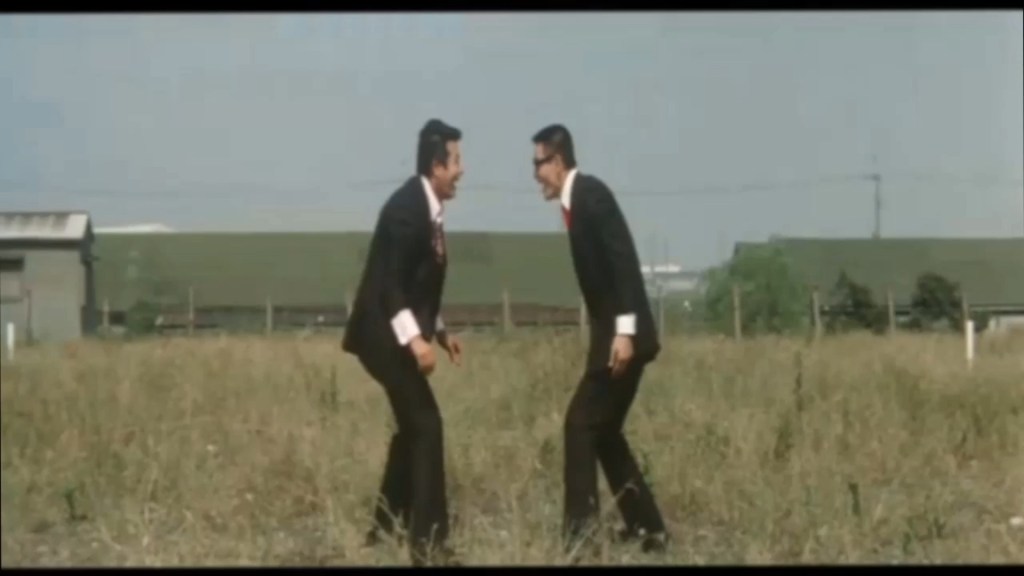
As the number of members increases, they think they should reflect on new business methods and thus revive the DMK Great Japanese Whiplash Association. They throw themselves into the streets to be injured and live for a while as victims, or they chase the owner of the truck company, Mr. Naga, in their cars and motorcycles and force him to crash his car, supposedly by accident, in order to receive money. When the tricks seem to be running out, they kidnap millionaire dogs for ransom; when the ideas dry up, they check themselves into the hospital, because, as Hiroshi thinks, they don’t ask for a deposit and serve three meals a day.
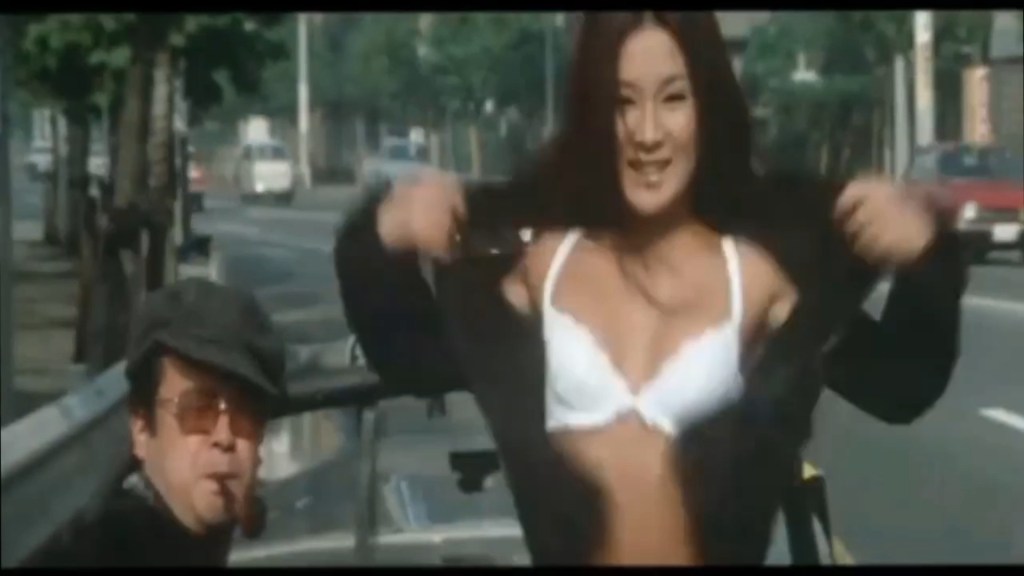
The camaraderie and mutual fanfare between Hiroshi and Katsu (Bunta) when they meet again is ridiculous but cute. During their car scams, Magu lifts her shirt in the middle of a moving car to distract people with her firm breasts in her bra, and so on.
And everything would have continued like this until they decided to spy on the yakuza with audio recordings, listening to Taizo and Iwata report to the Boss about their thousands of customers selling a million shares each.
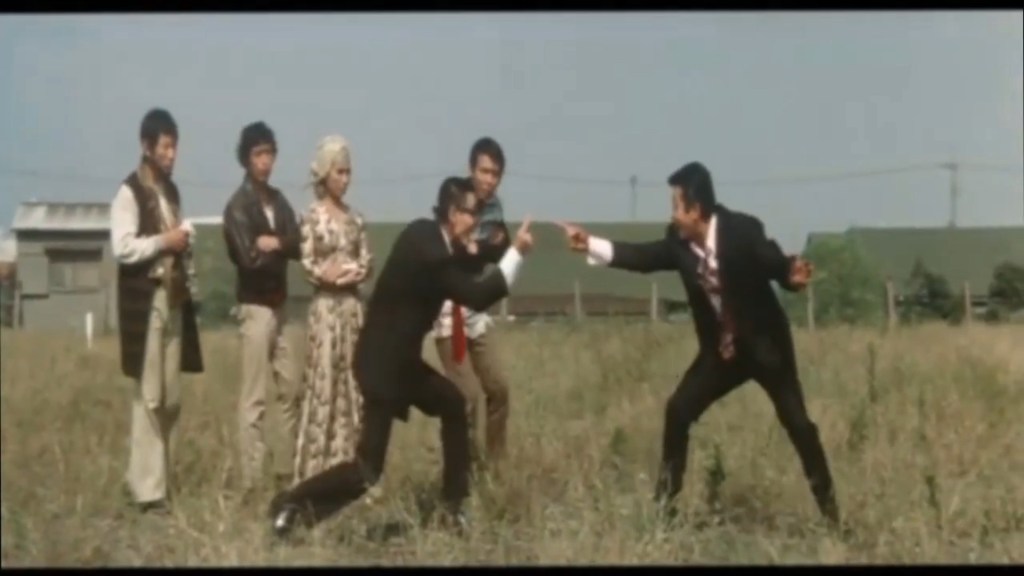
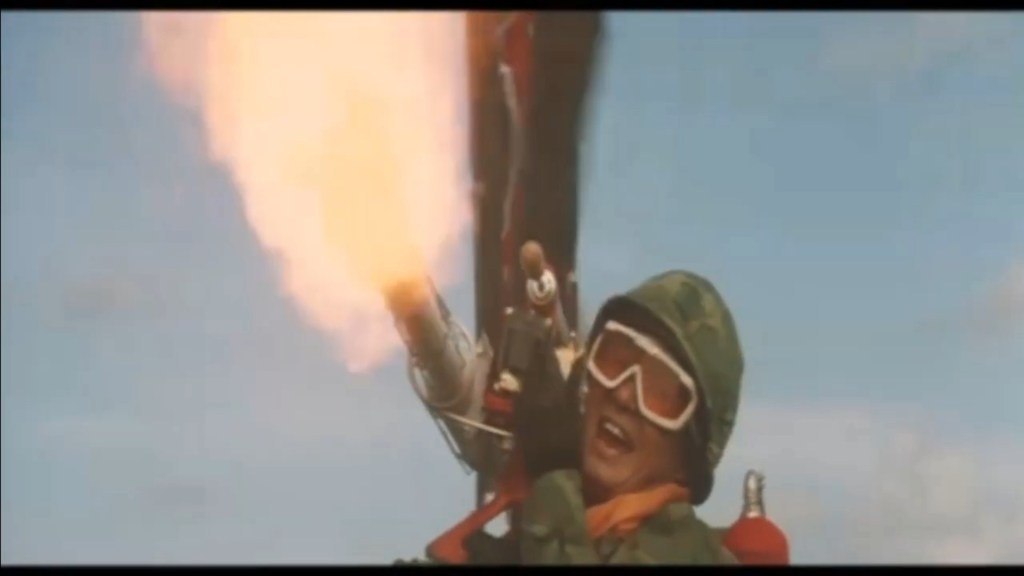
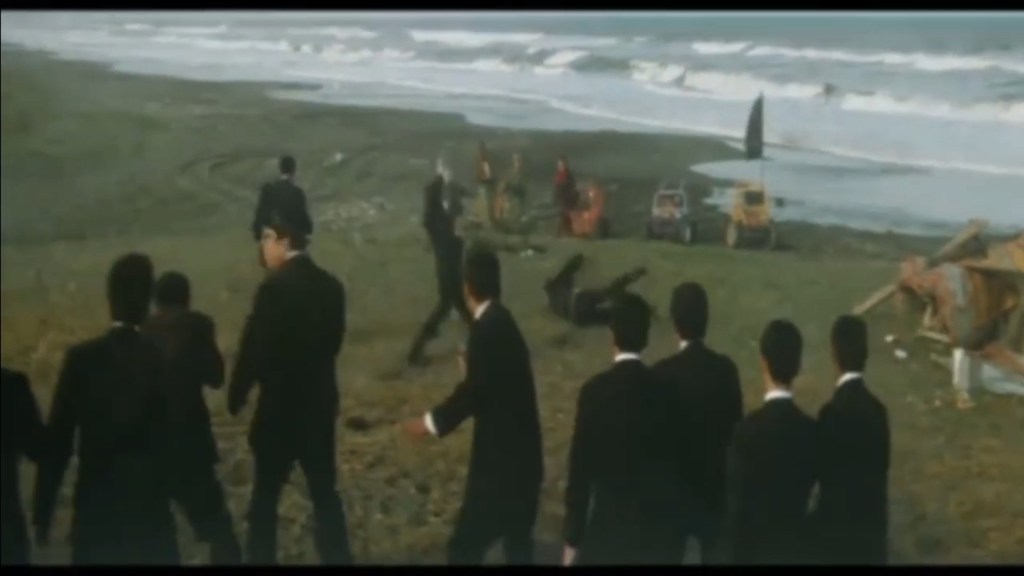
This will cost the lives of more than one member of the gang – like Katsu – in the end on the beach, including Magi, despite using her flamethrower and high-calibre weapons to defend herself from the yakuza who have been swindled by her actions and Daito Shoji. I said these films are unpredictable; you would never expect the degree of comedy in the story, or that there would be an angry scene in which a yakuza kills the faithful mastiff Taro for defending his master.
 Pantagruel´s liquor
Leave a comment