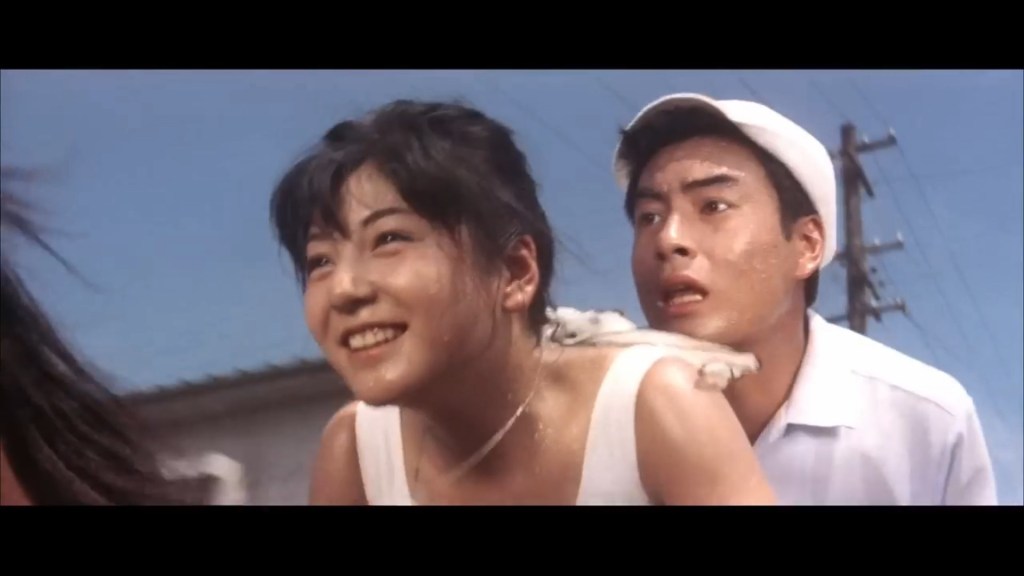
Bold and playful. Within the apparent triviality and even futility of the plot, with its student controversies inherent to adolescence, the film radiates a beautiful nostalgia for tentatively—but openly and cheerfully—exploring themes of the ‘new morality’ of post-war Japan, alluded to by the old school principal when he drinks beer with the young sensei Nanjo (0:47:37); themes that would become a source of social unrest a decade later in the 1970s, such as confronting patriarchal authority or even homosexuality (the rumour between Shimizu and the 30-year-old English teacher Orittsan), which was not prohibited in Japan but was not openly accepted due to moral conservatism.
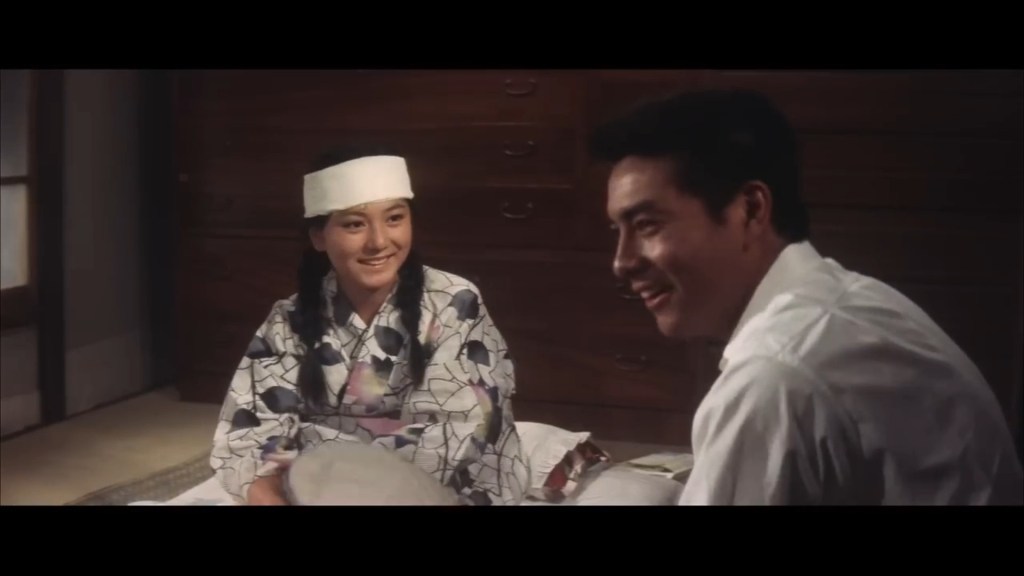
From the outset, Mr Nanjo, who is as irreverent as he appears, rather than actually being so, finds himself expressing his opinion in the staff room: ‘I’m afraid I’ll be more of a living teaching aid for the students.’ And he was not wrong. He starts off on the wrong foot in the parade when he participates with the students and injures student Chie Shimizu when she crashes into a pole. In the infirmary, apart from some amnesia, the girl literally wets herself in bed and dies of embarrassment, but Nanjo suggests going immediately to buy a pair of knickers to avoid embarrassing his student.
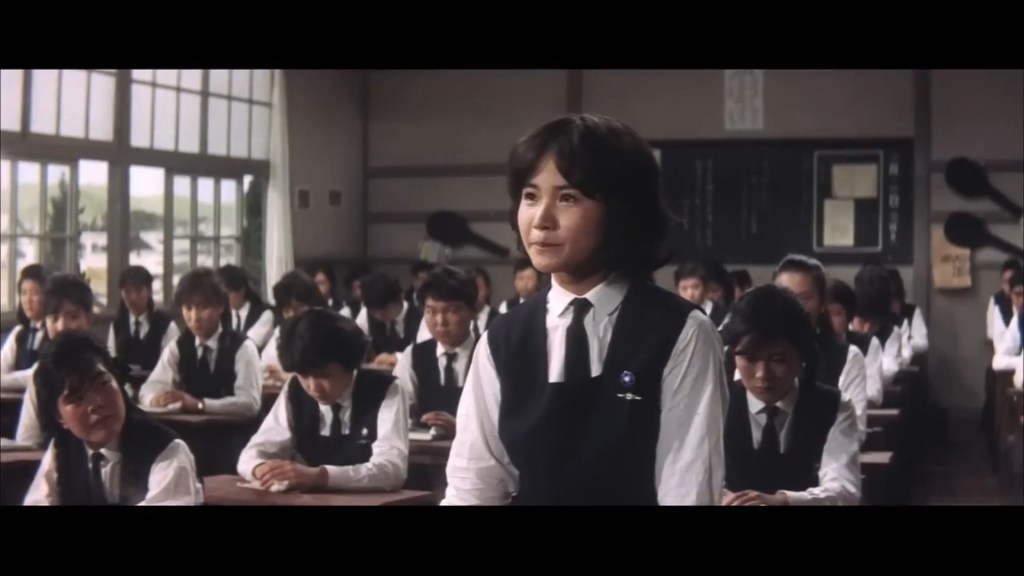
The problem is that the young people from the student newspaper, who had already photographed him because he was new and spread the word that he was a very handsome and young teacher, find out that a certain teacher Nanjo was seen buying women’s underwear, and slowly the rumour spreads. To make matters worse, Shimizu has rivals who bully her to compete for the new teacher’s ‘affection.’
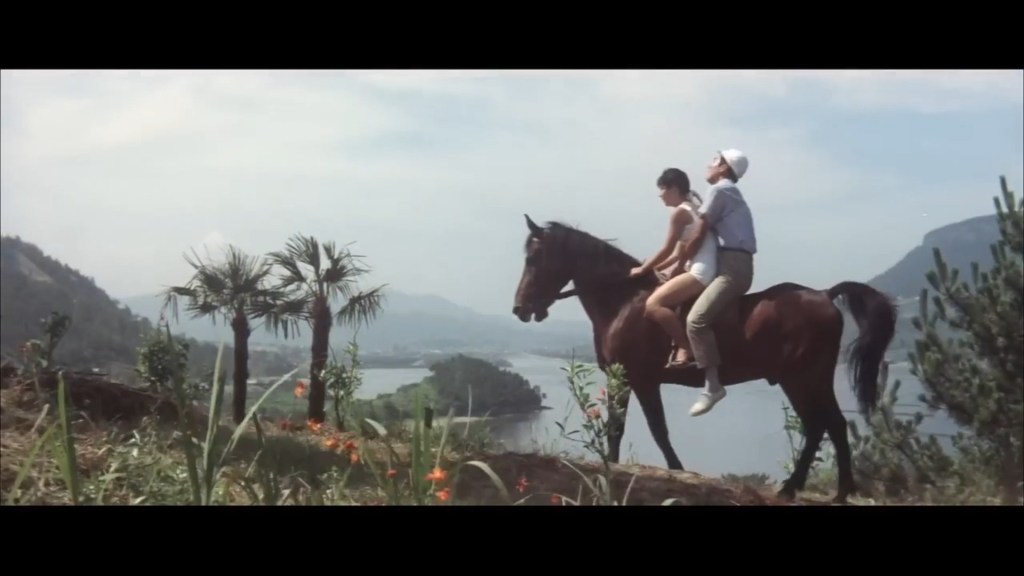
But things only get worse the next day at Seto’s open water swimming practice. It is not forbidden to watch the female students swim in swimsuits, but it is not considered appropriate for even a teacher to dive into the water to save a student from a possible cramp, and this earns him severe criticism. But the worst is yet to come when Shimizu suddenly misses class and her classmates find out that she is riding a horse. When Nanjo, concerned about Shimizu’s well-being, finds her, the young girl confesses that she plans to drop out of school. When Nanjo tells her that he is going to Tokyo, she begs him to take her with him because she loves him. In that discussion in front of the horse in a picturesque scene, Nanjo mounts Shimizu, and that was a big mistake because Shimizu is upset at being rejected by her teacher and, with the horse running wild, she crosses the school grounds under the suspicious gaze of teachers and students.
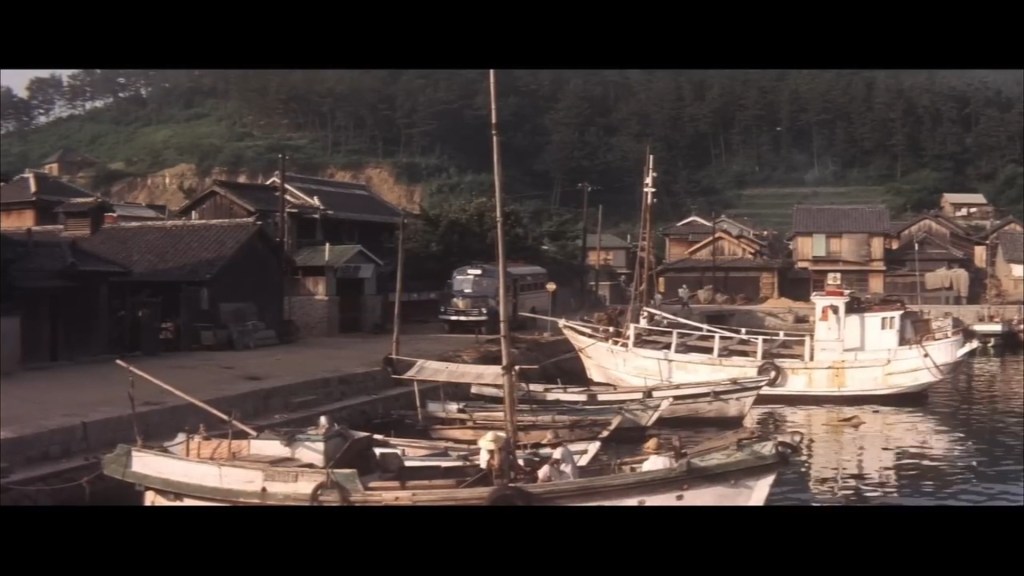
At a meeting, everyone votes to punish him, and the headmaster argues for expelling both the student and the teacher, perhaps jokingly; then the others realise that the punishment is too severe and he is given another chance, which the headmaster takes to advise him not to be so foolish as to mix his relationship with the student, even if it was only out of good intentions and not romance. At least, in the end, albeit in a bad way, Shimizu, although he claims to hate Nanjo, seems to understand that it was not possible to carry on with their crazy youthful love and he continues to praise the Seto Inland Sea, almost leaving for Tokyo but carrying the bay in his heart.
 Pantagruel´s liquor
Leave a comment