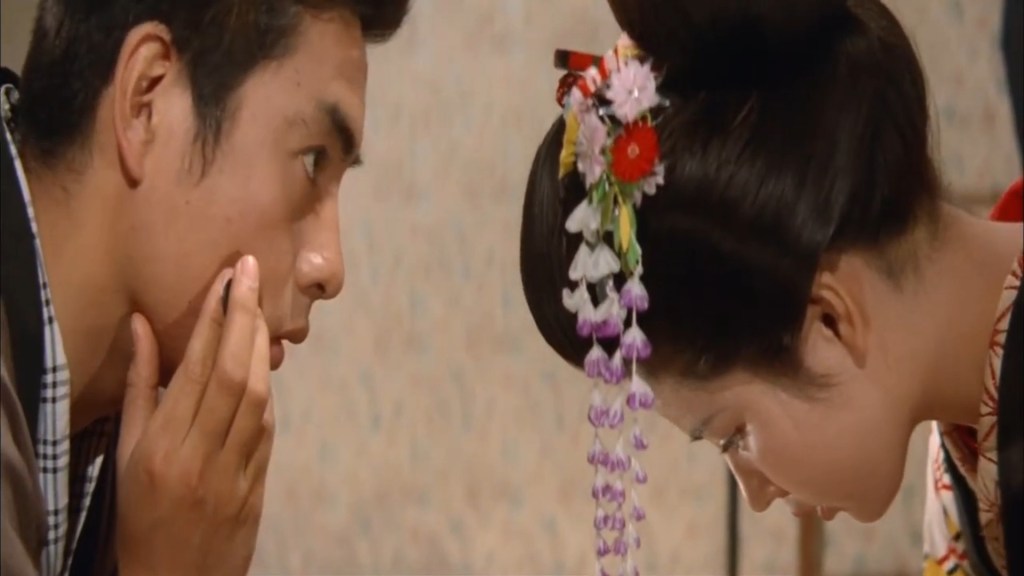
Onchi has created a gem that truly captivates the viewer and conveys the professor’s bucolic journey into the past, towards the autumnal landscapes of Amagi on his way to Izu in his youth. We perceive happiness as Kawabata has invited us to in many of his stories, as an ephemeral treasure kept from youthful memories, but we also see youthful illusion confronted with loneliness and the inability, in the very moment of living, to decide on what the young man in his twenties will probably realise 40 years later was a different existential attitude.
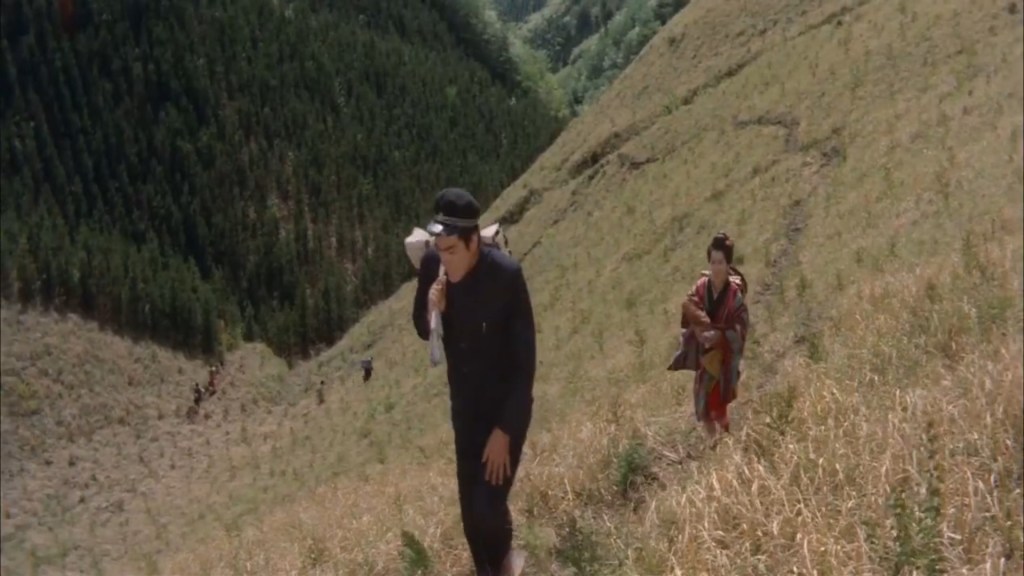
The memory comes to him when one of his students announces his marriage and the bride is a dancer. The sensei gives us an overview of his youth, and what memories! At times almost contemplative, we can smell the rain and hear the choirs of village children on the winding mountain road to Izu, the boy thinking about the cover of Yamaoka’s dancer, which he never sees, by the way.
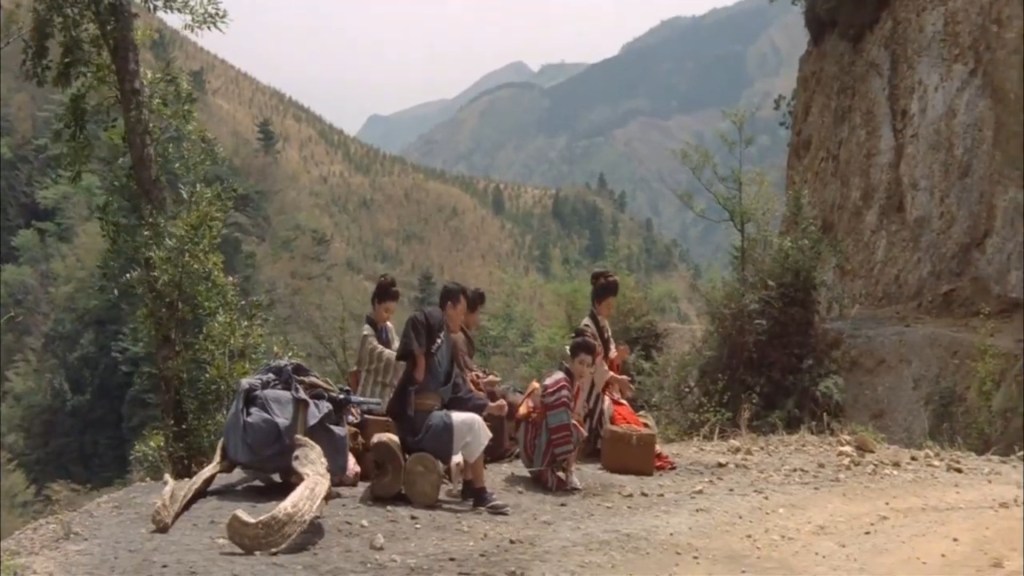
He takes shelter from the downpour in a tea house where a loving old woman treats him wonderfully and where he also meets the artists and itinerant performers from the island of Oshima. He had just sighed a moment earlier for the dancer on the cover, and now he is transfixed by Kaoru. When the rain stops, he continues on his way and is surprised to find that the musicians are also on the same path and gradually exchange words until they reach the Yugano baths.
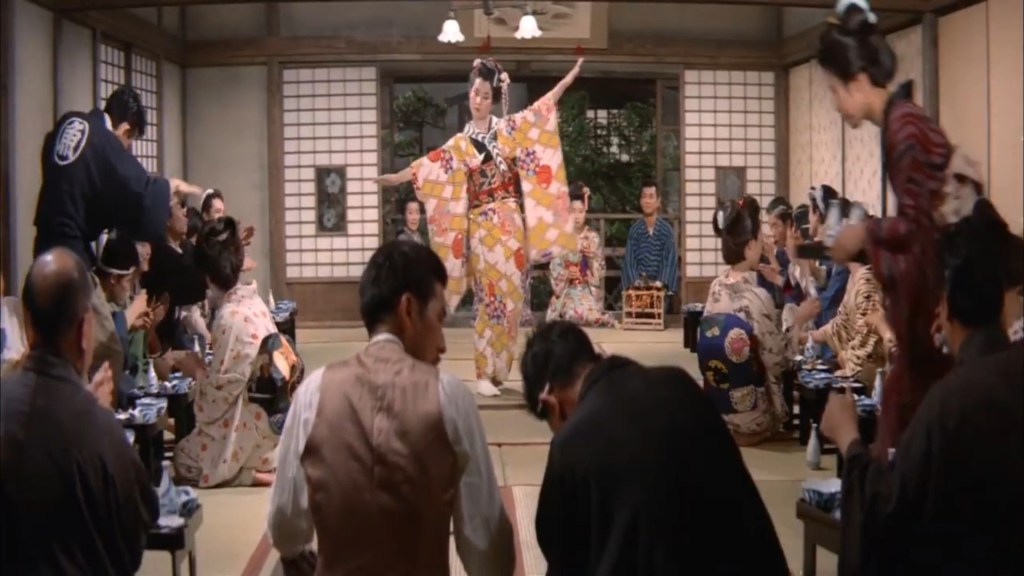
In fact, Onchi recreates, albeit with a medium shot, the part of Kawabata’s story in which Kaoru is so childish (still a little girl, says her brother Eikichi) and so immature that, without caring that she is naked, she cannot help but smile and shout from afar at the student (the sensei who reminds her of her adolescence). Obviously, Onchi takes some narrative licence to add the part about the geisha, who is also there and who, one could say, causes the girl Kaoru to lose her innocence when she sees her fainting from exhaustion and devoting herself to serving old men for a living.
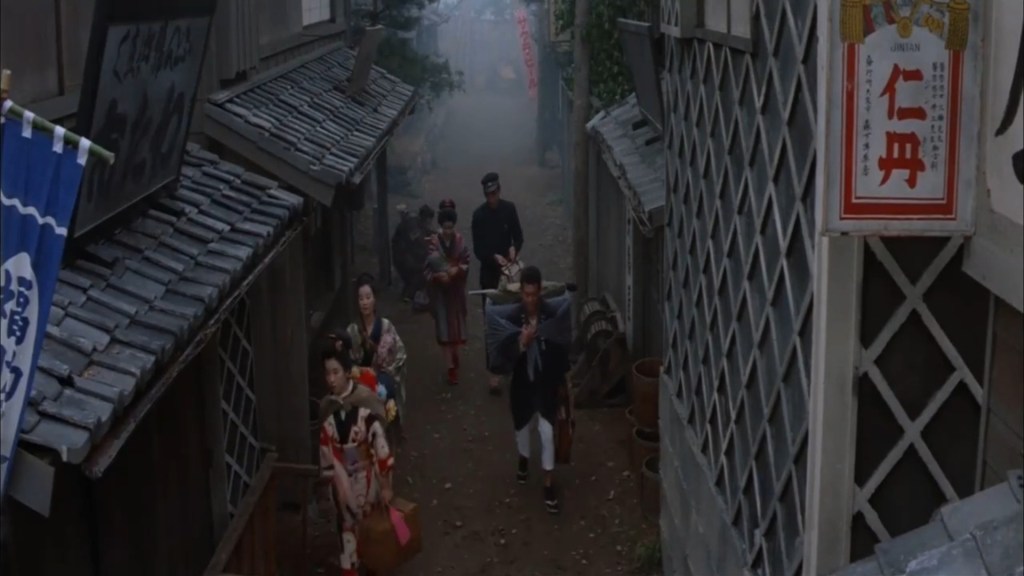
‘The old man from the Tsuru house wants to see you again tonight,’ they tell her, leaving Kaoru perplexed. The trip to Shinoda is postponed for a day because the artists still owe the landlady for their lodging. The epiphanic moment in the public baths serves as a revelation: when the student protagonist realises that the dancer is just an innocent girl, he experiences a spiritual liberation that manifests itself in his spontaneous laughter. This recognition of pure innocence gives him ‘ineffable comfort’ and allows him to see himself as ‘a good person in the ordinary, human sense of the word.’ In fact, in Kawabata’s story, the student recalls that he had promised himself to ask the girl for the comb.
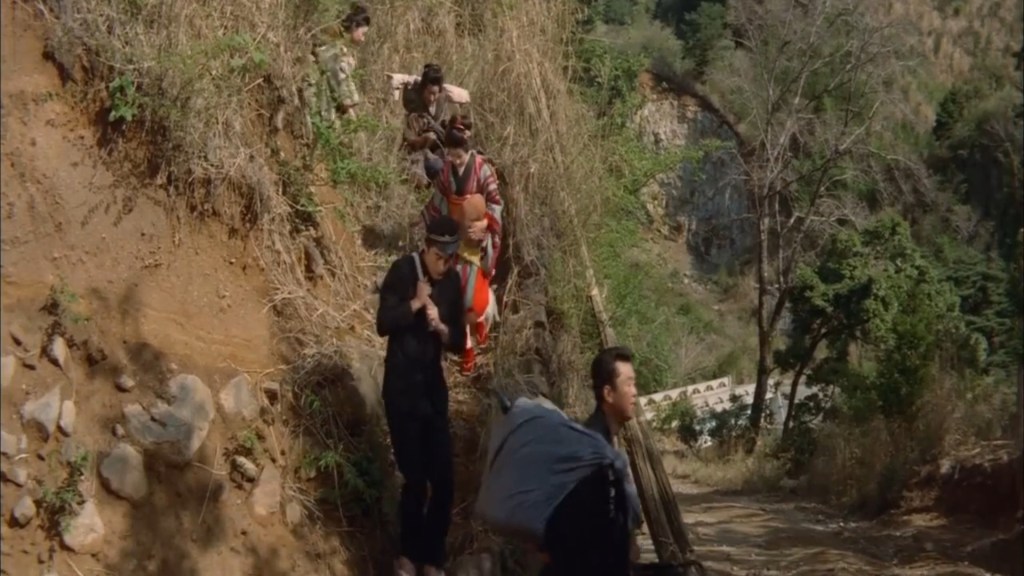
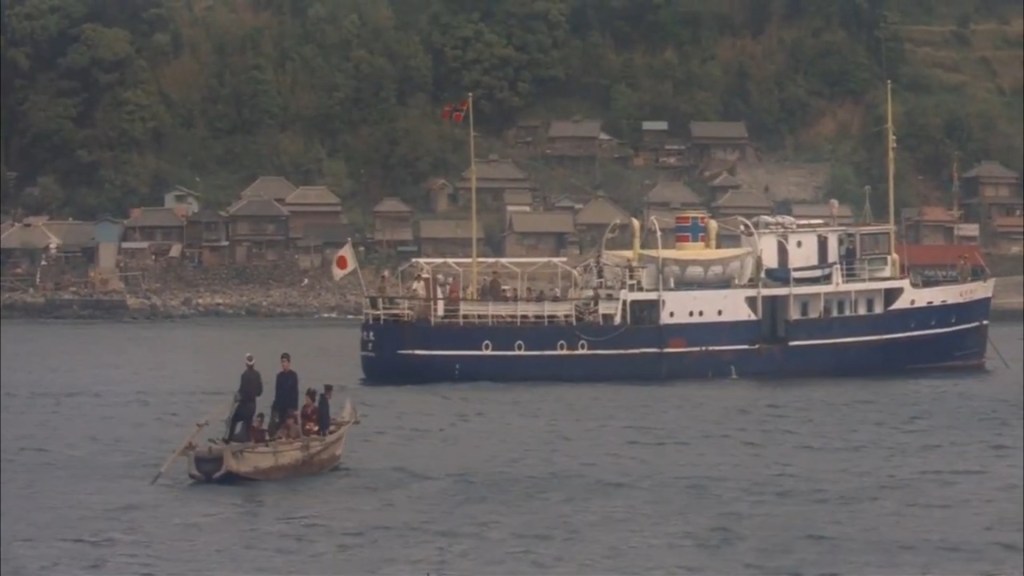
There was no longer any opportunity to do so, because when he arrived in Shinoda, his brother and the other artists had work to do and made it impossible for Kaoru to go out at night. This slightly upset the still immature student, and he said that he would leave for Tokyo the next day by boat, saying goodbye to everyone except Kaoru, who was upset and hid in her room.The philosophical core of the story ‘The Izu Dancer’ lies in the exploration of existential loneliness and the search for authentic human connection because in the story, the protagonist confesses to having lived ‘tormented by his withdrawn and lonely character’ and to having embarked on the trip to Izu when he ‘could no longer bear the oppression of his melancholy.’ Surely that memory, seeing Kaoru wave goodbye to him at the pier and running with the rain, alleviated that state of mind, at least enough to remember it 40 years later. Beautiful work.
 Pantagruel´s liquor
Leave a comment