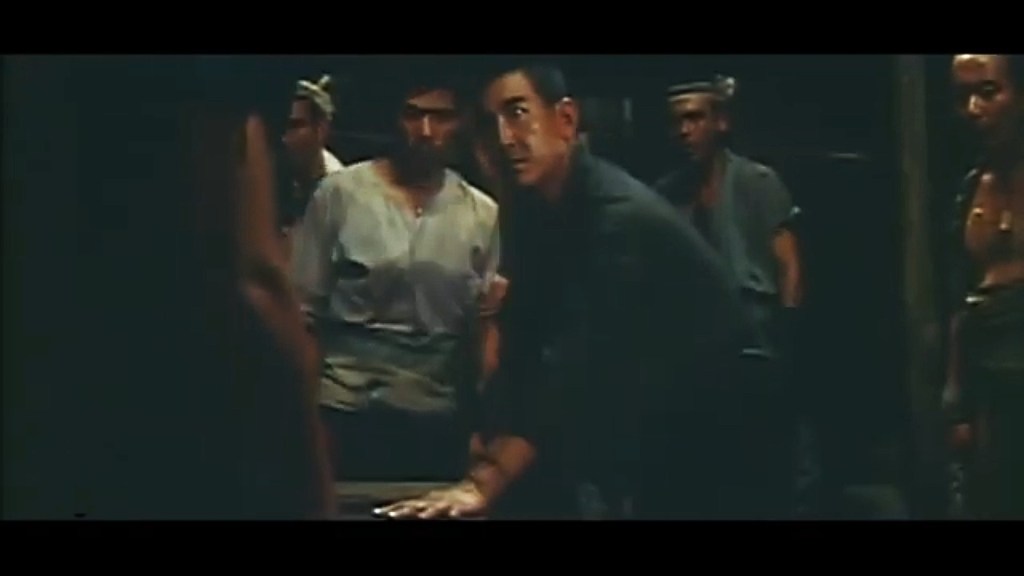
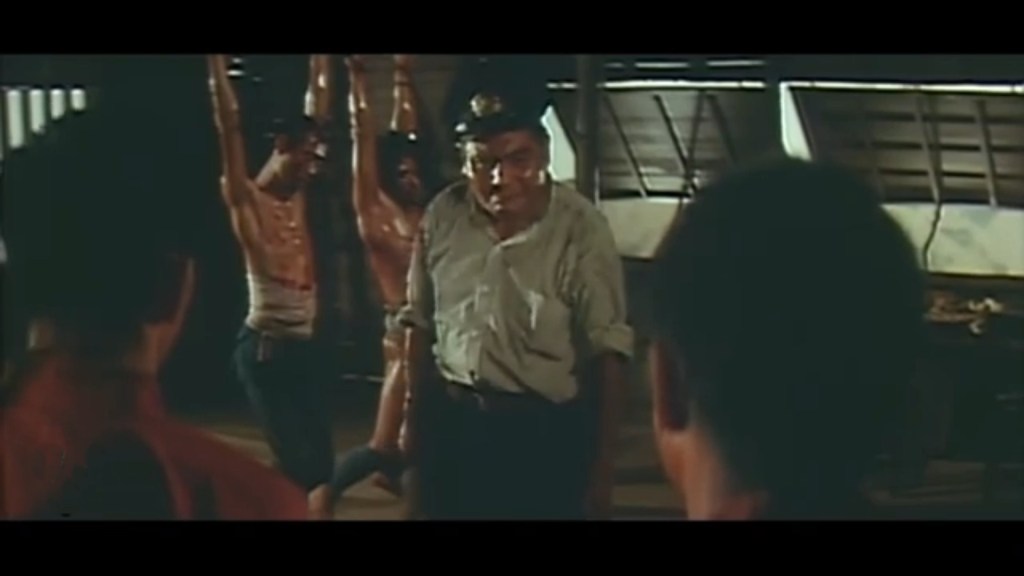
Kiyoshi Saeki blends a superb docudrama into a suffocating plot; on the one hand, the real hell of the Sado mines during the Meiji era, such as the Sōdayū Mining Tunnel and sites like Dōyū, where the miners, most of whom were ex-convicts, either faced the extreme and cruel environment of the island or died trying to escape or due to punitive beatings; and on the other, the fiction of an emblematic figure such as Yamashira Shiraha no Denji, ‘the one with the unsheathed sword (ready to fight),’ who emerges from the inevitable breeding ground of quarrels, desolation and misery between the Kikunoi and Goju factions.
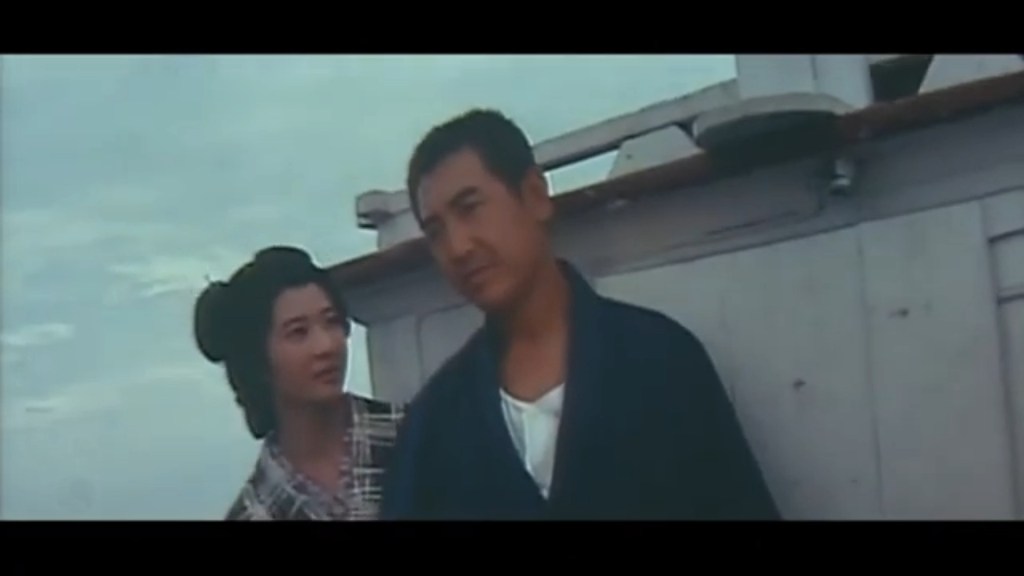
Tsuruta’s character, Kiku-san, has already intervened to prevent the island’s guard from killing those who opposed the beating to death of two fools who failed to escape from the site. Later, he opposes Igarashi, the leader of the other side, to prevent one of his men from killing him in a senseless fight. The film is wonderful because it lays bare the human vices of the workers crammed onto the island, portraying them in the flesh without forgetting that they are ex-yakuza, gamblers, murderers, one for robbery and assault, another for homicide, one with eight convictions, and so on.
Let’s look at Kenpai with his inseparable friend, trying to cheat at the casino run by Igarashi, who unfortunately discovers him and is about to kill him. Kiku-san intervenes and exchanges the punishment for the cheater, offering his own hand for torture, which is mercilessly crushed with a metal bar. That was Kiku-san, he despised spilling blood foolishly, and if it happened in the end, it was because Kioka, corrupt as he was, intended to trample on the rights of the Hori family, regardless of the death of the young man, which Igarashi always regretted.

But fate had a different relationship in store for Kiku-san and Igarashi, because Osue-san, the landlady, had already openly declared her love for Kiku-san, and he warned her that he was only a yakuza. ‘Don’t you mind loving a yakuza?’
And so they remained even after the collapse in the hellish cave, where Igarashi backed Kiku-san and then offered apologies to him and the deceased. Igarashi tried to make the corrupt Kioka understand, despite treating him like a loyal brother. It’s a shame that such an intense work hasn’t been restored, especially the final scenes, which set aside the docu-drama of the gold mines and return to the ninkyō eiga genre. Kiku-san almost dies when his sword is broken by his opponent, but the refrpan says that justice is lame, but it arrives.

 Pantagruel´s liquor
Leave a comment