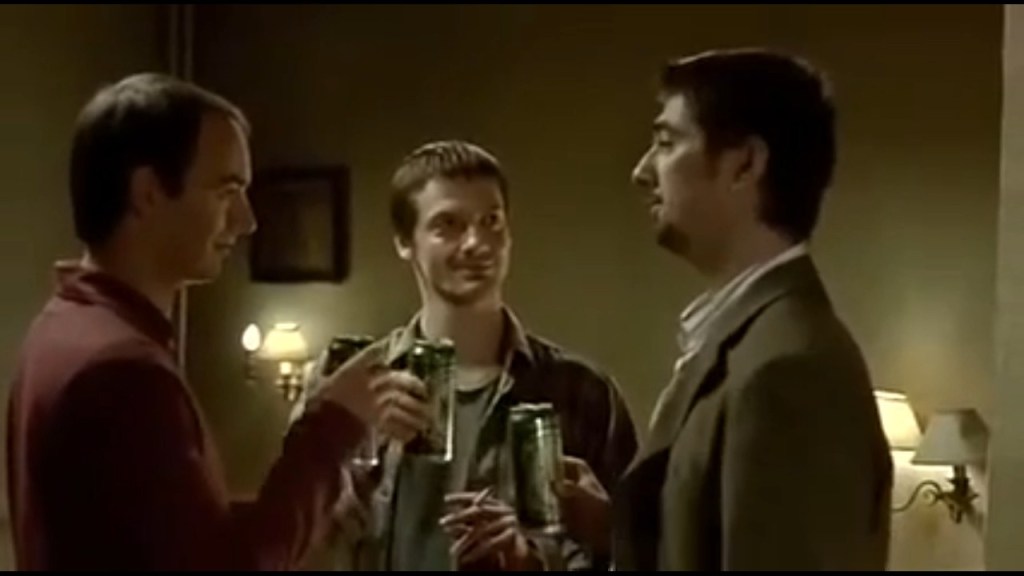
A raw exploration; I correct myself, a brutal exploration of the disillusionment of a post-socialist Balkan society in which passive-aggressive specimens swarm around, driven by resentment, such as Professor Rasha, misfits such as his alcoholic father who kicks him out of the house every day and won’t even let him take a shit, or the obviously sick, suffering from mental illness, such as Igor, who repeats the Gospels, with the daily need to consume an entire pharmacy to stabilise his disorder, but in any case, characters representing a common denominator of capitalist uncertainty. Perhaps an excuse is needed, like these stories, to laugh at tragedy. However, in laughter there is a risk of losing one’s frame of reference; the joke as a defence mechanism may no longer be a matter of cheerful sanity in the face of misfortune, but rather madness due to a powerlessness towards the future. A man of 30 or more—like Ivan—dedicated to reading the Gospels and, in fact, talking about sin to his friend Rasha in his own apartment, just when Milica, a student and Rasha’s lover, arrives, kisses him and lavishes caresses on her mentor. is diabolically cruel for any preacher—even if he is not a confessed one—“the slavery of sin has become a habit”, phew. Ivan arrives home and finds his mother alienated in front of the TV watching something strange that very few human beings could ignore, even if they call it something else; the mother, I mean, is a living carbon copy of Sara Goldfarb from Selby’s Requiem for a Dream.
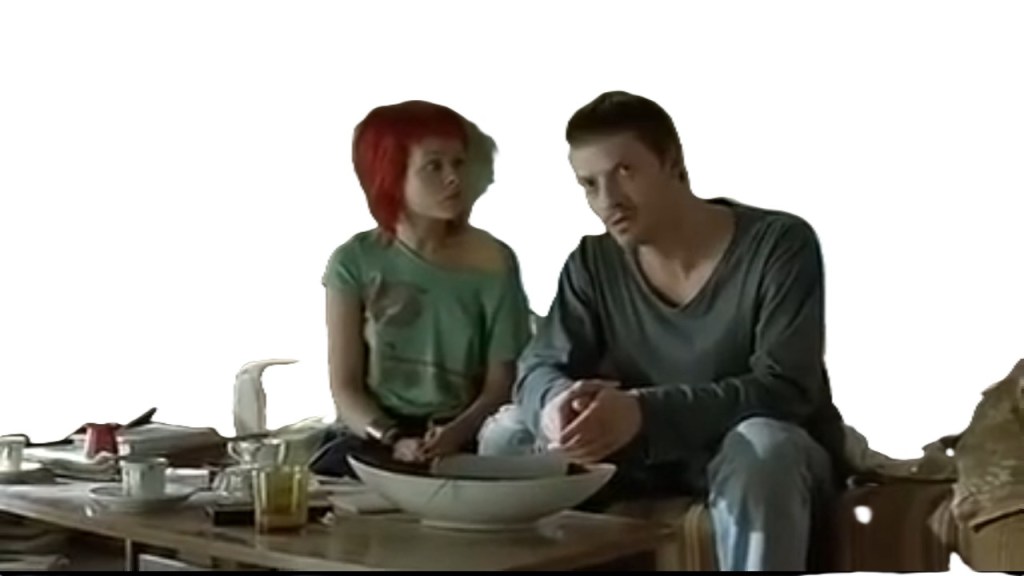
What good will it do Ivan to quote Nil Sorski and his spiritual translation of the eight deadly sins in order to get along with a teacher who represents the opposite of his ideas, and whose student and lover places her hand in his so he can feel that she is wet, and then asks his sensei to rethink Hamlet, comfortably settled on top of each other on the cramped sofa, before Milica plays a home video of her mother and “boyfriend” having sex? On the radio programme hosted by Rasha, we glimpse the personality I pointed out in the young man, not allowing the author of the book Prisoner of the Tribe to speak without making risky comparisons between the former Yugoslavia and the Germans, or the role of dandy that Serbia and the Slavic countries have played for Europe despite their ethnic importance.
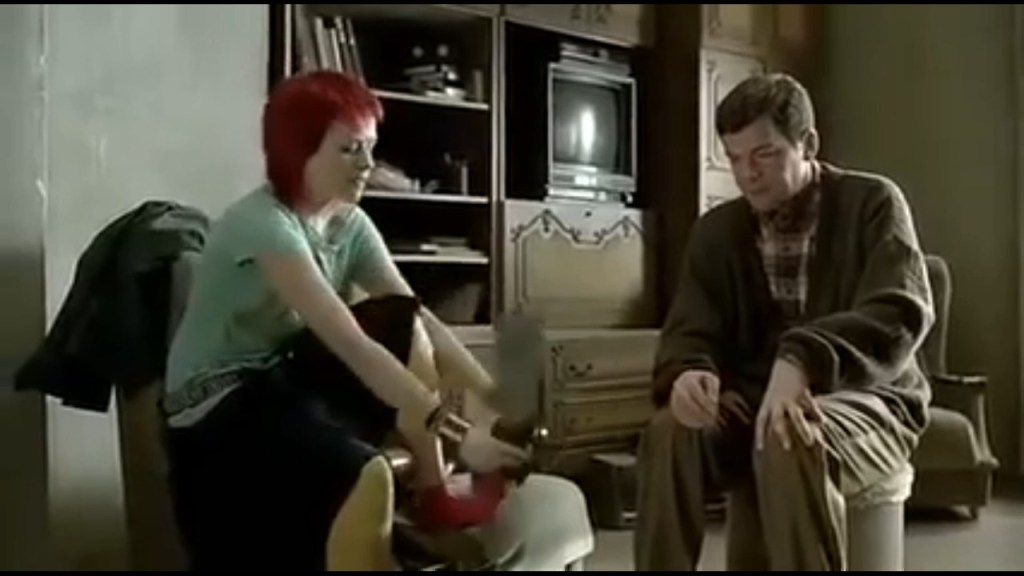
But something unclear becomes evident (although it may sound contradictory) when Ivan, with all the medication he has to take and his kind of mental retardation, is the least affected from an aggressive or violent point of view: as if he had blocked himself off, Ivan, despite his mental deterioration, maintains a constant spiritual search. His journey includes yoga, Kabbalah and finally Orthodox Christianity: ‘Three years ago I was baptised in the Orthodox Church’. His philosophy is summed up in the quote he mentions: ‘Saint Anthony the Great says: “Within ourselves we should think that we cannot wait even for the end of the day.”’ When Ivan looks out the window, his mind seems to dissipate with the musicality of the piano in Andrei Ivanovich’s Rondo in A minor, played by his young and beautiful neighbour. Ivan’s spiritual quest contrasts dramatically with the harsh reality of his drug addiction. But there are characters like Chicayolko, Rasha’s father, who has been deranged since the metal factory where he worked closed down, as I mentioned. He treats his son with disdain, even when he enters the bathroom, but when he runs into Igor, who has just returned from Huddersfield, England, he treats the young man with kindness and even flattery, regardless of how drunk he is. I will skip over Milica, who immediately tries to flirt with Rasha’s friend when he returns from abroad, so we finally have Igor arriving in his homeland after 11 years. Igor, who lived in England, is confronted with the reality that capitalism does not offer the promised solutions: ‘There’s no way God the Father won’t call you back after all that shit.’ His material success contrasts with his emotional emptiness and nostalgia for lost ties. First they talk about another friend from their generation, Keva, who ran away with Rasha’s sister, then they argue and argue, later they eat on the street and review the youth group: one, Pinter, is in prison, another, Kajsvic, died in Kosovo, and so on until he accidentally stains his friend’s shirt with ketchup and at home they continue arguing about whether neoliberalism is hidden behind employment at Nestlé or his friend’s chocolates and why Rasha prefers to continue with a few hours on the radio and the mediocrity of his homeland, without accepting Igor’s invitation to leave with him. Igor, about to marry a Polish woman, is no less confused than they are, but he fights on. The ending mocks Ivan and Milica until she leaves with her mother’s porn cassette. In the morning, Ivan visits Rasha as usual, but this time, it seems that there may be hope in the silence that he had sworn would always remain.

 Pantagruel´s liquor
Leave a comment