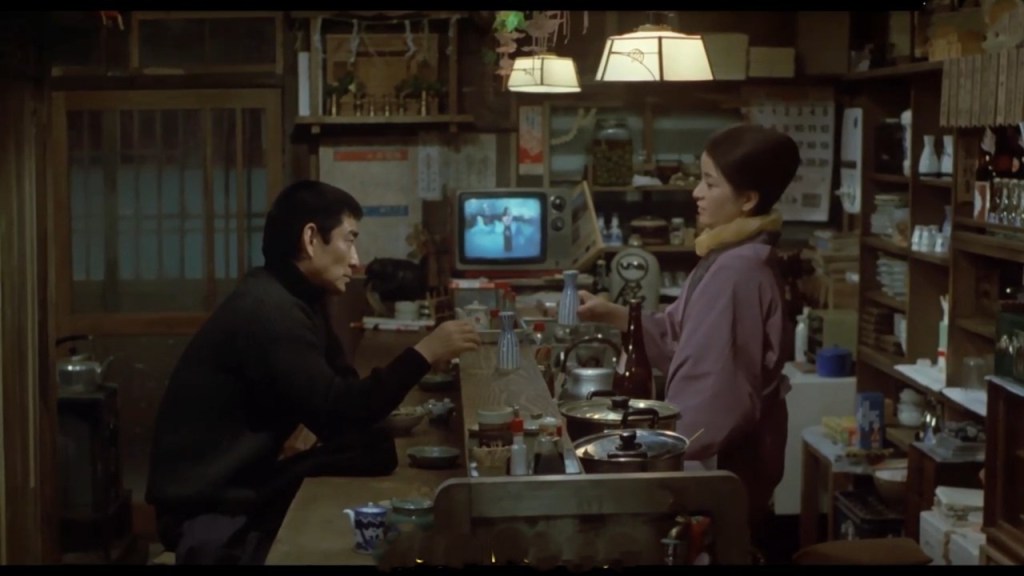
Sartrean ‘bad faith’ (mauvaise foi) in Furuhata. When existential subtleties and deviations from the course of life caused by personal decisions spontaneously take centre stage in a plot, as happens to police officer Eiji Mikami, loneliness and nostalgia have served as a costly and harsh lesson in self-deception. It also means that a film like 駅 ‘Station’ comes closer to achieving the unusual miracle of closely resembling real life outside the work. This is the treasure that is discovered within a film whose police theme and relevance as the character’s profession slowly fades (even confirmed in the form of habit and routine in the face of the inability to turn back), not only through the years in the story, but also in the eyes of the viewer. As can be seen a couple of years later in the former baseball player in ‘Choji Snack Bar’ (1983), Furuhata was mortified by the delicate thread on which dreams based on successes that animate and materialise the fragile present hang, but which crumble in an instant due to an event (an injury to the baseball player there, the Olympic Games and the murder of his boss and friend AIba, and then a change of coach in the shooting team here). Mikami is comfortable with his loneliness and pain. Sartre would say that he denies his freedom, although not in an obvious way, but rather as a mechanism that is not uncommon in today’s societies.
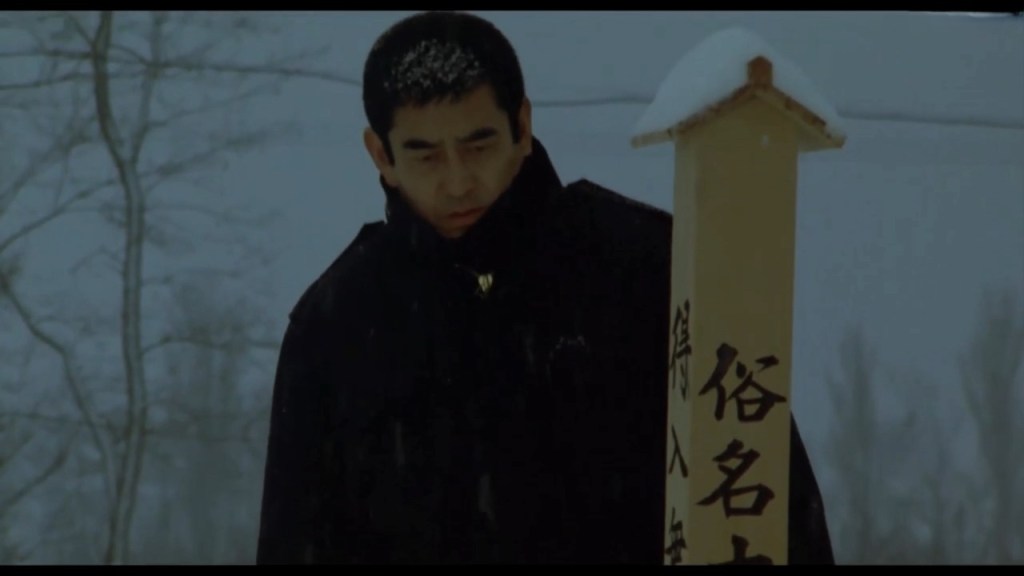
The character takes refuge in his role as a police officer and justifies his personal sacrifices and the pain of his decisions (such as distancing himself from his family—his wife and son—and the violence inherent in his work) as inevitable or imposed by his vocation and circumstances. Mikami seems to accept his loneliness and suffering as the price of his duty, evading the existential responsibility that he could have chosen otherwise or, at least, that it is he who defines the meaning of his life and not the shooting competition in the Olympic Games, nor the serial killer he will continue to pursue in the three stages of his life covered in the film: 1968, 1976 and 1979. By dint of pursuing criminals, he ends up hunting ghosts.
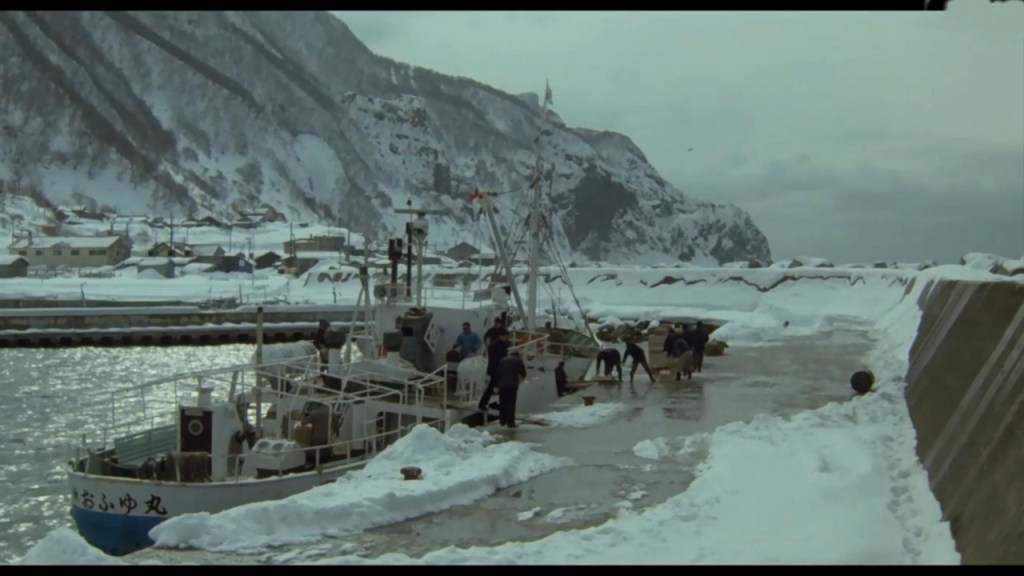
See his obsession in the Kazimache tavern and specifically with Suziko to catch her criminal brother. He finally succeeds, but in the meantime he is haunted by remorse for his now grown-up son. But whether in his endearing Ofuyu, in the violent moments when he is the protagonist of his profession, as in 1976 in the hostage-taking by Ryosuke when he himself feels that he is ‘a killer cop’ repeated by the mother of the slain criminal, and later in 1979 when he receives a letter from Goro Yoshimatsu from prison, prior to his execution.
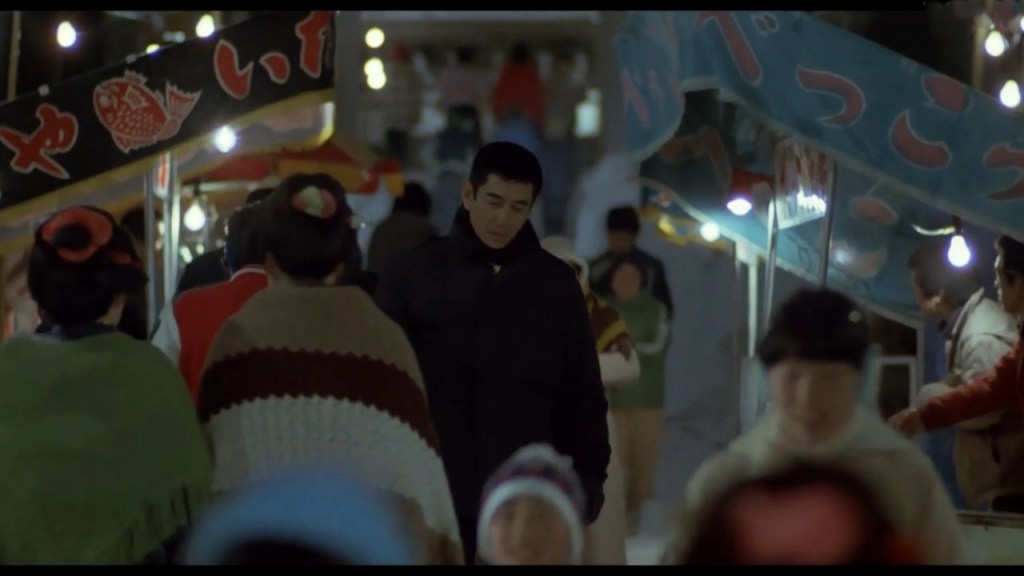
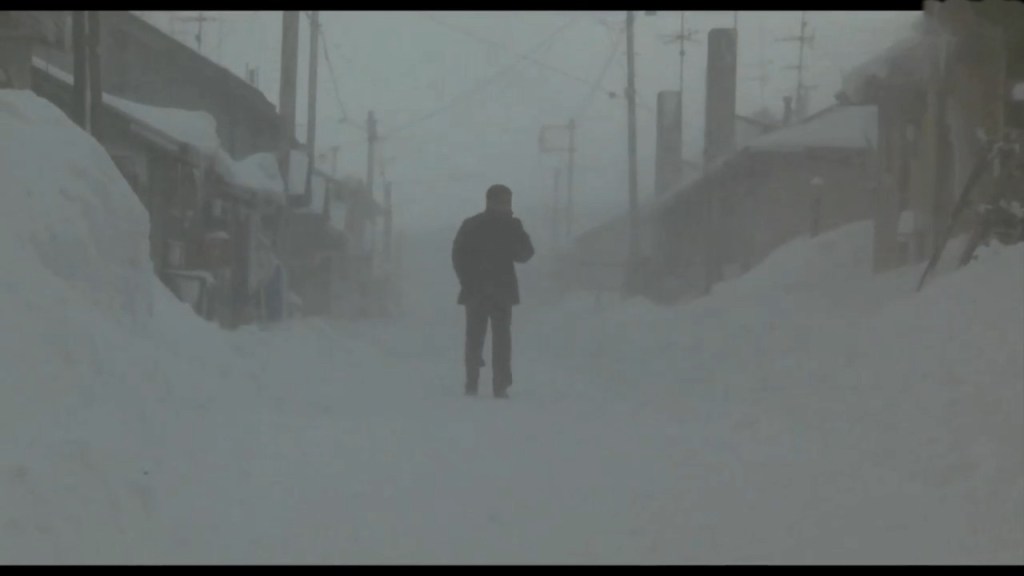
Does bringing flowers to the cold grave of the condemned man calm his spirit? How far can his bad faith go, or rather, how many decisions he has made will accumulate in his present? How many choices will be necessary to show him that much of what he sees is not the result of the events that happened to him but of his reactions to those events? Perhaps his regret, although unspoken, is visible when the turning point in the story occurs, when he has to stay in the village longer than he expected and, due to the cold weather and the New Year, he meets the bar manager and barista Kiriko. Everything seems to be going well, he, originally from Ofuyu, she, from Utanobori. They share a philosophy of cutting their veins to the delightful music sung by Aki Yahiro. She talks about suicide at the end and beginning of the year, while he remains silent, thinking about how his sister married without love and how he himself drove his family away. He begins to let his guard down and think that it is no longer so much fun to eat his katsudon alone, and he begins to entertain the idea of something he would never have believed possible: leaving the police force. He weighs up the pros and cons and, for the first time, wonders whether he should give up being a police officer because he is so exhausted from continuing in the role. Does he regret it? Is he sincere? We don’t know, but a feeling seems to grow for him. His regret is not entirely genuine if he experiences it as something imposed by fate or by the role he has been given to play, rather than recognising that it is the result of his own free choices. When he decides to quit, having already drawn up the document and even confided his decision to his close friends, once again, a subtle detail changes everything. In the end, his fate was not determined by his reaction to finding the suspicious Morioka at Kiriko’s house. He shot him, but what happens next shows that his Sartrean bad faith has been left behind and he is trying to rekindle with Kiriko what made them both so hopeful at the end of the year. Only this time it was Kiriko who chose bad faith, the huge rock that Sartre points out halfway down the road and the return home, instead of turning around or looking for another way. Mikami breaks his resignation and the ending is once again a train station. Transience.
 Pantagruel´s liquor
Leave a comment