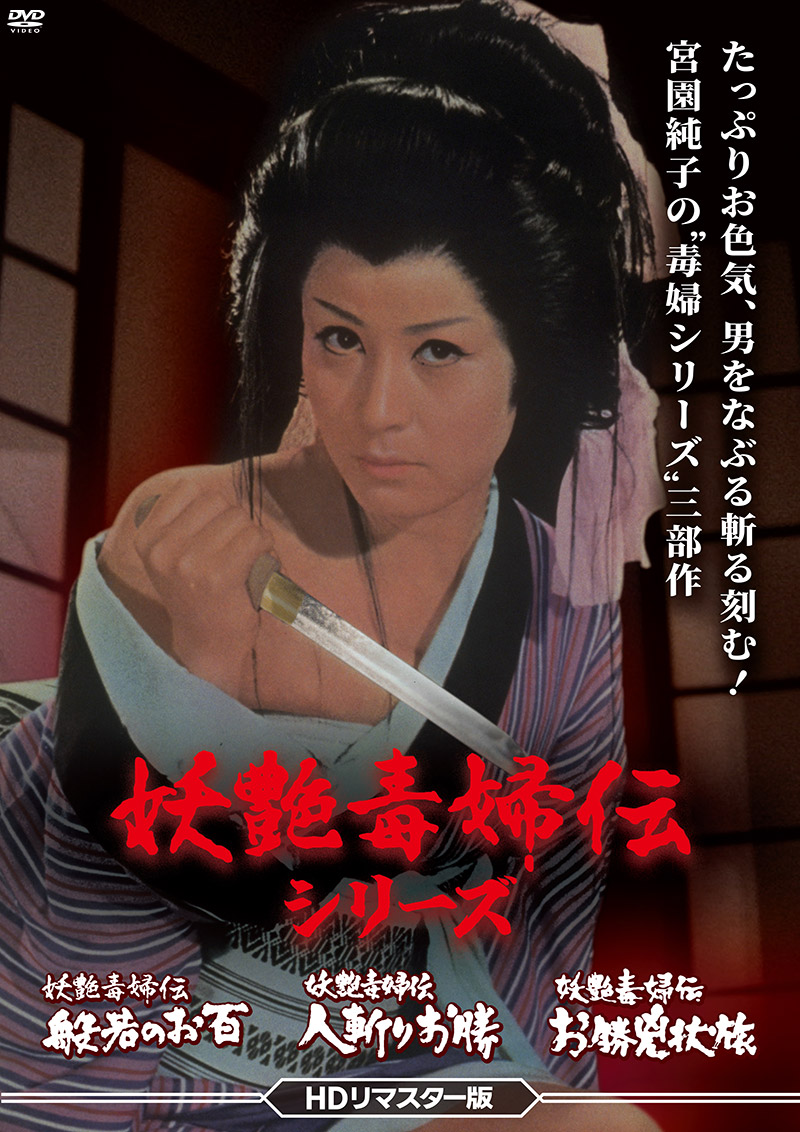
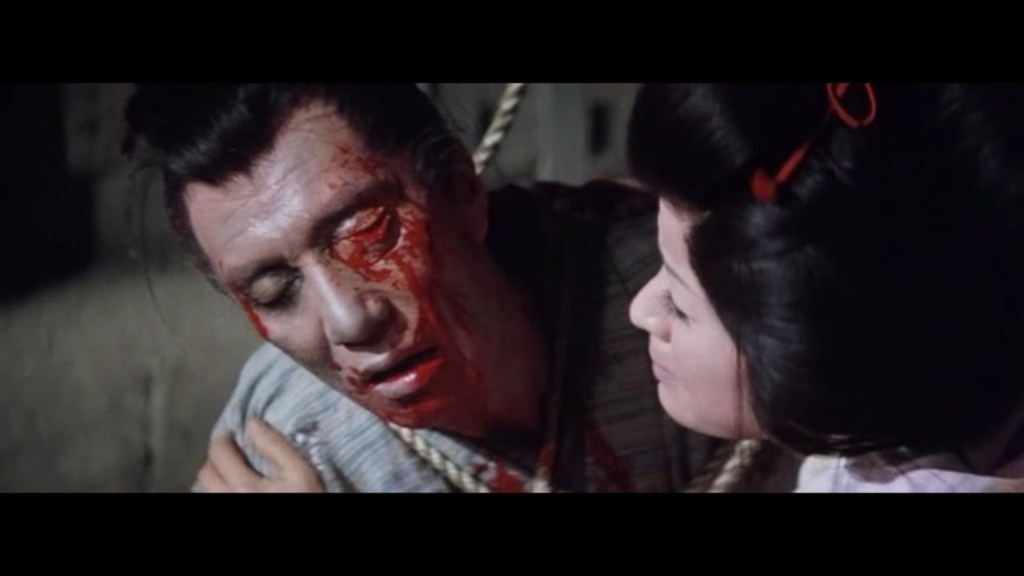
When adrenaline forces Okatsu to take off her kimono, you could say that the sword takes on an amusing figurative feminism that is unusual in this film, which not only has its fair share of gore—when her father’s eye is gouged out—but also eroticism—when the heroine loses her virginity to Shiokazi, the scoundrel who will pay dearly for his depraved crime. The beautiful girl has to defend her honour, but above all the debts of her brother Rintaro, who was only 2 mg short of inheritance to be born with mental retardation. Thanks to this silly young man, myths are destroyed, as Father Makabe Sensei plans to leave control of the Dojo to a woman, his daughter Okatsu, and not to his good-for-nothing only son, who spends his time womanising, although lately only with Saki.
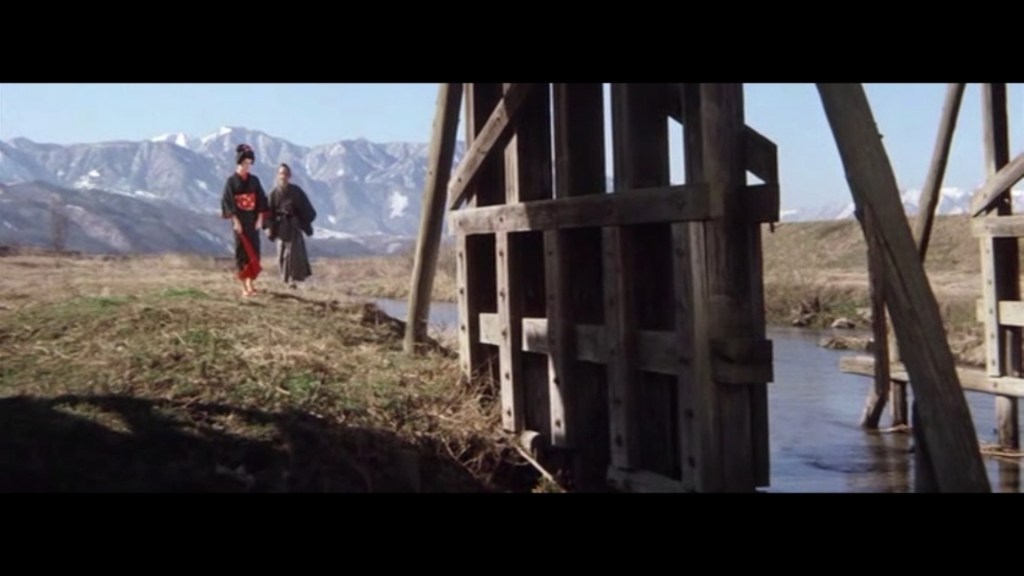
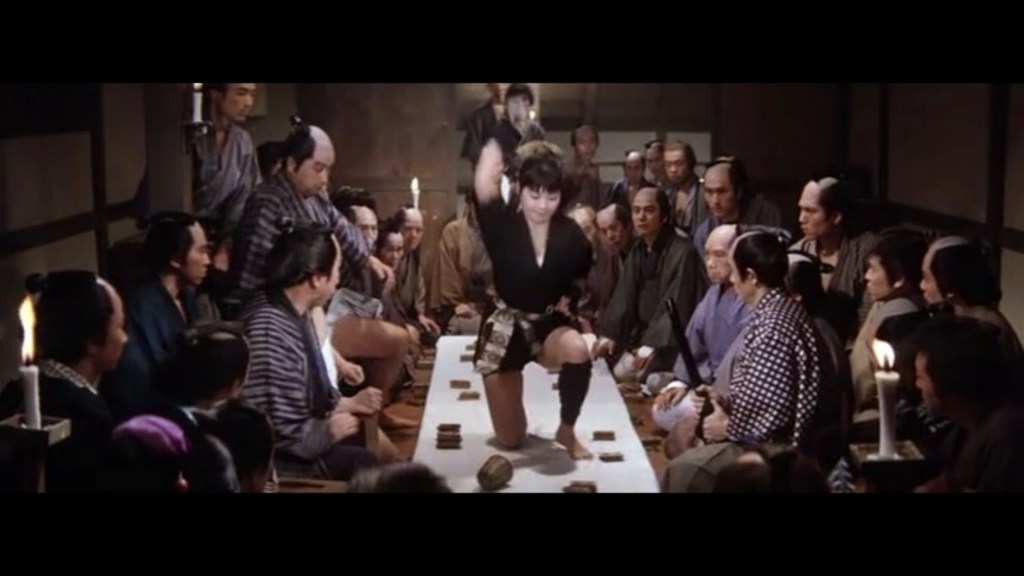
We soon learn that Rintaro has got Saki pregnant and decides to run away from home to get married, a bad decision because he has no money and is tricked into going to gambling dens and card games, where he loses everything, even his trousers. When Makabe’s enemies, including his envious assistant, take Rintaro hostage, Okatsu rushes to rescue him, and thus begins the dialectical struggle of this plot, the dialectic of values and anti-values of the old samurai tradition comes to a head: tradition dictates that a man must take charge of the dojo, but he is a good-for-nothing, anti-tradition;}
Rintaro gets a girl pregnant and leaves; Okatsu’s father, Sensei Makabe, gives himself up in exchange for Okatsu; in any case, Rintaro cannot get the money for the wedding and bets everything and loses; secondly, Okatsu cannot free her brother, nor can her father free Okatsu in exchange; thirdly, her father is tortured, has an eye gouged out and is beaten up, and Shiokazi does not free his daughter, but instead sexually abuses her in a despicable manner. What happens next?
The only thing missing was for the moron Rintaro to take refuge with the ambitious and greedy Okiwa and her husband Jikuro, who literally stabbed him in the back.
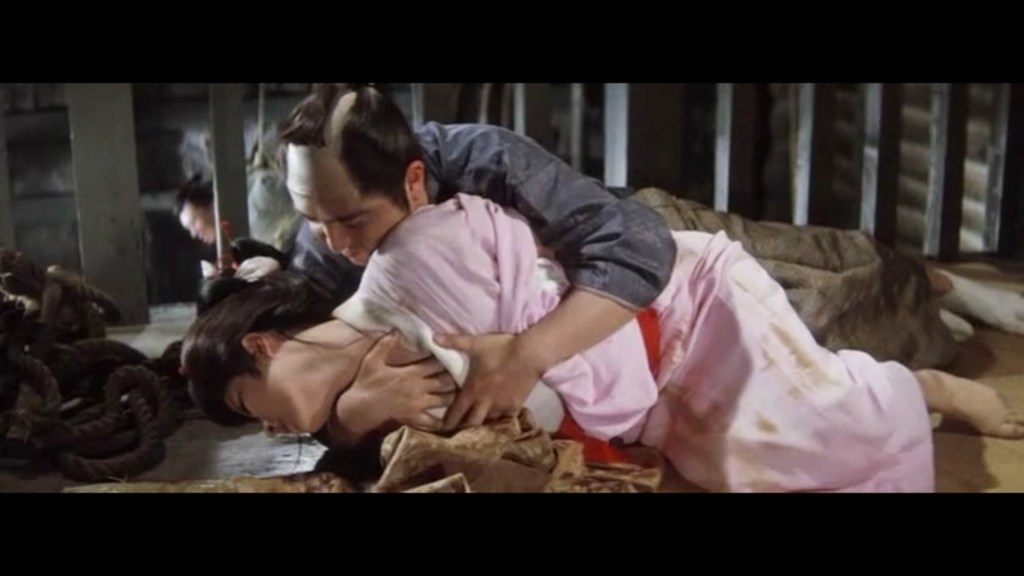
Rintaro dies rolling down the hill after being stabbed, while Okatsu escapes Shiokazi’s henchmen with the help of the swordswoman Rui. She heads to Edo to avenge her father. But first she must avenge her brother by taking care of Okiwa and her husband, but that won’t happen before she trusts them and drinks the tea to put her to sleep. Beyond the violence—whether justified or not—for the betrayal of her father and her rape, Okatsu must make everyone involved in the downfall of her clan pay, even though she herself was adopted and not Rintaro’s biological daughter. The curious thing is when a bounty hunter played by Tomisaburo Wakayama appears and, armed with a revolver as well as a sword, dispels the crowd intent on capturing Okatsu.
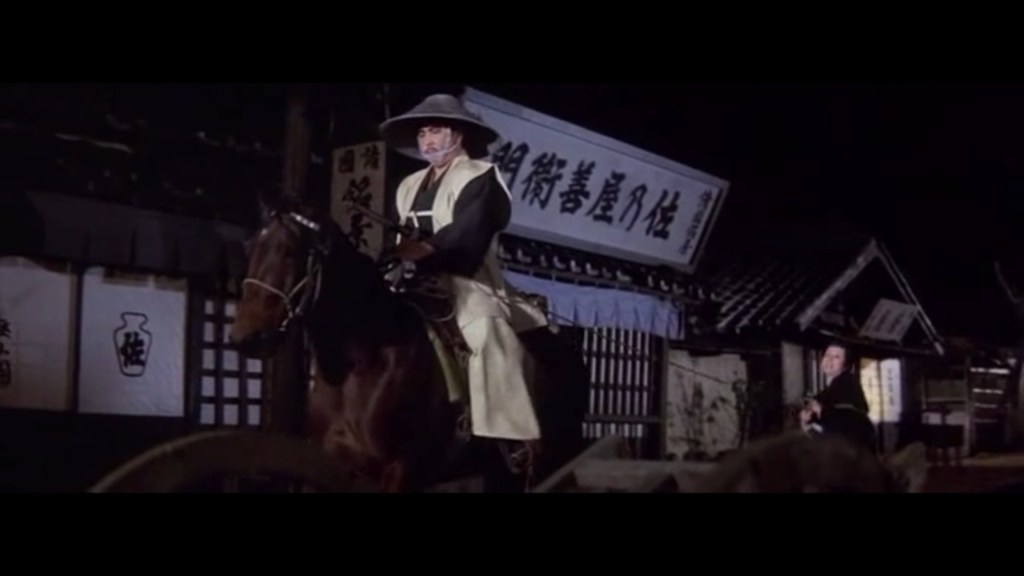
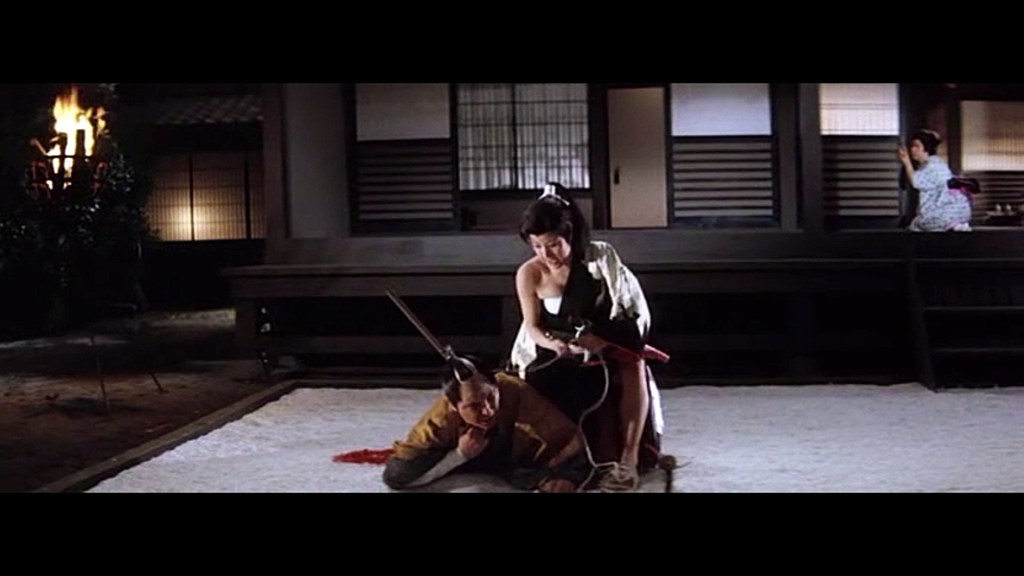
In the end, when Okatsu has consummated her revenge by dragging and slicing the vile Shiokazi in his own palace, the bounty hunter is hired by the city commissioner to capture Okatsu after she escapes and plans her revenge. Wakayama was not yet famous as Ogami Ittō in the series ‘Lone Wolf and Cub’, so his opportunistic but ultimately helpful role is unique, as he listens to Rui’s pleas but warns Okatsu that the bounty on her head will eventually rise to more than 50 gold coins and that they are likely to meet again. He leaves on his horse because he is in a hurry to get to the set of Lone Wolf and Cub.
 Pantagruel´s liquor
Leave a comment