Second installment of the Inu saga. Despite some silly jokes, the story is sure to be entertaining if we think about Kamoi, an ex-convict who can’t stop chasing after Yukari, a bank employee, like a dog in heat. To get money to ask her out, he has to work for Komori, his worst enemy in prison, as the foreman of a construction site where the “workers,” or rather slaves, try to escape every day as if they were in a pogrom because they were promised a salary of 850 yen and only receive 100 yen. be a foreman on a construction site where the “workers,” or rather slaves, try to escape every day as if in a pogrom because they were promised 850 yen in wages and are only given 350 yen for carrying huge stones under the sun all day long;
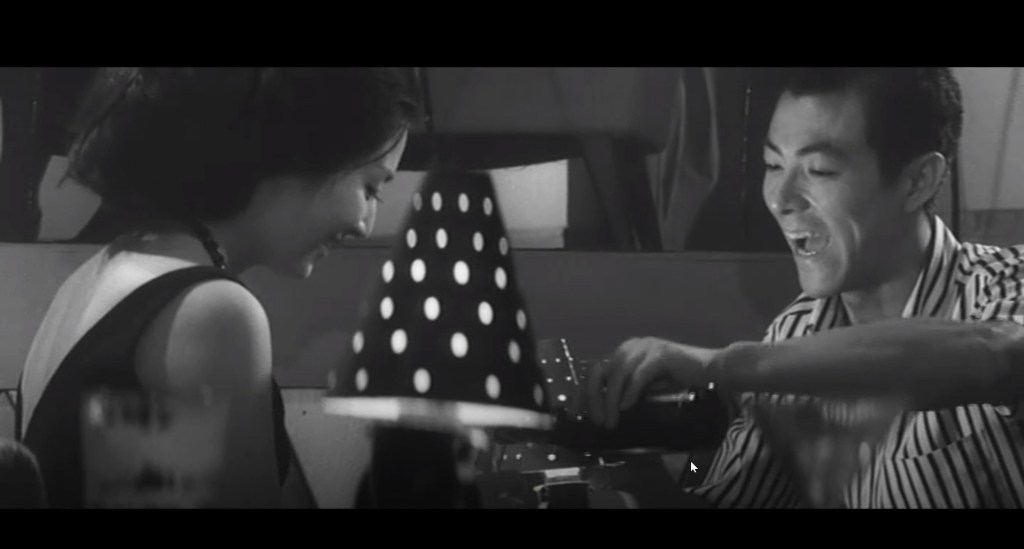
of course, it’s a dog’s life and a canine metaphor. That’s why rehabilitation centers in prisons don’t “rehabilitate.” Because hooligans like Kamoi have adapted to confinement and their circumstances of indolence rather than waiting for freedom. He himself will say mutatis mutandis in the prologue at the beginning that it’s better inside, and he will repeat it later outside: “Freedom is quite difficult.” (0:35:28) when he has only 9 yen and is broke, along with his half-witted friend Kokuchi, and they find themselves without food, after first inviting Yukari to the bar at night and then realizing that they don’t have a penny to their name.
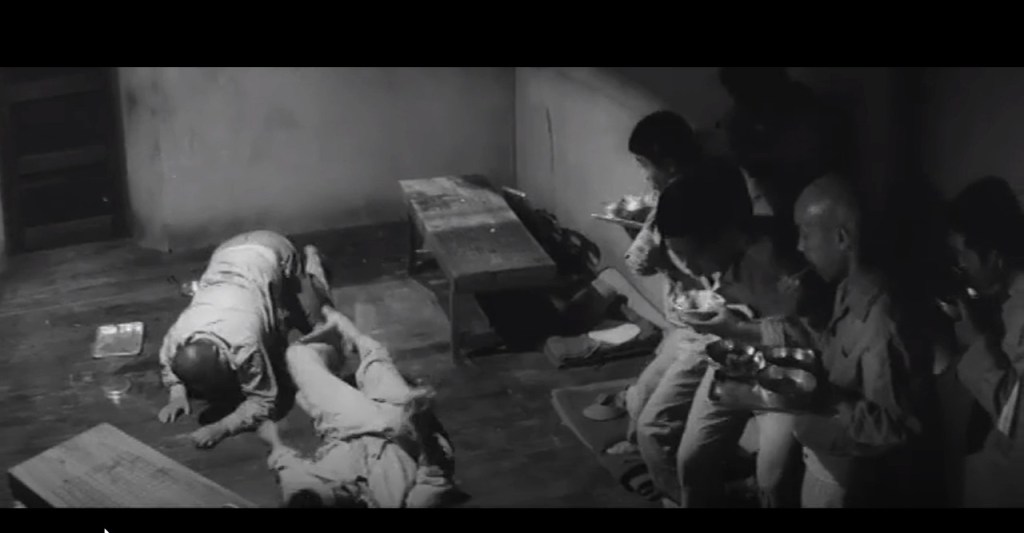
From prison, they are seen having fun arguing over rice and the legitimacy of their fangs, to continue with the dog analogy: indeed, the fight begins in prison and observe the dance of his companions, without letting go of their plates and gobbling up their rice, in a half-beatdown in defense of their comrade; another brawl in the carpentry room and so on. I’m beginning to believe that Kamoi wasn’t lying when he introduced himself at the beginning of the film, saying that he preferred to be inside prison than outside—that it was better, he said—and that if he ever had a hard time, it was because of the lack of women inside, whereas outside he was popular with all of them, according to him.
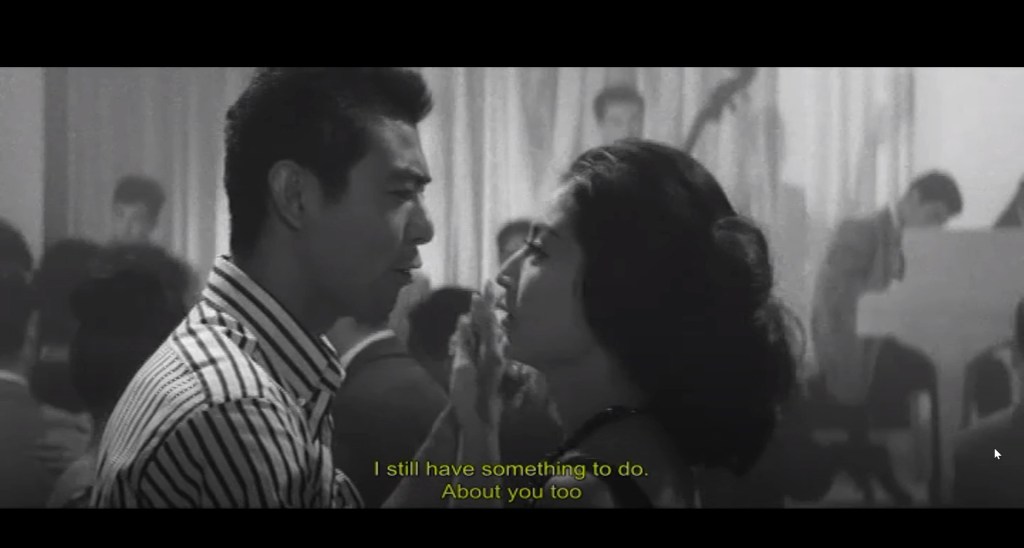
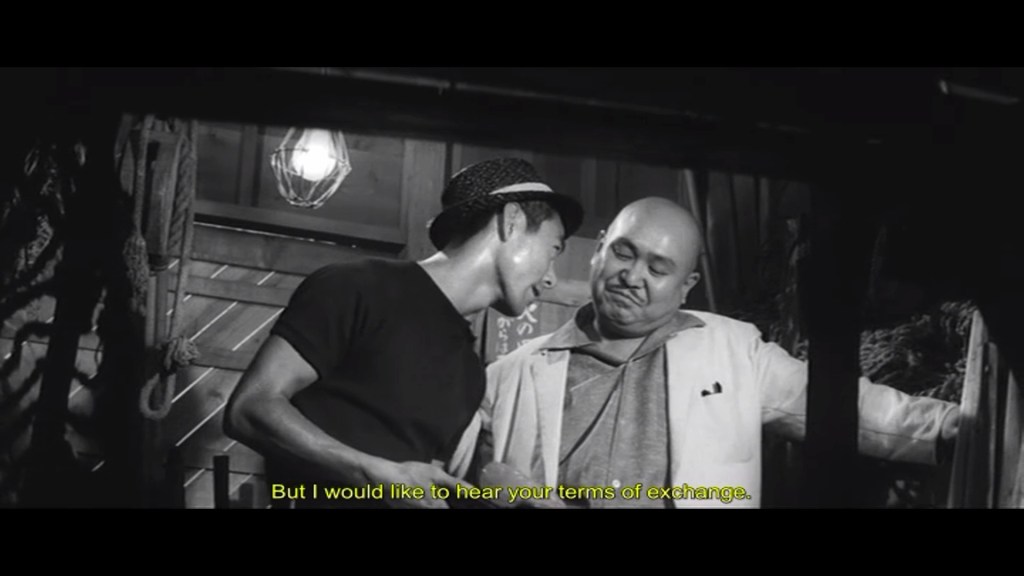
In fact, he was right, as I said, he should have signed up with Komori from the Tenchi Group, which was involved in smuggling and other activities, but he had to eat, didn’t he? He was barely surviving with Kokuchi. He insisted on getting Yukari’s favors, but the problem was that she was Komori’s wife and, to make matters worse, Gamo, the boss’s right-hand man and henchman, also liked her. One fine night, Gamo knocked on Kamoi’s door and took him aside to suggest, and then outright propose, that he get rid of Komori. Kamoi laughed loudly to mock him, “And after you kill him, you’ll talk to the police and get rid of me, right?”
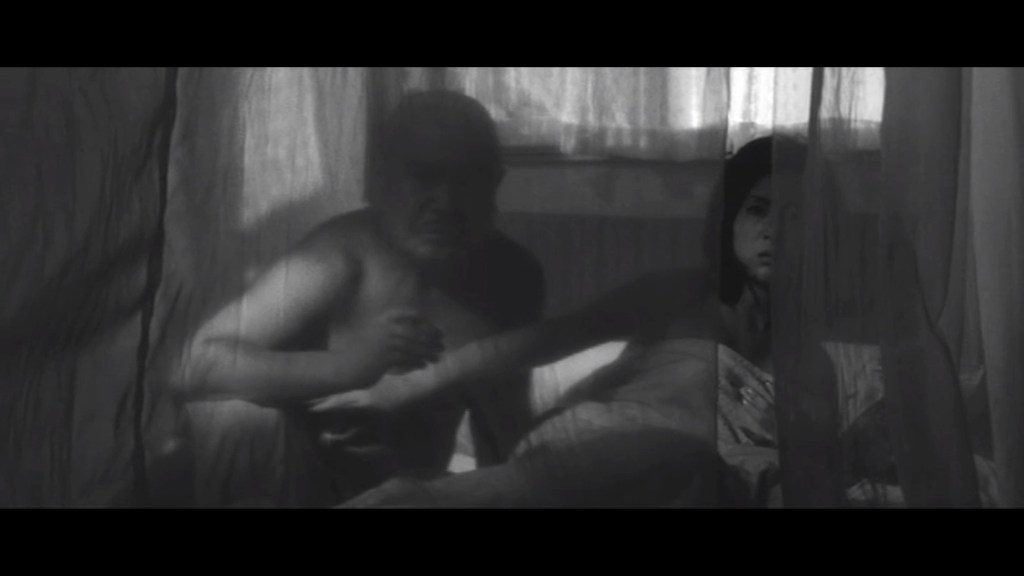
That night, a Hollywood scene ensues—but a funny one, since Kamoi always used his gun as if he were in the Wild West, like Wyatt Earp. Gamo tries to shoot, but Komori quickly deflects his hand and points the gun at a lighter in the middle of the night (0:52:39). The next day, it is Komori who tries to bribe Kamoi with more guns and promises him management of the bar if he kills Gamo. Obviously, the same thing happens as with Gamo.
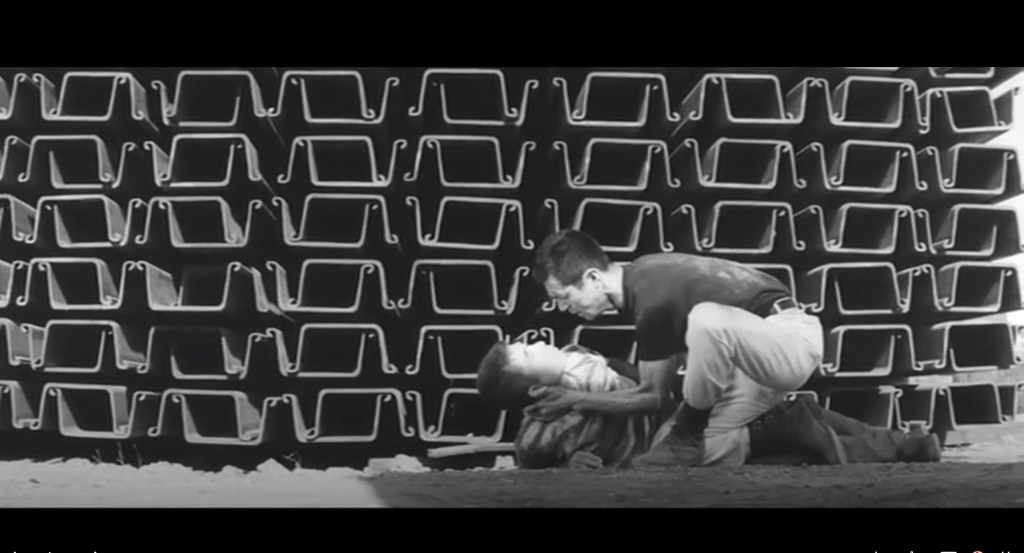
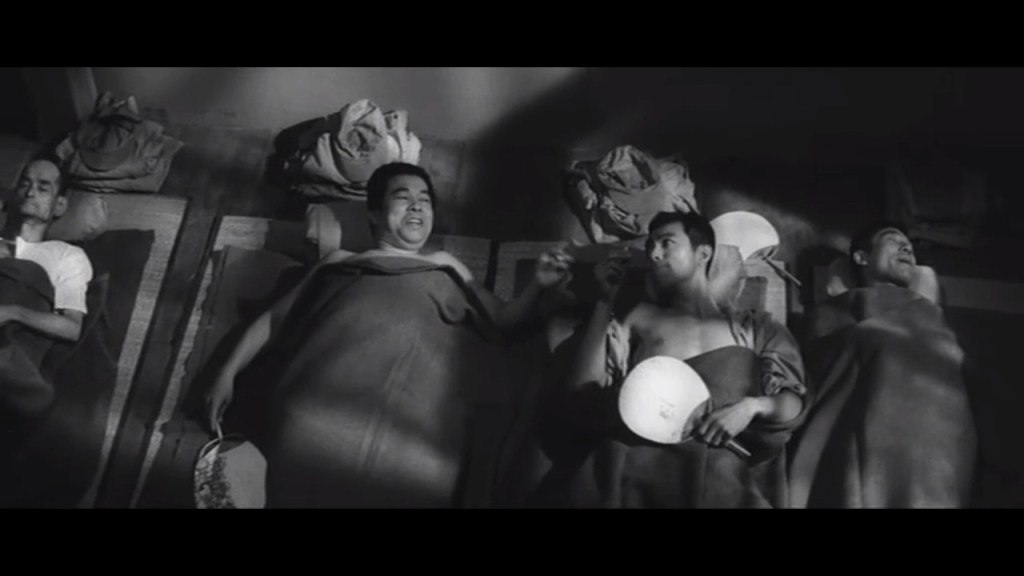
Unfortunately, a few days later, a group of workers tries to escape and kills Kokuchi. Kamoi will never forgive them for that, because, like a good dog, he remembers that Kokuchi shared his only cigarette, which he had hidden in his underwear, with him. A journalist disguised as a worker at the company witnesses what happens next: Gamo and Kokori wait with the other henchmen for Kamoir to arrive at the warehouse to ambush him, and a shootout ensues in which Komori is killed and Gamo is beaten up with fists and slaps. Kamoi is honest with Yukari, with whom he spends the night, but he abandons her because, he tells her, a loving woman like her is not good for a womanizer like him.
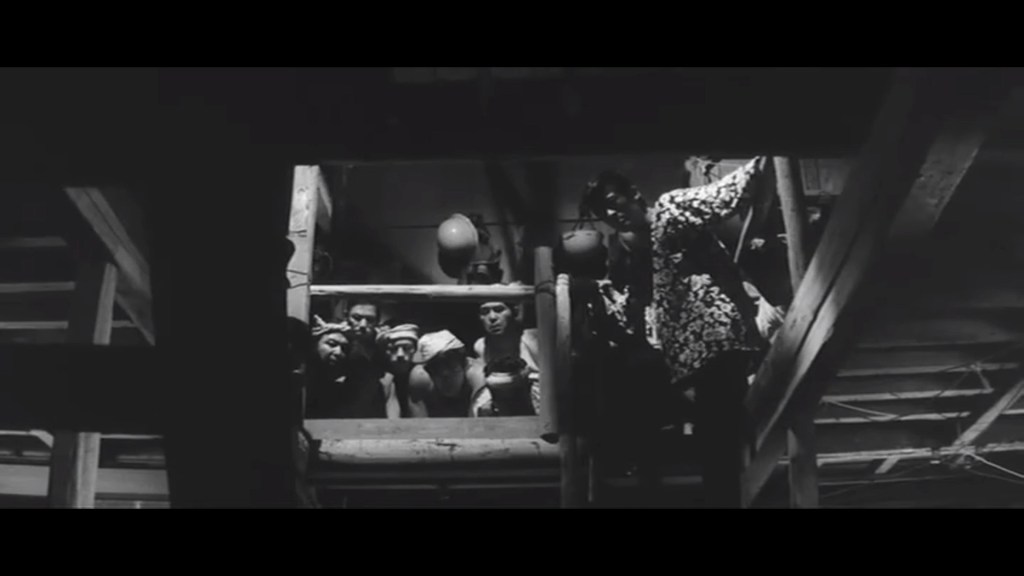
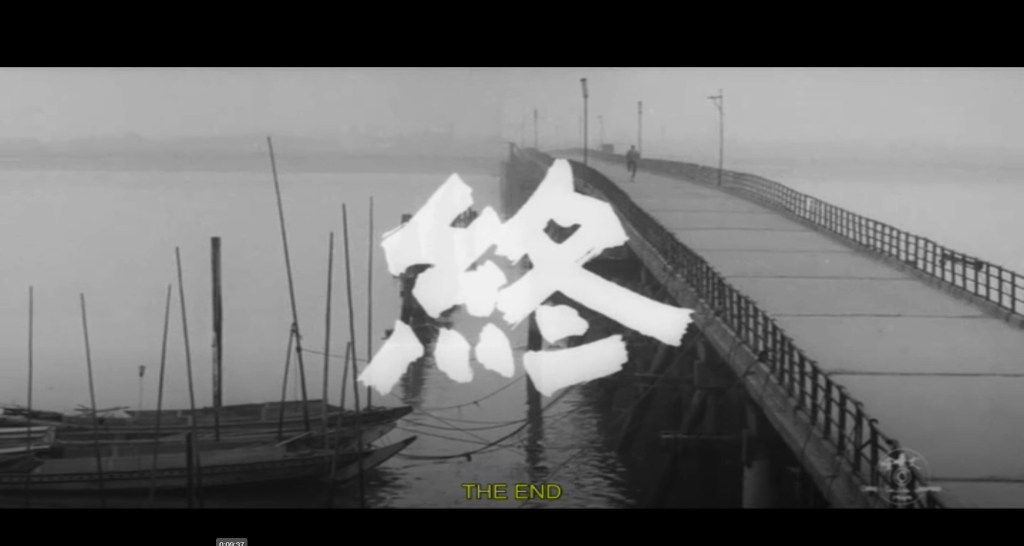
He entrusts her to the journalist outside Yukari’s apartment and tells him that he is not taking the beautiful woman with him, but he is taking the gun because, he says, he is popular with women but not with guns.
 Pantagruel´s liquor
Leave a comment