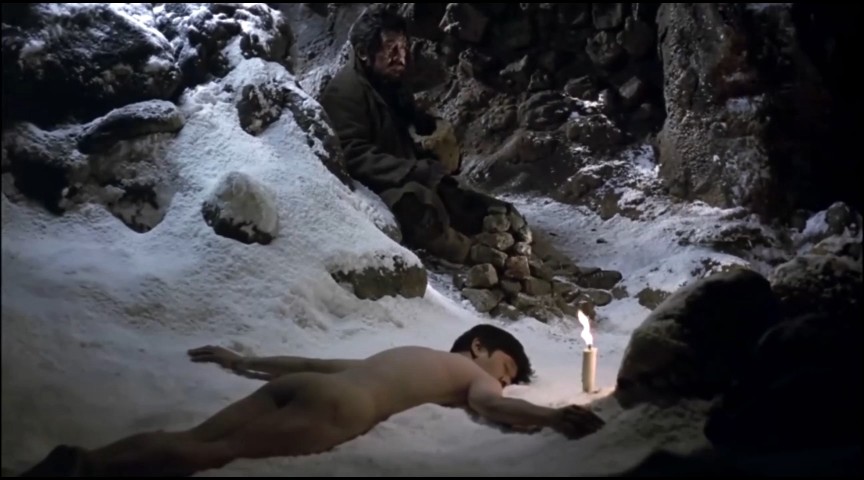
No animal or beast can ever attain the insurmountable depravity of human beings, because the one and only aspect that changes everything, which is consciousness, turns the most beautiful acts or, in this case, those most justified by survival, into the most disturbing self-indulgence. Unlike Kim Ki-duk with his ‘Human, Space, Time and Human’, Kumai is not interested in being disturbing, as demonstrated by the hallucinatory process and judgement at the end that explodes the humanist substance of the entire plot. Precisely because the dénouement is recreated by the newly arrived novelist who has been entrusted with the scandalous events of 1943 in the cave where the mysterious halo of light can be seen in Punto Pekín.
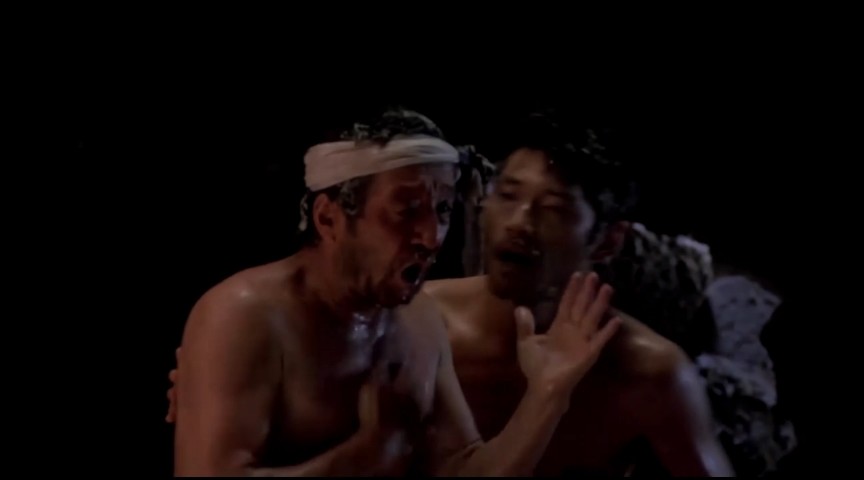
The film is a kind of ethical and philosophical meditation by a novelist on the limits of civilised and humanly dignified scruples in human beings, based on the real anecdote entrusted to him by his host in that sparsely populated part of the Shiretoko Peninsula in Hokkaido. In the December storm of 1943, a boat around Rausu was shipwrecked and the three officers and the captain ended up in that cave. The crux of the story, as explained to the novelist, is that only the captain survived and barely made it back to Rausu three months later.

He says they ate seals and other animals, but in winter it is impossible for such animals to be so close to the coast. Some time later, the captain admitted that the chest of bones found later belonged to one of his shipmates named Nishikawa. In fact, the flashback, or at least what the novelist imagines after a beer and a pleasant chat with the director, is the reason for the sinister meta-narrative plot. Starting with the infamous cold and the slaps and blows with open hands to warm up, and then the convalescent Gosuke, the young man who relapses and is the first to consider the possibility, after days adrift and barely on land, of eating anything, and that anything will be the young man himself. In fact, noticing the intentions of the cold captain, who would do anything to survive, Gosuke, almost in tears, asks Hachizo to promise him that he will NOT eat him when things get worse. And in time, things did get worse, although at first, old Hachizo even found the strength from somewhere to put on a show, miming as if he were cooking something delicious for his three companions. When the boy died, the captain began to slice him up, and I am grateful that the film does not show the cuts explicitly, only the captain and Nishikawa at his side eating their companion’s flesh, their faces contorted with disgust but calming their ravenous hunger.
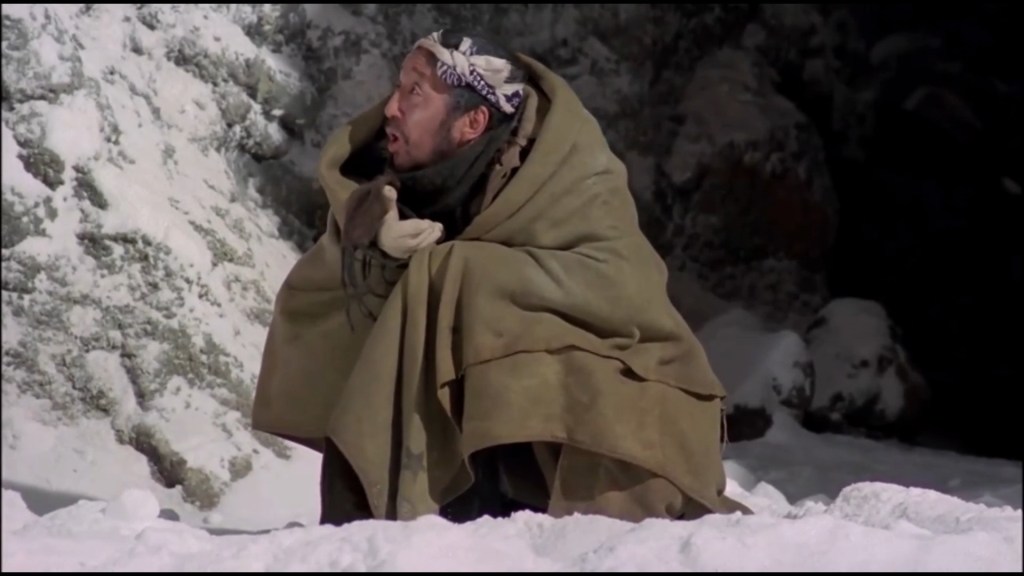
Hachizo keeps his promise and just watches his two cave companions, in the deadly cold of the night, preferring to go out and look at the moon and smile, remembering the good times he will never enjoy again with his family at the table at home, all eating without knowing how lucky we are. Before dying of cold and hunger, Hachizo is the first to spot the trail or halo of light in the background where Nishikawa was standing. He asks him to stand up, moves him further back and positions him so that he can see the strange photoluminescent effect, like a luminous aura around his head. In the final sequence of the trial against the captain, his arguments are not far-fetched and reveal the human substrate I alluded to at the beginning, because he asks the judges to be the judges themselves or someone who has already eaten meat as a cannibal to judge him in order to understand the reasons why his biology and humanity were weak in the situation in which he committed the atrocities for which he is being tried. Of course, it is a fallacy to ask that a rapist be judged only by someone who has raped, thus reducing the issue to absurdity. But in any case, from another angle, it clearly raises the moral question of whether he should be judged by lawyers or witnesses who have not suffered extreme human conditions that would allow them to consider whether it is ‘good’ or ‘bad’ or right or wrong to eat human flesh.
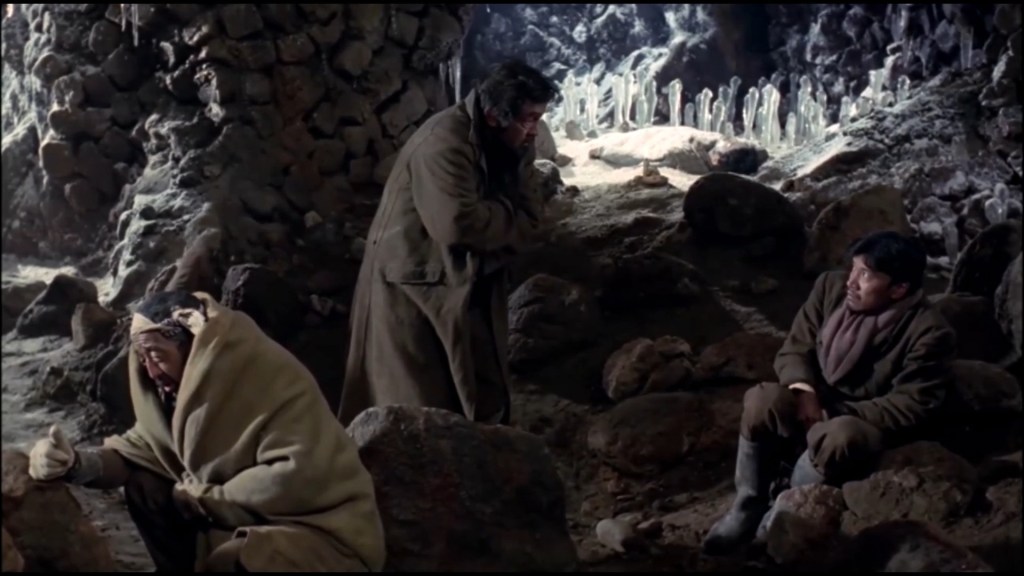
The film was adapted from Taijun Takeda’s 1954 novel and questions, albeit subtly, or perhaps not so subtly, whether our cultural norms and socialised habits have answers or consider exceptions to critical moments when a human must kill, defend themselves or even eat another human out of biological instinct rather than criminal considerations capable of punishment. The sound of the air raid siren interrupting the process like a nightmare—let us not forget that this took place before the end of World War II—transports the cave to a more sinister environment, where the halo of light embraces all those present.

 Pantagruel´s liquor
Leave a comment