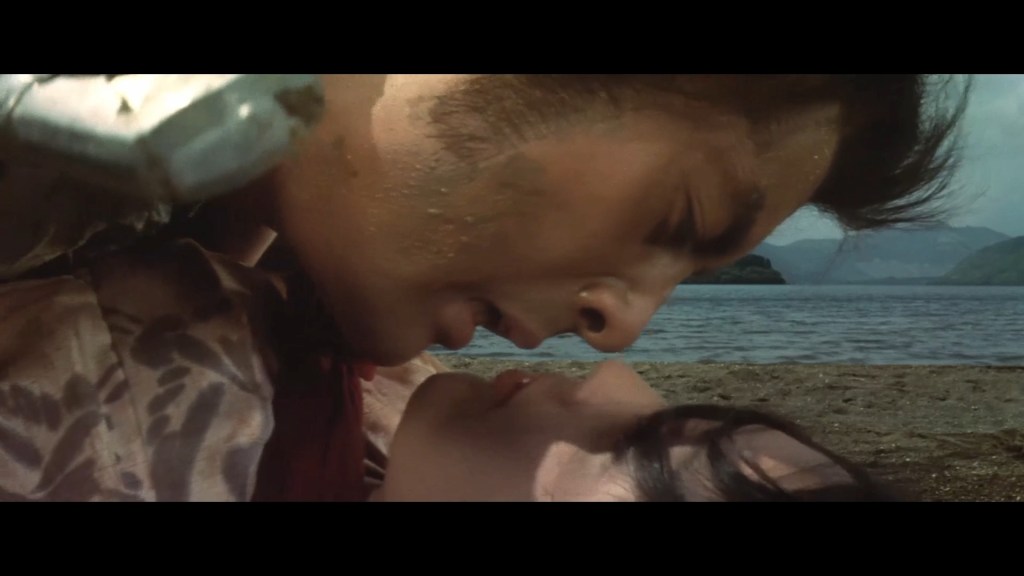
Keiji Maruyama is simply sublime. I never imagined that after the 1970s anyone could improve on Mizoguchi’s superb cinematography. But here it is. The parsimony with which Tai Katô lavishes this bildungsroman makes it my favorite version of Musashi, as it progressively balances the ill-fated—and later remarkable—vicissitudes of the swordsman Takezo. The young man first almost died in the battle of Sekigahara, and later, because fate had not yet finished attacking his existence, he almost did not see the light of day, as he was tied up and hung in the village of Miyamoto, where he was considered a traitor for having incited Matahachi to go and fight with him, only managing to escape thanks to Otsu. Did Takezo get lost in Himeji Castle? Who knows.

He was never seen again, but after a while, rumors began to spread about the challenges of a certain Miyamoto Musashi. It was Takezo. Despite getting lost in uncertainty, in a few years he had the opportunity to challenge the leader of the Kyohachi style, a good-for-nothing who, incidentally, repeatedly tried to abuse the woman who would become the mother of Matahachi’s son. Yoshioka sexually abused the woman who entertained with her instrument. In the fight, Takezo cut off his arm, and a samurai who happened to be passing through the village advised him to amputate it in order to survive and thus save his family. That samurai was Kojiro Sasaki, whom Takezo would face towards the end of the story, without any illusions. The younger brother of the amputee
named Denshichiro, insisted angrily on challenging Musashi again to avenge his brother, but he fared worse, dying with his body cut almost in half.
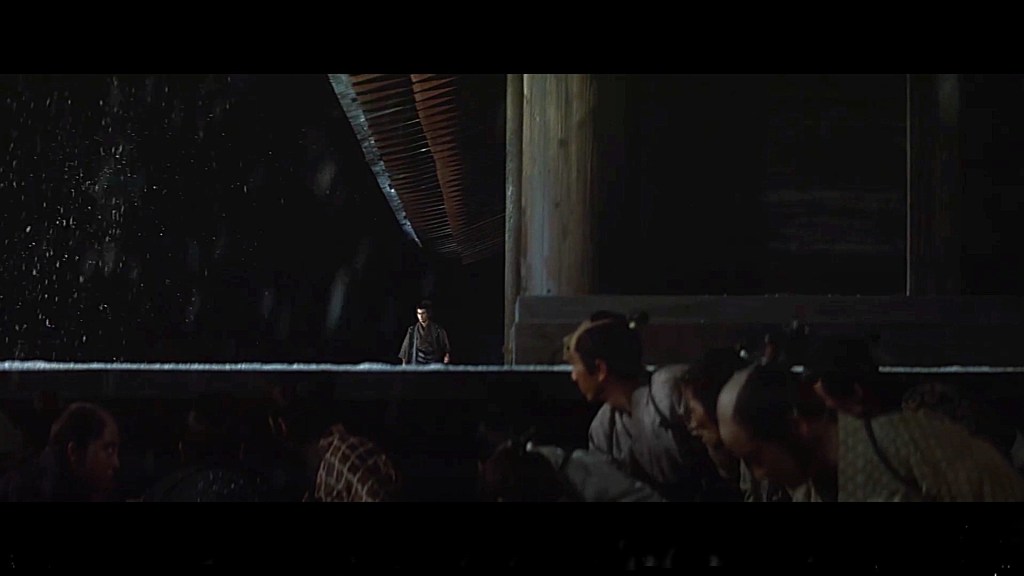
For the third duel at the foot of Mount Ichijoji, Musashi was summoned again, but first Elder Mother, Matahachi’s mother, who hated Takezo, filled with jealousy over the love that had blossomed between Otsu and Takezo (Otsu being the wife of her son Matahachi); for the millionth time, the toothless old woman tried to assassinate him, ambushing him as he left the hut of the elderly innkeeper who had allowed him to spend the night and bathe. She fulfilled her role in the plot, the frenzied woman cursed him to die and warned him that he would not survive because dozens of Yoshiokas were waiting for him, given that the next challenger was only 13 years old. Thus, Takezo arrived late and from the rear. The rules allow many to intervene if the opponent is only 13. But as he set off into the thick night, the sound of Otsu’s flute interrupted him before the third duel. She had been hiding nearby with Priest Takuan. In the confrontation, he stabbed the boy Genjiro and barely managed to escape, followed by a small army of swordsmen who almost killed him. The suicidal challenges continue when, in Chichibu, he fights Shishido Baiken in the rain, escorted by his wife with their child on her back. He had already been chained up, but the elusive Takezo, with his shoulders tied to his torso, still wielded his deadly sword to slash his opponent. But there is a turning point in the work. It comes during the challenge in Edo against Yagyu.
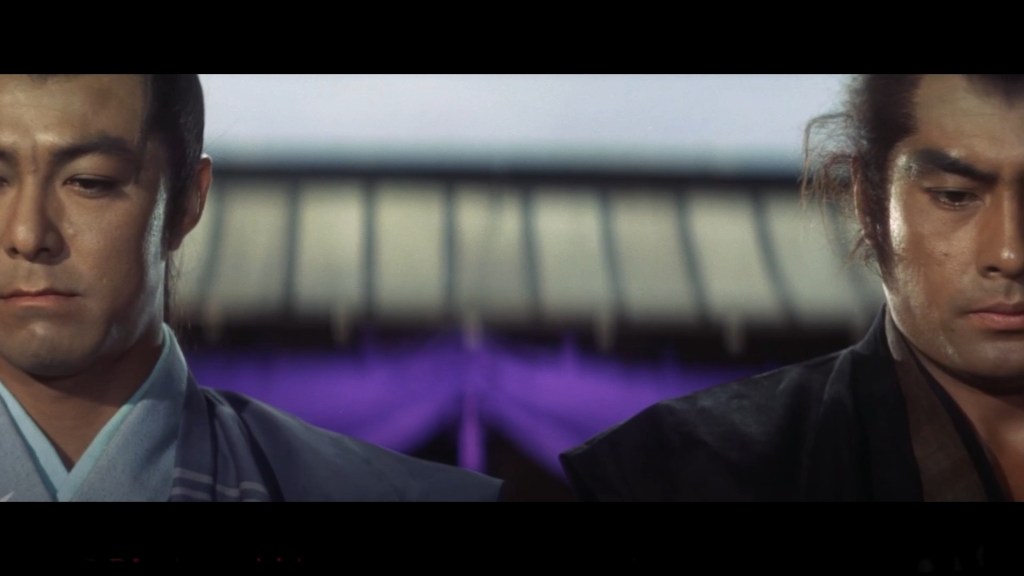
Takezo is perplexed when he is told that samurai should not use their swords except to defend the people and not to kill and challenge opponents. That is why no one wants to maintain his sword Hizen, because it is thirsty for more blood, the blacksmith tells him. Takezo will never forget that he has won his victories with blood, protecting no one but his own vanity, and this changes his countenance. A few days later, gathered before Lord Hosokawa, Takezo tries to enter the lord’s service, but it turns out that Kojiro Sasaki also aspires to the position, so Takezo declines, but Kojiro, a little arrogant, hopes to fight him someday and says so in front of the arrogant Lord Hosokawa. That day arrived on April 13, 1612, on Funajima Island. Meanwhile, Elder Mother arrives at the village where Otsu is dying of starvation.
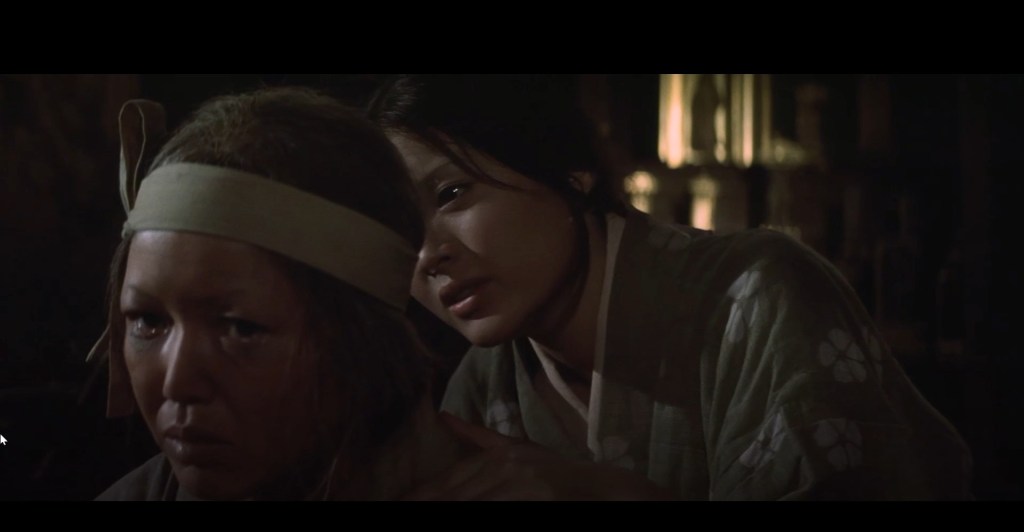
She saves Otsu, but when she realizes that she is still in love with Takezo, the old woman flies into a rage and almost kills her, dying first. The day of the duel arrives, and Musashi does not show up at the beach. The chamberlain, on behalf of the lord, goes after him, and Takezo, without changing his breathing one iota, continues chiseling the oar for the boat with which he will go to the duel, the boat he made himself, which is why he declines to go with the chamberlain and arrives late as usual.
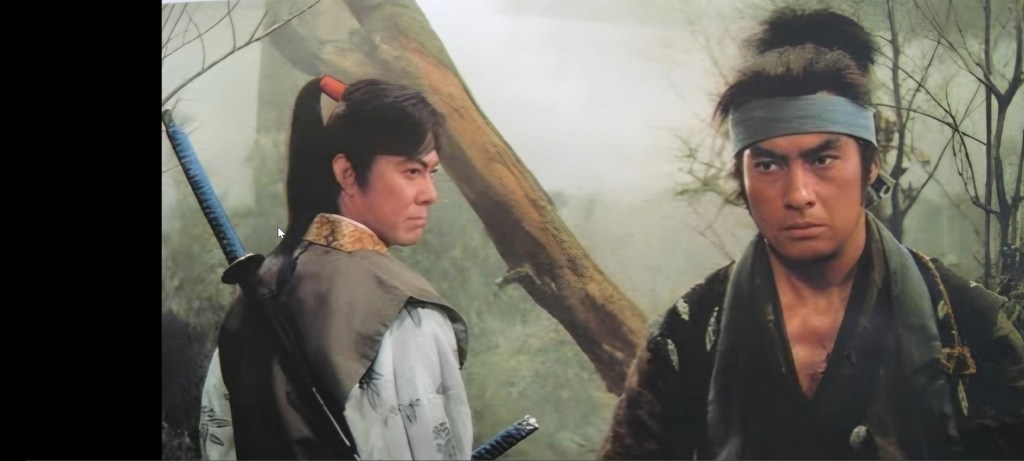
The final scene is short but excellent, and both are wounded, although the final blow with a huge leap was for the victor Musashi, who immediately jumped off the rudimentary raft and disappeared with his assistant rower in the distance. All of Lord’s guards were unable to catch up with Takezo and were hiding beforehand, which is why the late Kojiro was nervous because he didn’t trust him, but obviously the Lord wasn’t willing to lose a ronin to an unschooled swordsman with no glory.

 Pantagruel´s liquor
Leave a comment