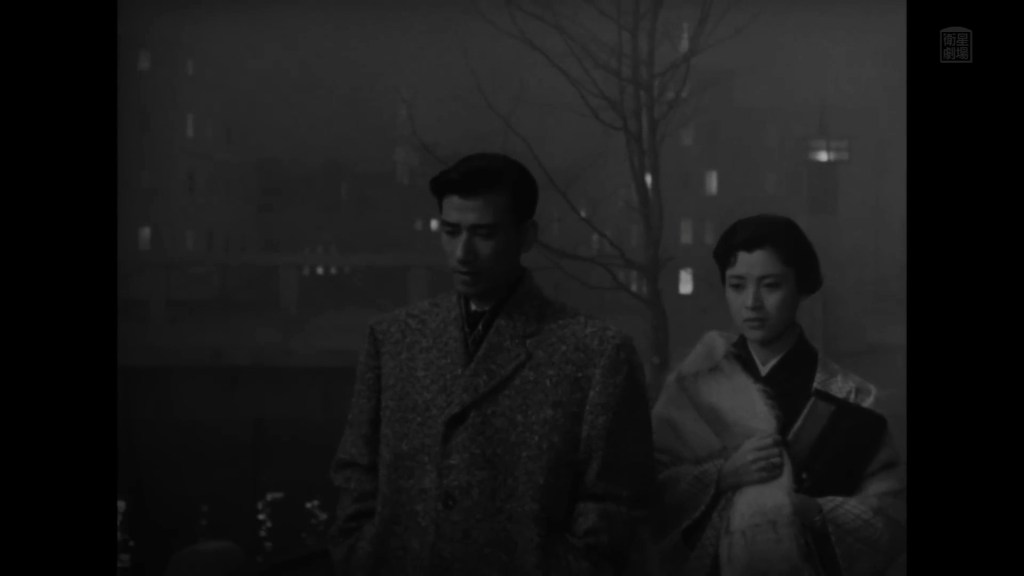
Honestly, Nakamura would produce less predictable and certainly more interesting works a decade later with Chieko-sho (1967), to give just one example. This adaptation is a sad melodrama that suffers from being predictable from start to finish. In Bugle Denz magazine, I read that it had a large audience, to the extent that it exceeded 300 installments, and perhaps justifiably so given the time when it was published and the soap opera-like serialization in newspapers by its author, Niwa Fumio. In any case, it is a story of love at first sight, at least for the president of a publishing company, Doi Hiroyuki, who, while staying at a hot spring resort, accidentally opens the screen or door while Yashiro Ikuko, an employee of “Hexagon” (which in Spain would be a tobacconist’s or a kiosk selling cigarettes and magazines) and from then on, on the train and elsewhere, he follows her with his eyes until he meets her at work. Ikuko, however, is -almost- the property of the boorish Kurayoshi (again, remember the deplorable position that many women had in the immediate post-war period, and not only in Japan).
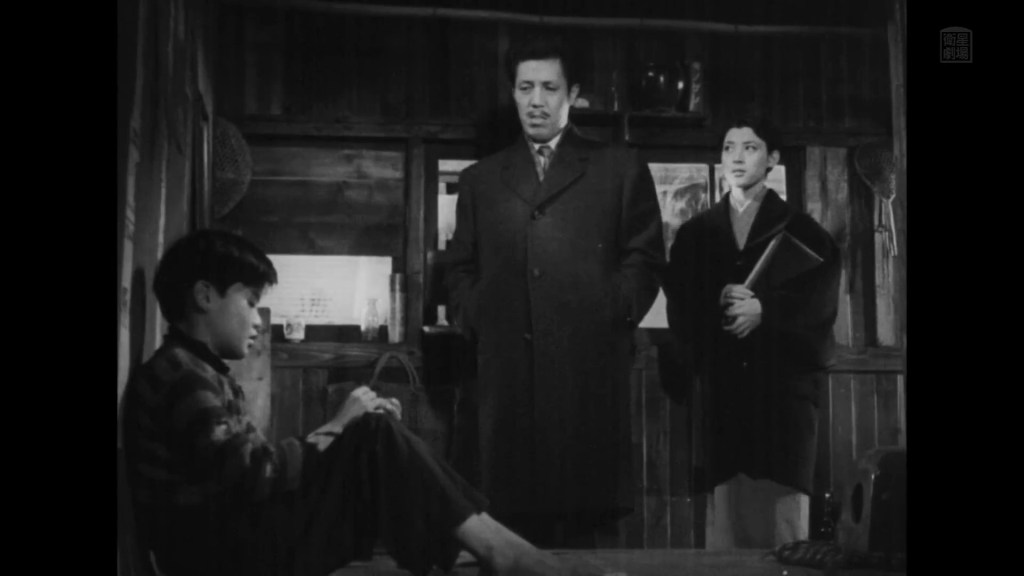
In fact, this will be the only tension in the plot, if you can call it “tension,” that Hiroyuki is married and his wife has been bedridden for at least several years and that Ikiku has no self-determination, which is why the rich jeweler takes away even the dress worn by the beautiful young woman opposite him, because he bought it for her and therefore, in his mind, it is his. Tomoko, Doi’s wife, is strangely sweet. I mean, bedridden and feeling that her life is slipping away, many people would become bitter. In any case, her husband is unfaithful to her every day, which for some, like the reviewer writing this, makes him a fickle and hateful man.
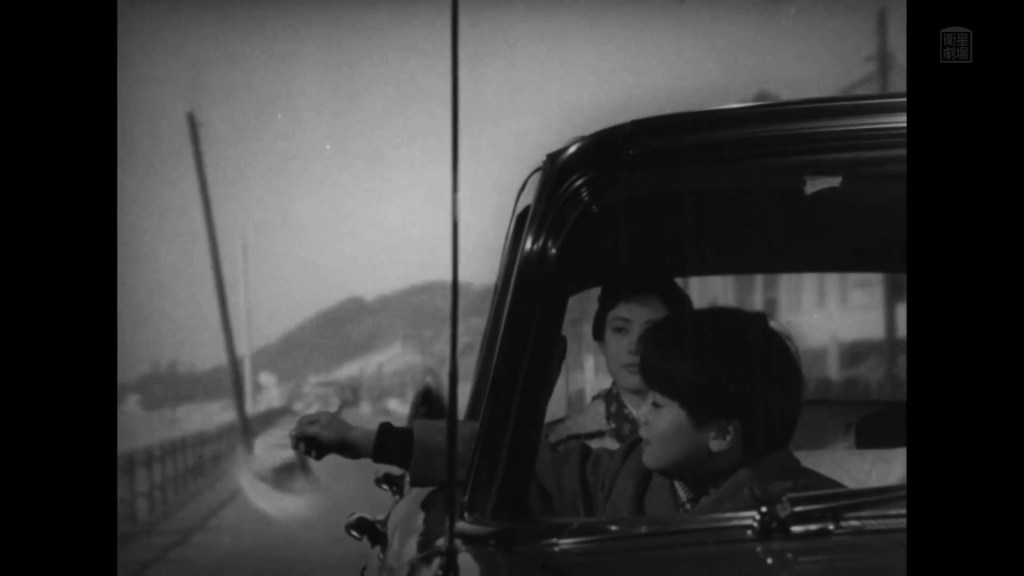
While the jeweler forces his lover Ikiku to take care of the child Shinichi, believing him to be his son, the unfaithful husband reaches Ililo on the island of Enoshima, which is not far from Tokyo, supposedly by chance.
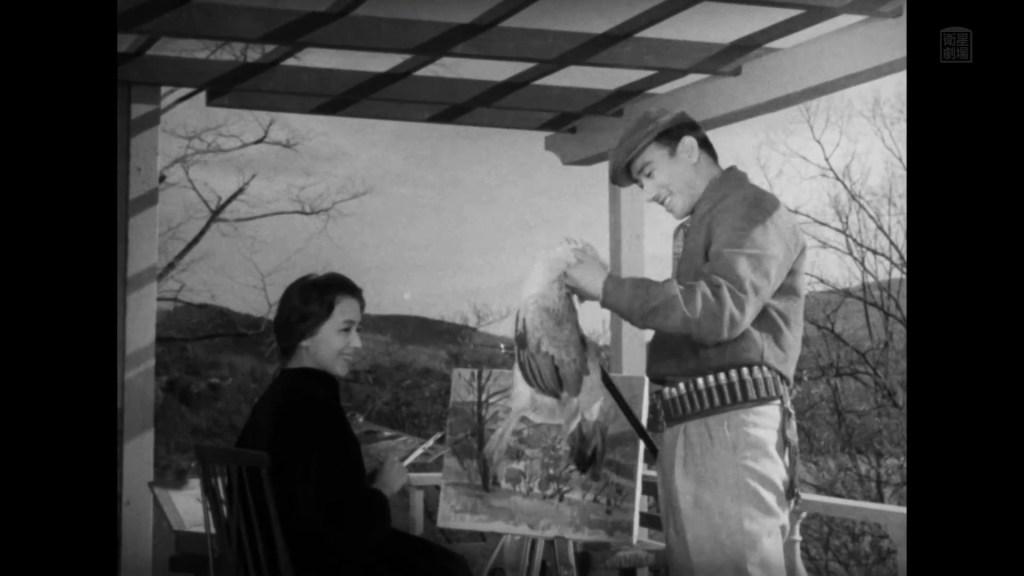
They begin an affair, although neither of them enjoys it: she because she is being unfaithful to the man who provides for her and who will end up throwing her out of the apartment he pays for, and he, Doi, because he sees that his wife, far from improving, spartanly accepts her fate while he cheats on her.
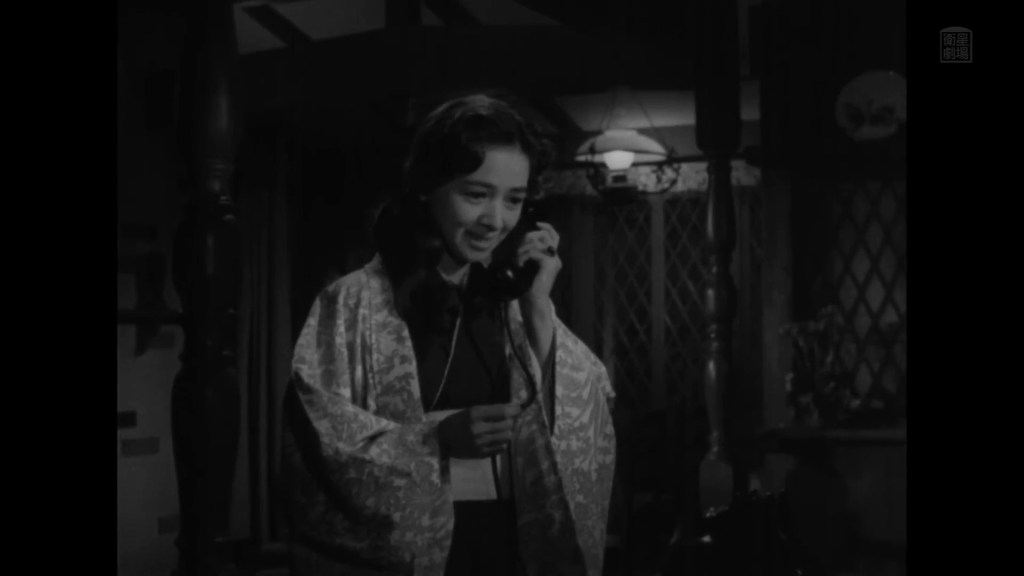
They agree to meet at Ueno station, but Doi does not arrive because Tomoko’s condition worsens. In any case, after recovering a little, the sick wife returns to seek out, that is, to insist on Ikiko, who finally falls in love, and all so that when Tomoko dies, Doi has a crisis of conscience and abandons Ikiko and the child, a minor with whom she stayed when the jeweler left her, knowing that she was cheating on him.
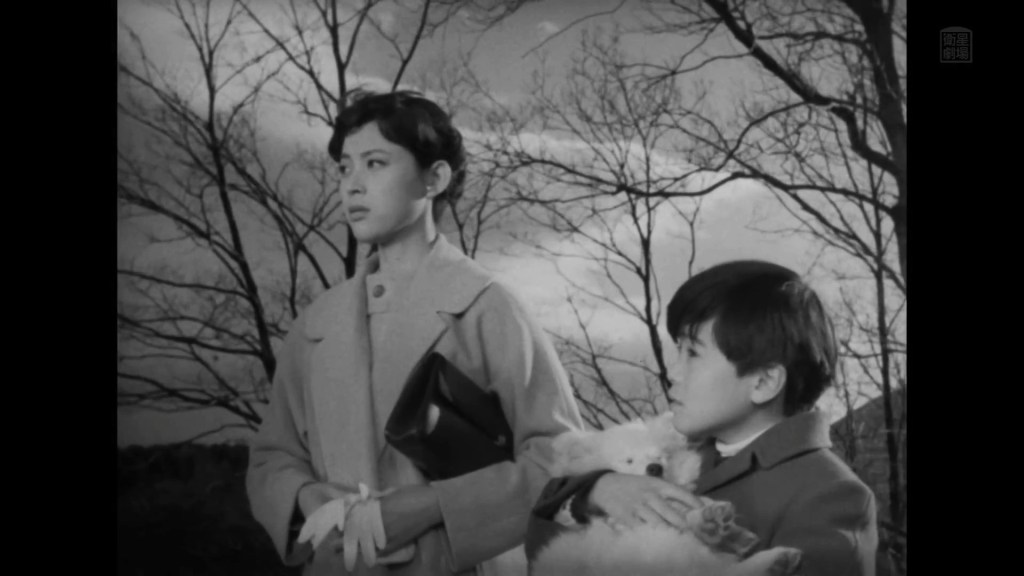
When Tomoko dies, Ikiko confesses (1:33:25) that “somewhere in my heart, I feel relieved that your wife has passed away.” What she couldn’t predict, because Doi didn’t either, is how bad her husband began to feel when he took Ikiko to the house where his wife died after being visited by her brother. “I can’t help judging myself for that” (1:42:45), Doi will say, and that is the outcome. We will see the beautiful woman and the child leave disappointed because, once again, this time caused by a fatuous man like Doi who never knew how to distinguish a sexual adventure from the true love he felt for his wife.
 Pantagruel´s liquor
Leave a comment