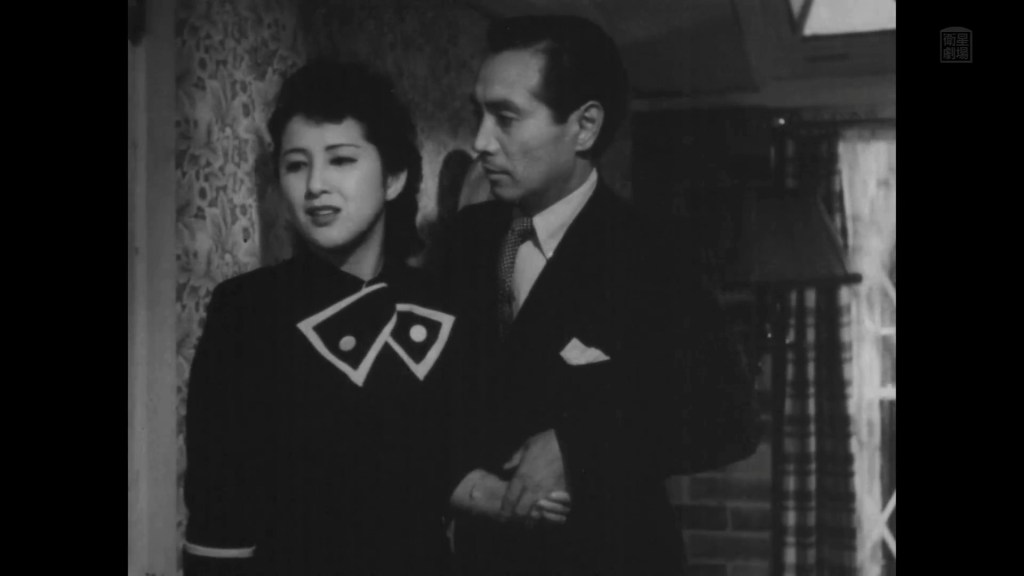
First of all, it is not, as the synopsis says, a romantic film. It is a tortuous drama adapted from Mikio Mishima’s novel 純白の夜 . I advise you to be kind to the work, not only because the psychological drama of the novel cannot be achieved in film—that has always been “the weak point” of the seventh art (Mishima dixit)—but also because it was filmed shortly after the end of World War II. Its tempestuous moral premise has therefore aged almost 80 years since its release: the dilemma of Ikiko Muramatsu, a married woman, indecisive and fickle, when she receives a brave and sincere letter from Kusunoki, an admirer who is in love with her and who, from the beginning and throughout the entire plot, has risked everything to win her affection, having fallen in love with her after dancing with Mrs. Muramatsu. When the story begins, we see how inflexible and even cruel Ikiko is with her younger sister, the young Tsuyuko, who loves to dance and wants to be paired with the whiny and temperamental Harunosuke, a dancer who does not want to advise her younger sister and is therefore enrolled in a matchmaking service.
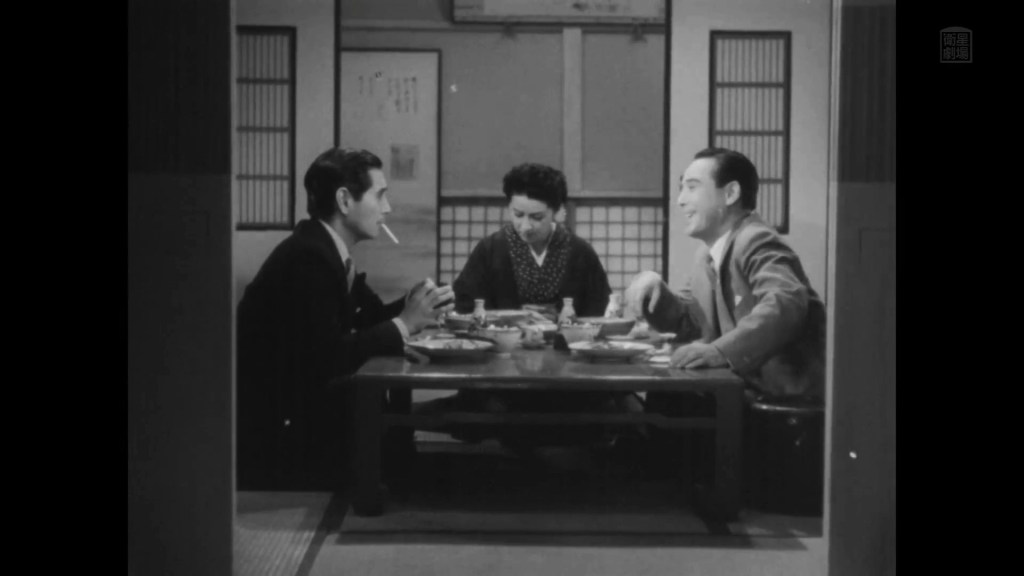
Ikiko does not suspect that very soon, her prejudice towards her sister’s beau will turn against her, as she will come to prefer the intrepid Kusunoki to her calculating banker husband. Therefore, at the end of the film, during Tsuyuko’s dance to the music of Kagura, she will accept her sister’s love for Suke-san, to everyone’s surprise. Perhaps Ikiko’s mistake was not realizing that she actually needed the adventure she never allowed herself to have, despite accepting the offer of the man who danced with her. That is why she read the letter and gave it to her husband, who, smug and victorious in advance, suggested not revealing anything to the lover, since Kusunoki had dealings with the husband for large loans (in the novel, we know the reason for these loans and also the illness of Kusunoki’s wife, who is always bedridden). Ikiko first agrees to go to the Etoile and then to Kita Kamakura station until he finally takes her to his apartment, but nothing happens because Ikiko restrains herself. However, the gossipy colleague Sawada notices their affair and discreetly blackmails Ikiko.
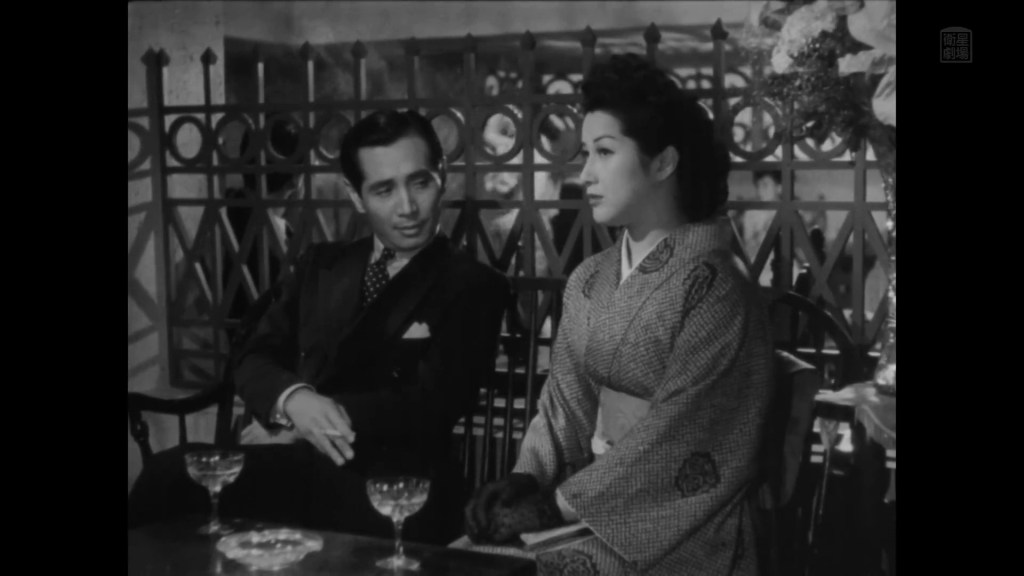
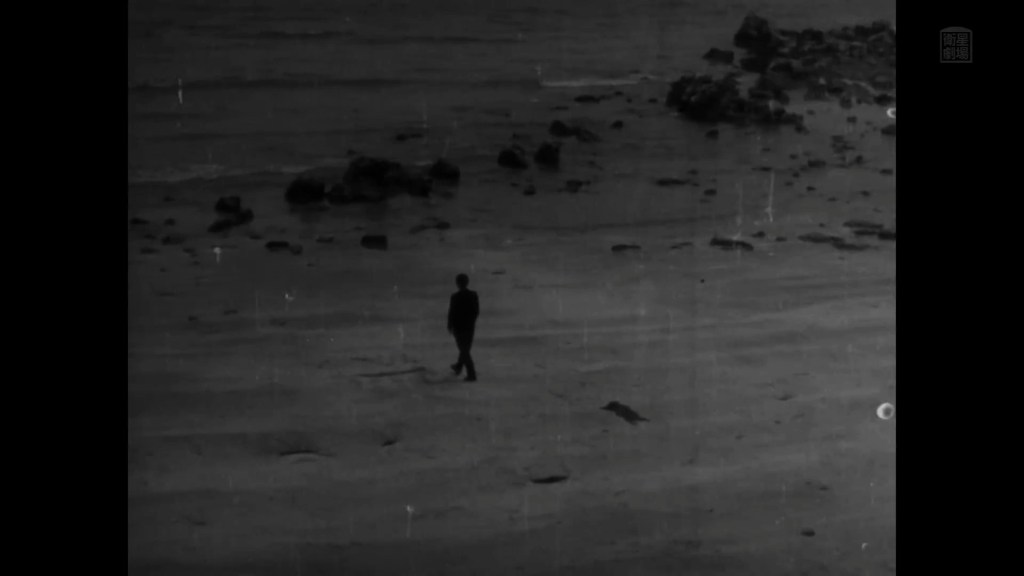
Her husband, knowing that she met with Kusunoki even though it had not been long since they were invited by him to his villa in Izu, annoyed but not losing control, finally refuses to give his rival the large loan, and we do not hear from Kusunoki again until she seeks him out after some time. But the natural indecision of a married woman continues, and even so, after leaving for her younger sister’s dance, she runs away with Kusunoki. However, once again, when she has to spend the night away from home, she calls home and tells Junko, the maid, to tell her husband that she is staying at a friend’s house. Upon hearing this, Kusunoki becomes enraged and leaves her at the inn at the end of the film. when Ikiko calls her husband crying and saying that she spent the night with Kusunoki while he lies on the beach in despair, and we know that the married woman will commit suicide (although this is not obvious in the film, it happens in the novel, and when Kusunoki returns to the inn in the morning, he sees the police because of the tragedy).
 Pantagruel´s liquor
Leave a comment