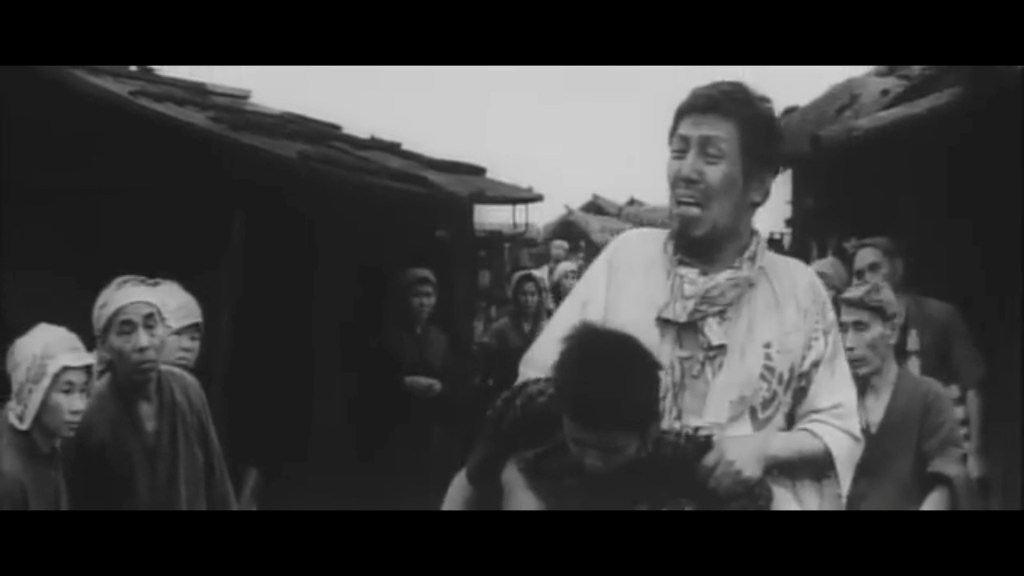
Koji longs to be a teacher, but he won’t even be allowed to register as a legitimate member of a caste that has been discriminated against since the 19th century during the Meiji period. And as for his older brother Seitaro, who aspires to escape to Osaka to try to live a better life, it’s better not to even mention him. Because at the first argument or bullying by his schoolmates in the village of Asayama kun, it will be him, as a “stinking” member of the burakumin, who will bear the brunt, punished by standing outside the classroom carrying a bucket. One has to scream with embarrassment at the inhuman contempt directed at them, even when their grandmother—a very short old woman who breaks her back in the sun with her daughter, the boys’ mother, picking rice—begs and cries in the principal’s office to stop the abuses of the principal and the assigned teacher, Aoshima. Fortunately, Teacher Kashiwagi is the only oasis in this desert of rejection and absurd hatred towards the Hatanakas.
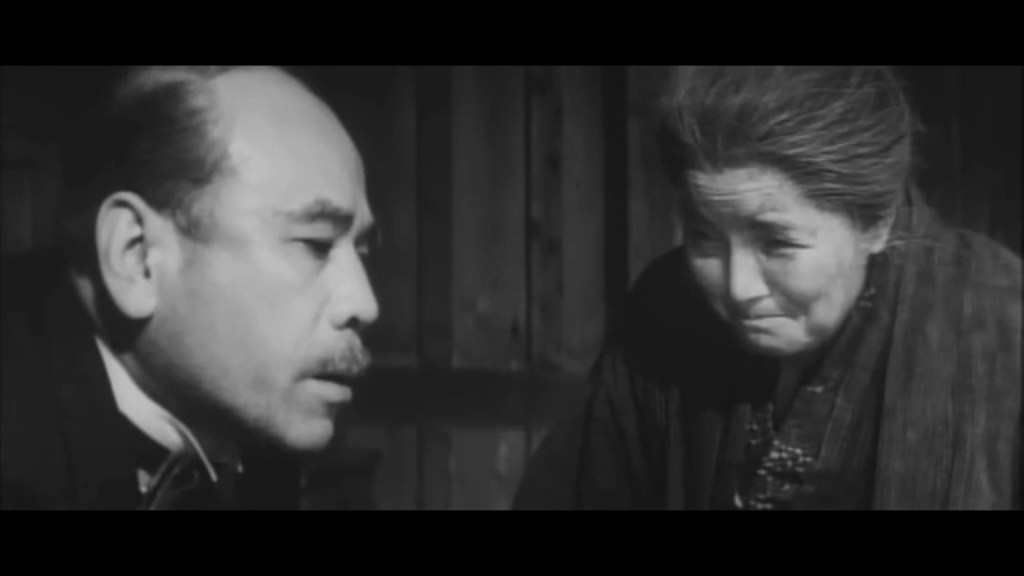
The situation is outrageous, to say the least. The teacher, full of love, goes to Koji’s home when she notices his absence. She only finds the heartbreaking reality that Take, a Koji{s classmate is being used by his father Tonosaku to pull a cart in the fields, and that the boy is wasting his best days and youth as a lackey in a rice packing plant; even so, one could say that he is happy. I regret not knowing Sue Sumji’s written work “The River with No Bridge,” on which Tadashi Imai based this ambitious but essential work, which is unfortunately still relevant today, given that discrimination against the burakumin persists in 21st-century Japan.The descendants of this caste are even preferred to foreigners because of their “impure” ancestors, according to the Shinto concept of “kegare” (impurity), after having devoted themselves for centuries to despicable professions that made them worth one-seventh of a man (Wikipedia).
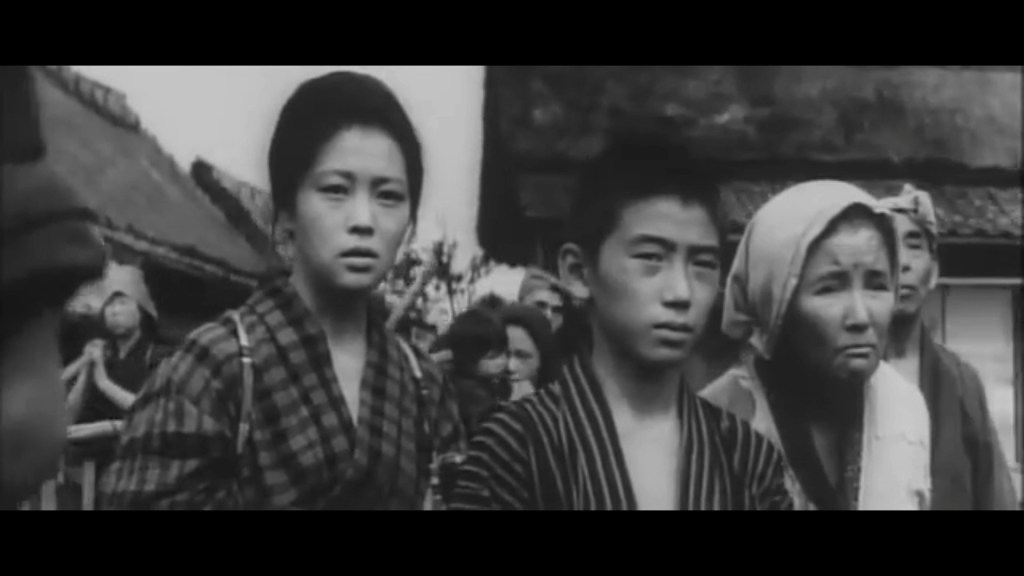
The picture is very sad, and the director expresses it through the children. Koji’s friend confesses to him that, like him, she prefers not to tell her parents about the bullying she suffers at school, and this is contrasted with the novel Destructive Heroe, in which the same patterns are followed and suffered by the characters. But the most dramatic turning point, or rather, the crux of this first part, occurs with the fire just as Koji is coming down from hiking with his friend and watches as his abusive classmates beat up his best friend Takeshi (mis-translated as “bamboo” by YouTube, since the kanji for “Take,” which means hard or inflexible, sounds the same—although it is written differently—as bamboo). Takeshi hides from his attackers or takes refuge after the beating (this scene is ellipsized and only the beating is seen in the distance), then later the devastating fire occurs and his father, “the plagiarist,” Tonosaku, drunk as usual, arrives and asks where the little punk is so he can beat him up, but unfortunately the boy dies after saying goodbye to Koji the night before, late at night, talking about going to Osaka like the girl artist who dreams of publishing her sketches in Tokyo.
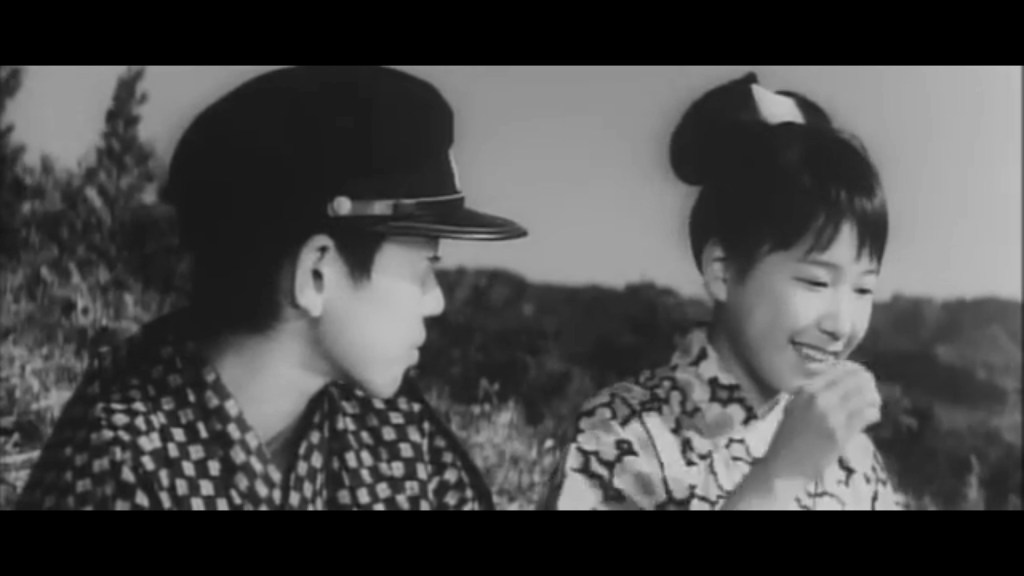
There, Takeshi confesses that he did not start the fire, even though he confessed otherwise at the police station, not only because of the repression of his sick or mentally challenged father, but also because of the unfair interrogation by the detective, who was desperate to get the truth out of the boy at any cost. It is impossible to remain emotionally unmoved when you see Takeshi’s father carrying his lifeless body, surrounded by the gaze of the townspeople, and as an omniscient observer, the viewer knows that Takeshi was never responsible for the devastating accident.The first part ends with a lesson for Koji and his classmates from the school flag competition, in which unity determines victory, despite differences.
 Pantagruel´s liquor
Leave a comment