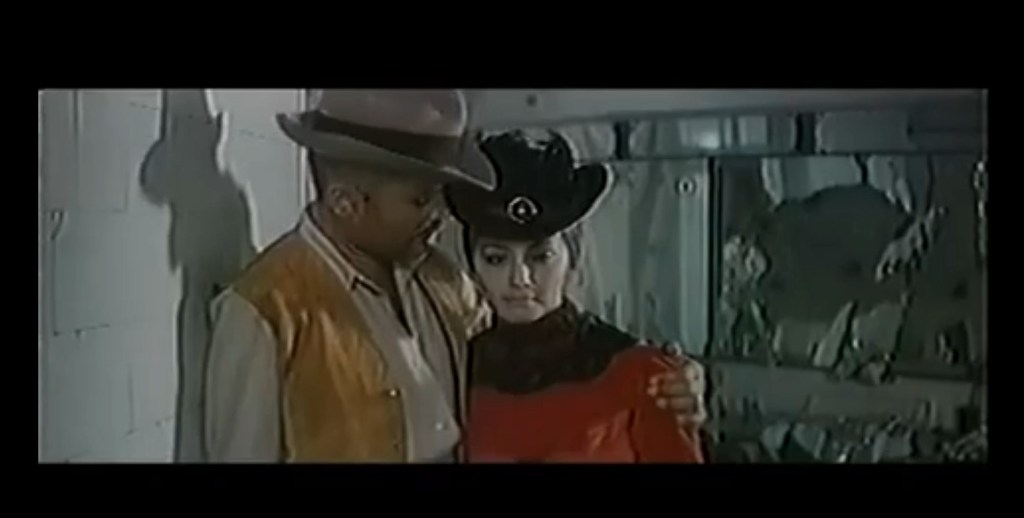
Only the score by maestro Eduard Lazarev fills this rare work in America with a strange delight. Things have changed completely since the tyranny of the Lords of the Land took over this region of what is now Moldavia., as fugitive Grigoriy Kotovskiy discovers upon returning to his village in Bessarabia. His father, the prince’s mechanic, did not receive a penny for his 40 years of service to the “honorable” royalty. That is why he does not hesitate to visit His Highness to ask him to be so kind as to give at least 500 pounds of grain to the starving farmers. As for the guards who patrol the dusty settlement, even in the canteens {I swear}, they may be more fearful than Grisha himself. They recommend that he flee as soon as possible, while he still has time. But it was already too late to turn back. Days earlier, he had escaped from the fort with ingenious tricks, usurping the identity of a high-ranking fascist officer and with blood as cold as a corpse, he prostrated himself before the officers on guard, ordering them to bring him a horse. His stay in his old homeland will only be a breath. He immediately sets off with followers willing to commit the same atrocities (as the fascists call them) of dispossessing the landowners and returning it to whom it belongs, in money or spices, it doesn’t matter.

The farewell, oh, Aunt Dana and her anguish over whether her son is alive, Aunt Maria caring for her husband in the cantina, carrying their baby. Everything is behind him, but we must remember that he is a legitimate hajduk, the local word for bandit. The first rich man they attack is persuaded to let them pass because he uses the same trick he used to escape from the fort, disguising himself as a military officer. They steal everything and have their first disagreement with Bugor, one of their fellow bandits who aspired to get rich from the thefts, until Grisha made him see who he would return the loot to. In the next assault, the stagecoach brings him a surprise: the former daughter of the wealthy boss he used to work for, Veronika. Of course, seeing her, and her seeing him, was a bucket of cold water after eight years of confinement without seeing each other, and they had unfinished business. Of course, he would not allow anyone in the gang to take a single earring from that carriage. Here begins an intermittent use of flashbacks recalling the beating he received from the aristocrats, family, and friends of the beautiful woman for dancing with her at her insistence. The idyll is cut short time and time again, first at a celebration or banquet where the hajduk decides to wear a beard that matches his stylish moustache and a formal jacket; he dresses up, but not as a soldier this time, but as a proud and aristocratic potentate. His lover, however, is the only one who recognizes him, and the Prince of Odessa and other nobles were enjoying the buffet until they found a bullet in their salad. When they called the cook and reprimanded him for such carelessness, Kotovskiy made his appearance. He threatened them and demanded that they pay the waiters and staff, warning them not to report anything.
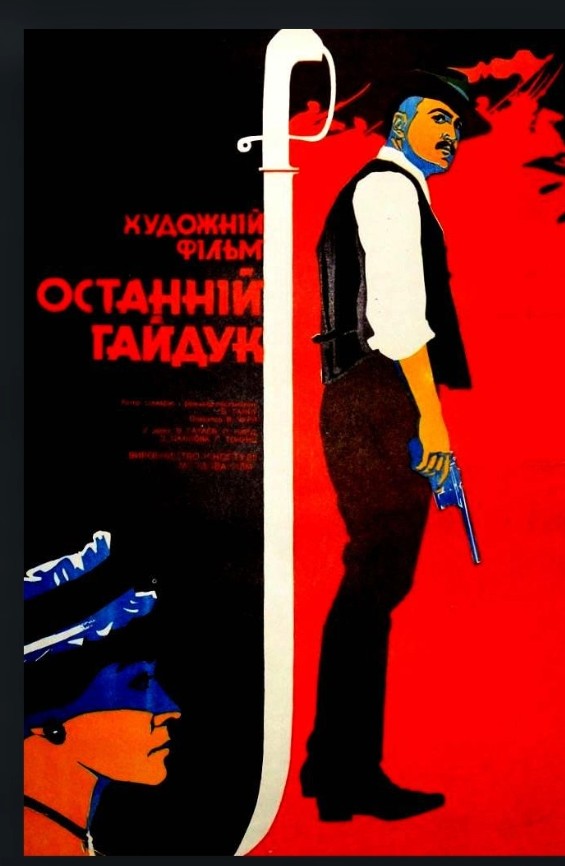
That is exactly what they did. The Romanian government’s abuses against the farmers continued, but as the arsonist Bogdan told Grisha, these are no longer the days of the hajduks. Grisha should have understood this when Veronika personally intervened in a shootout where the authorities had cornered the outlaw. Unable to do anything, she left saddened but furious, “choosing death.” Later, Kotosvkiy’s followers forced the prince himself to work the land to gain empathy and consideration for the farmers. The prince seemed to learn his lesson under the sun and, exhausted, even asked the servants to bring wine for everyone in that part of the field. And yes, the wine arrived, but it was to distract the rebellious peasants, to get them drunk, because a few minutes later they were ambushed by government forces and this time there was no way to escape. Kotovskiy was arrested and Veronika was in the front row at the Odessa court trial where he pleaded guilty and was sentenced to death. But then luck smiled on the popular hero again because, in the context of Posledniy gaiduk, while Grisha was imprisoned and awaiting death, it transpired that King Mihail I of Romania had abdicated, and this historical reference served to show the moment of triumph of the Russian communist forces and, with them, the anti-fascists, with the end of the occupation, providing a specific time frame and a powerful symbol of victory over fascist oppression in the region of Bessarabia and the Black Sea.
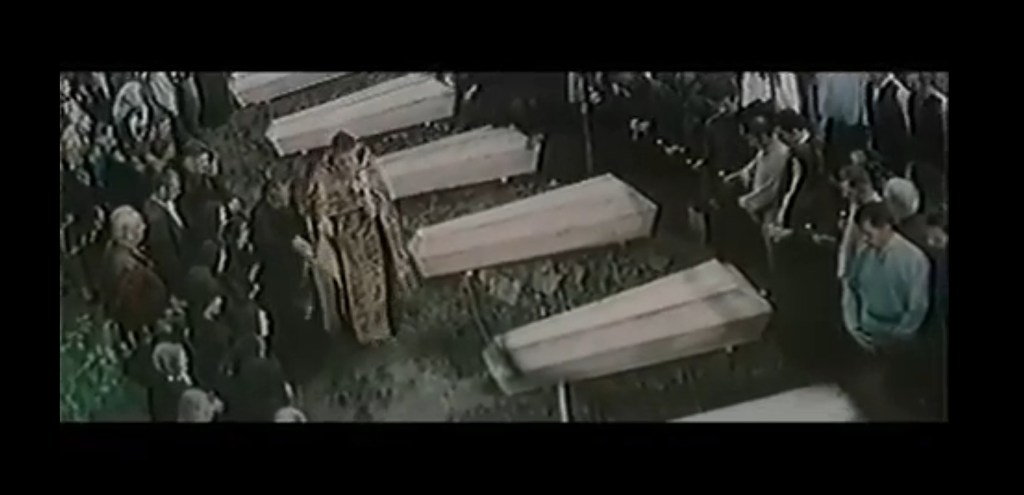
The political prisoners are released, and Grisha is almost prevented from leaving because of his reputation as a murderer, which, at least in this film, is not justified, but the other prisoners refuse to leave until Grisha accompanies them. This is how the film ends, when, after his sentence is commuted from death to imprisonment and from imprisonment to becoming a Bolshevik officer, the hajduk Kotovskiy is used as “cannon fodder” by the Russians to fight on the border, and his followers do not leave his side, even though he should have visited the beautiful Veronika for the last time as a high-born lady who would never flee from a bandit she fell in love with because of the romanticism of bullets and protests, rather than a quasi-suicide at the front line.The surprise Kotovskiy will get when he is already a high-ranking army officer and the guards tell him about a rebellious Bolshevik prisoner in the dungeon is that it is Bogdan, his great friend, whom he finds again in new circumstances and sets free.
 Pantagruel´s liquor
Leave a comment