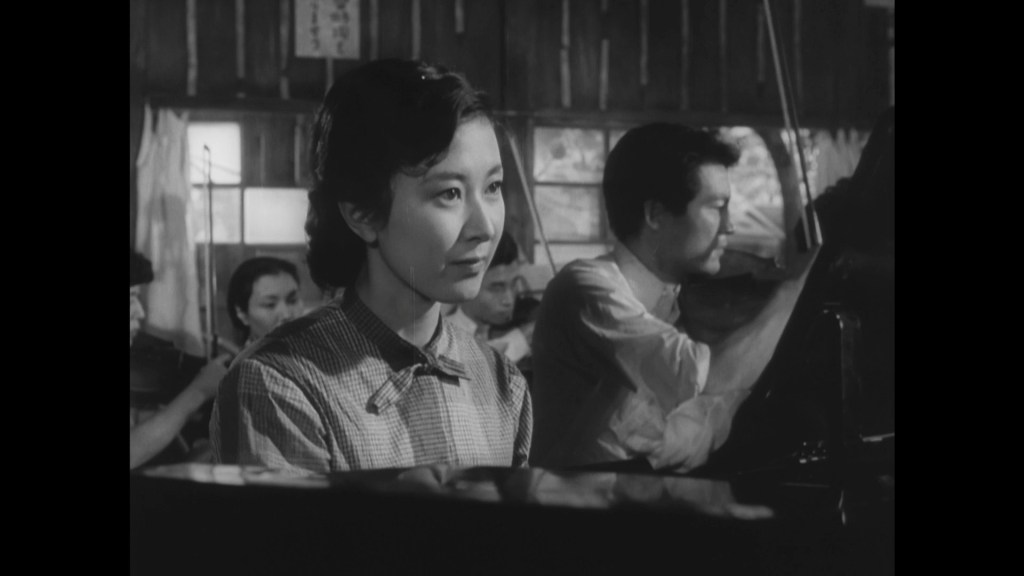
A work of overflowing and rhythmic lyricism that can also be seen as a programmatic film, allowing me to echo the baroque or classical music genre, such as Vivaldi’s Four Seasons, which the Prete rosso conceived musically to recreate the images, visual aspects and emotions of the seasons. Known for his communist affiliation, Tadashi Imai uses the real hardships and tribulations of these musicians in a nondescript, off-the-grid village to advocate for the cultural altruism that should spread to different strata of society, in this case the musical sphere, to reach even the most novice audiences or those unfamiliar with Beethoven, Bizet or Ottorino Respighi.
In the shabby little village, called Takasaki, I think, he will completely revolutionise things, at least at first, with the almost late, ill-disposed, improbable, haphazard and almost useless arrival of the demanding new conductor Hayama, who almost leaves and returns on the train without meeting the misguided group of musicians, were it not for the fatuous manager who catches up with him. To begin with, the woman who will become his wife, the pianist, rehearses on the ground floor and he, Hamaya, can almost hear her responding from above as he plays Beethoven’s Romance for Violin and Orchestra No. 2.
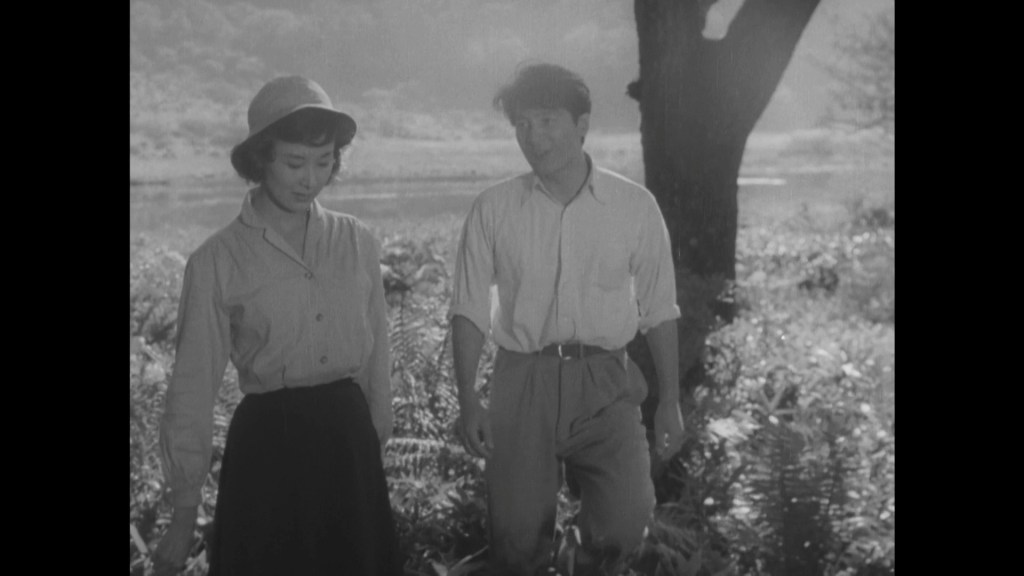
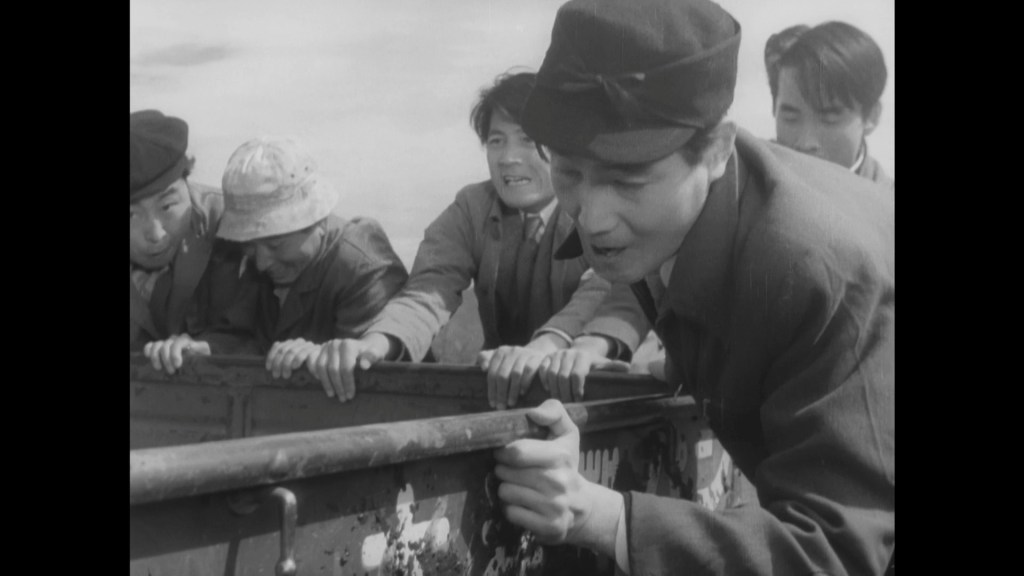
It is not often that we see such excellent use of time, and here there are indeed no wasted moments in the 150 minutes. The length is truly justified, given that the audience will witness not only sublime compositions such as Tchaikovsky’s Piano Concerto, but also different versions of the musicians themselves, who have to play in hangars and spaces occupied by other representatives of the people, as they can barely afford a permanent place to rehearse. That is why they have enormous significance, because of that communist heroism, the villagers who swarm around the musicians in the countryside, as can be seen in a wonderful scene when Keiko Kishi’s character, the pianist, flatly asks Hamaya not to abandon them and go to Tokyo, because she personally will be bored and won’t know what to do. They fall in love in this bucolic highland setting among the ‘Pines of Rome’ of Ottorino Respighi, and running hand in hand, they catch up with the musicians in the hollow and play for the villagers. The brave musicians go from poverty to vulgar destitution, from mistrust and camaraderie to fistfights when one of them pawns his instruments, the horn and the oboe, to buy rice or pay for lodging, which is shared at certain times by third parties.
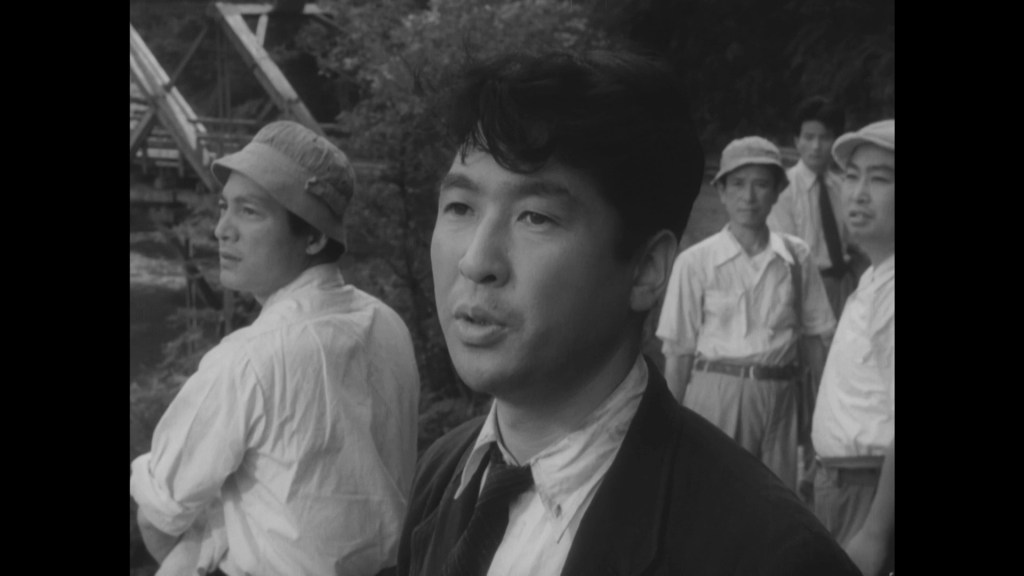
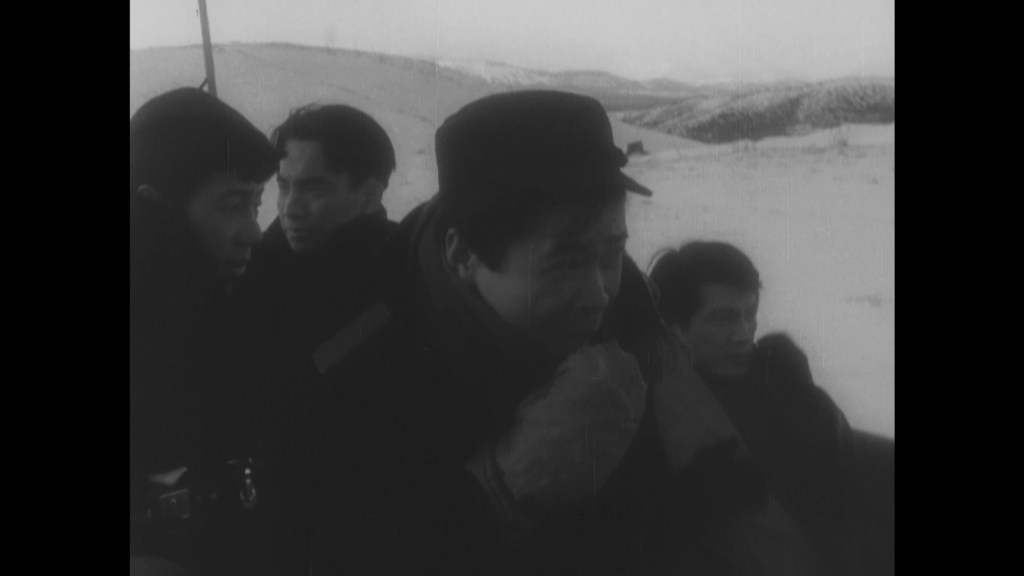
Hamaya will always wonder if he should have left for Tokyo, and he will ask himself that question again when it seems that his wife is beginning to lose her sight. In any case, after the drunkenness and fighting over pawning the instruments and confirming their disintegration as an orchestra, an unexpected turn will change their perspective, just as they are carrying borrowed instruments and climbing the mountain to play in front of a large group of children whose best future, as the manager eloquently put it, may be nothing more than carrying coal and working in the sawmills, and who may never hear a live concert again.
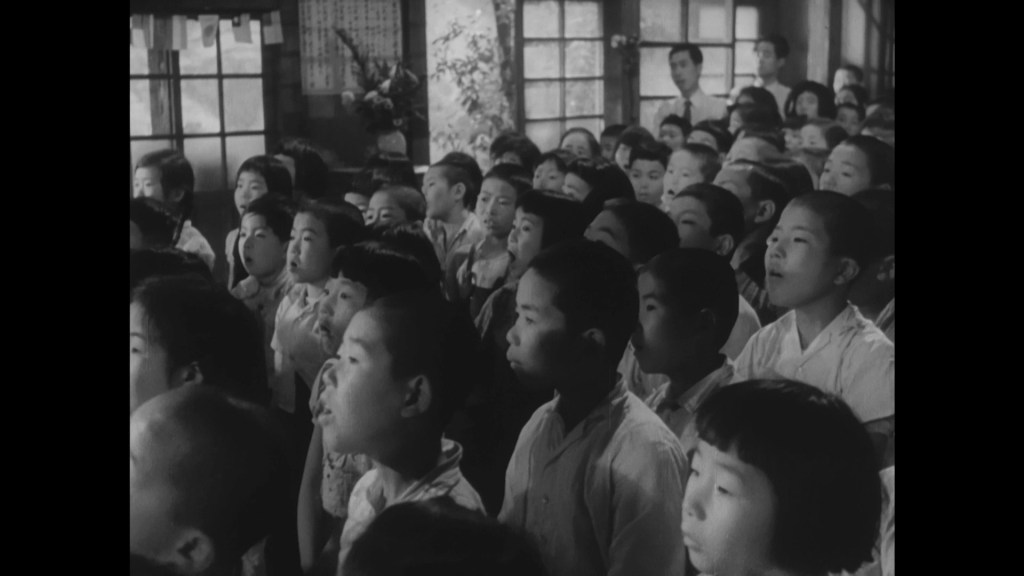
It is a real treat when they perform the popular Japanese song known as Tombo Red Dragonfly.From the emotional and beautiful farewell from the hill in the distance, the children became the inspiration for the musicians, who, in an ellipsis, will change their mindset and, in a time jump of perhaps half a year or more, when the conductor returns to the village and assumes that the musicians are in a bar or worse, he could not have been more surprised to see them performing Edward Grieg’s Piano Concerto in A minor. I regret that they did not end the film with this piece instead of the trite final movement of Beethoven’s Ninth. A masterpiece. By any standards.
 Pantagruel´s liquor
Leave a comment