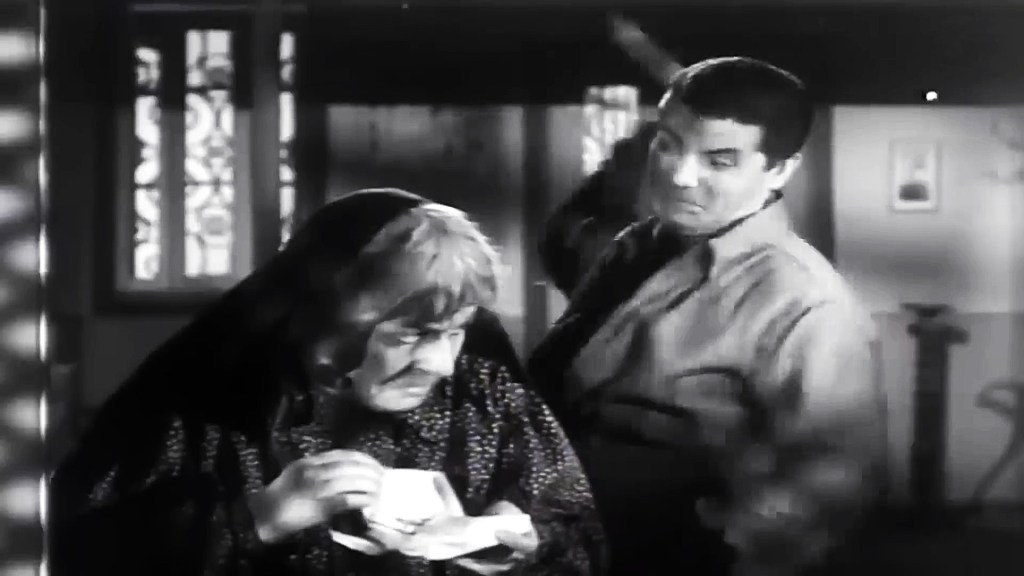
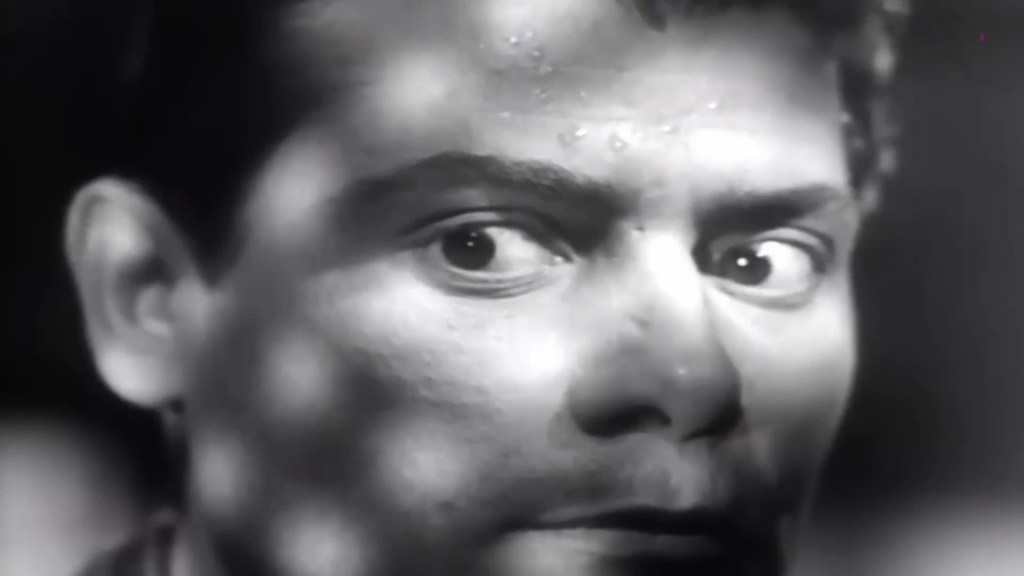
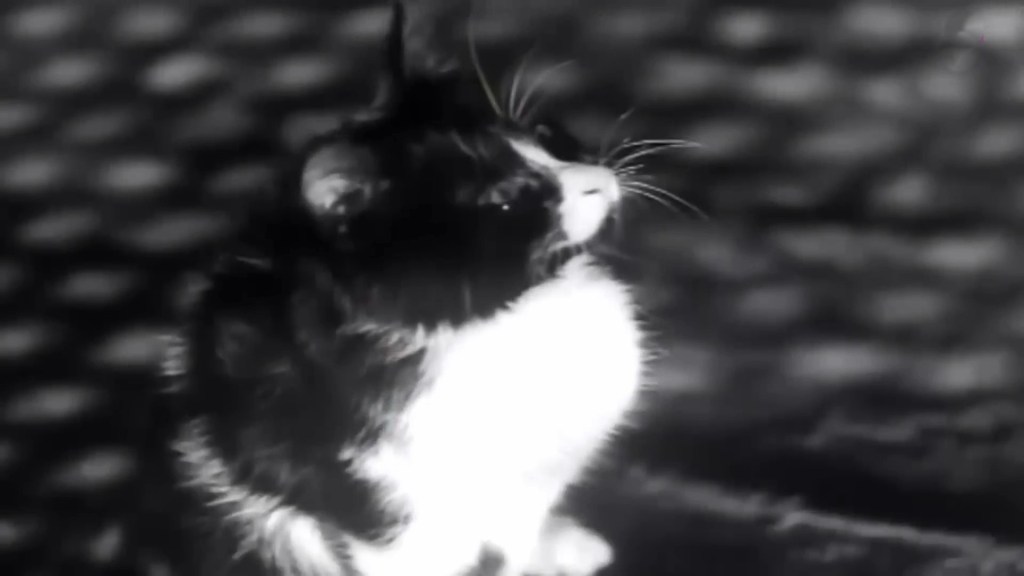
The only adaptation I know of Dostoyevsky’s Crime and Punishment that is spoken in Arabic, and in fact, it is a remarkable film for its flashes of German expressionism, especially during Ahmed Hosni’s stabbing of the old moneylender Mehlaal and the strangling of his unfortunate sister – not to mention the sinister nod of the cat.
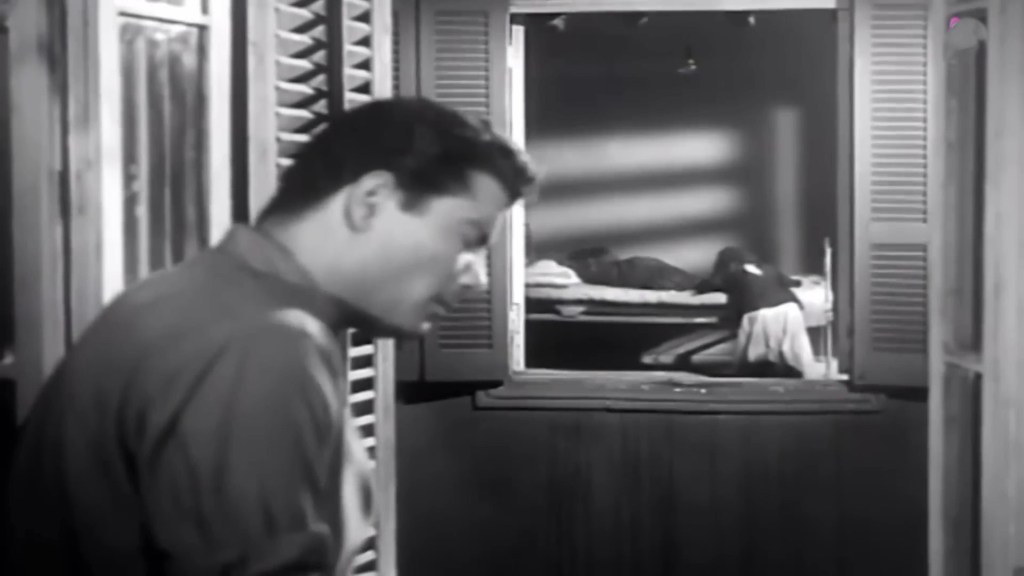
Of course, it strips away Dostoyevsky’s psychological drama and focuses instead on the sociological peculiarities of the time relating to the economic precariousness in which the student Ahmed, originally from the Ammar neighbourhood, lives. These hardships make it perfectly predictable that pride will explode – as the man of the house – humiliated, penniless and seeing his sister Nabila being offered as merchandise by her own mother to Labib Bey, a man three times her age.
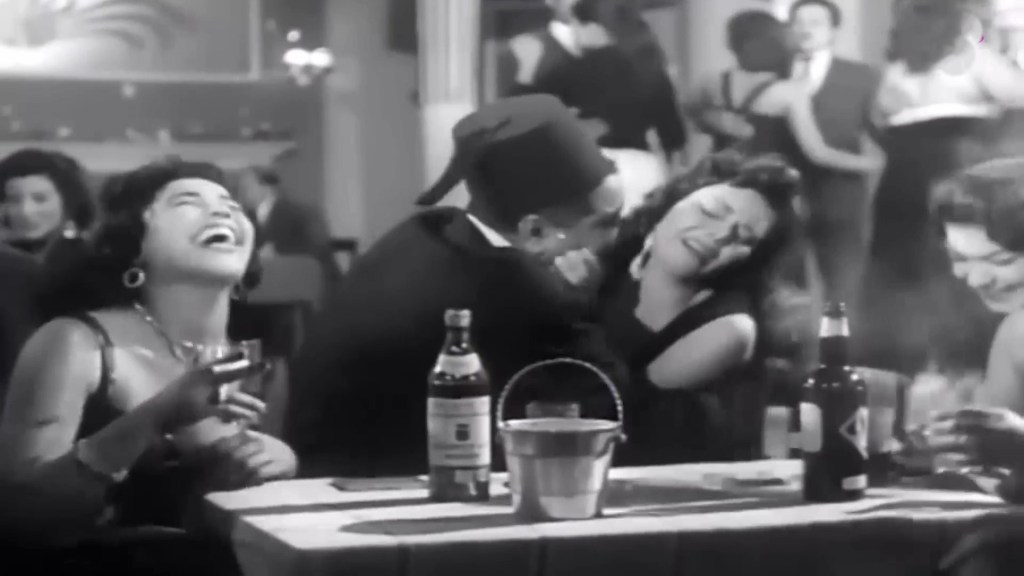
Add to this the hardships of Sumaya, with whom Ahmed is in love, whose father is an alcoholic and whose nephews – malnourished children at home, the children of Aunt Wahba—unable to find work, she is practically forced into prostitution at the cabaret where the owner first inspected her from head to toe in an outrageous manner, as if she were a mare for breeding, and then threatened her if she arrived late.
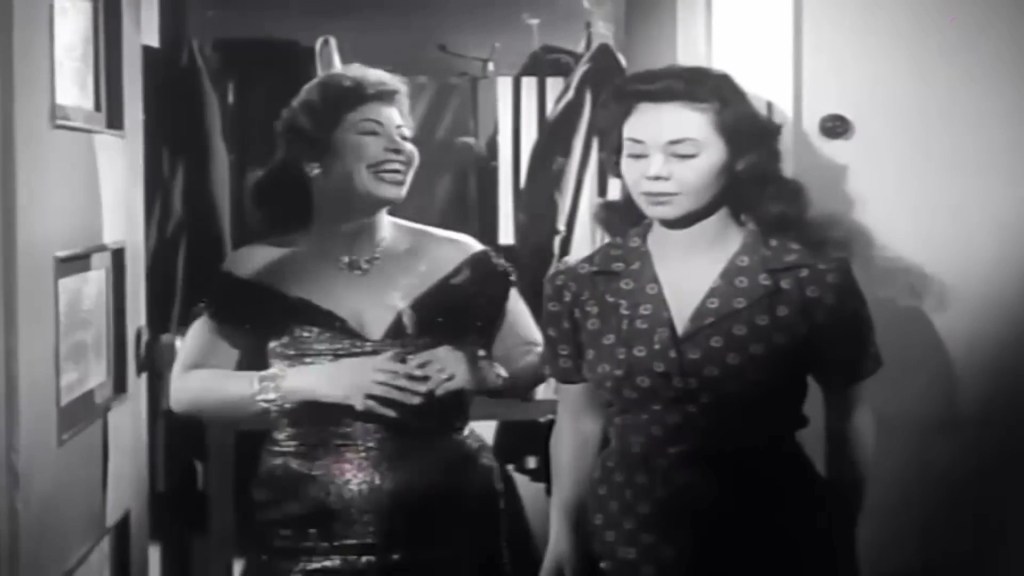
Meanwhile, Ahmed has nightmares about the deceased and visions of the wooden gallows that represent capital punishment; moreover, just like in the novel, he has been called in by the police and suspects that it is because of the crime he committed by stabbing the old moneylender and hanging his sister Uh Hilal, but just like in Crime and Punishment, he was called in because of a complaint filed due to his late payment of rent; instead, Ahmed practically sabotages himself because of his nervousness when they are interrogating one of the bricklayers, who happened to be working in the building where the murder took place, questioning him in the line of suspects because one of the workers was arrested when he was found with a bracelet belonging to the deceased, which Ahmed accidentally dropped when he fled in fear with the stolen goods.
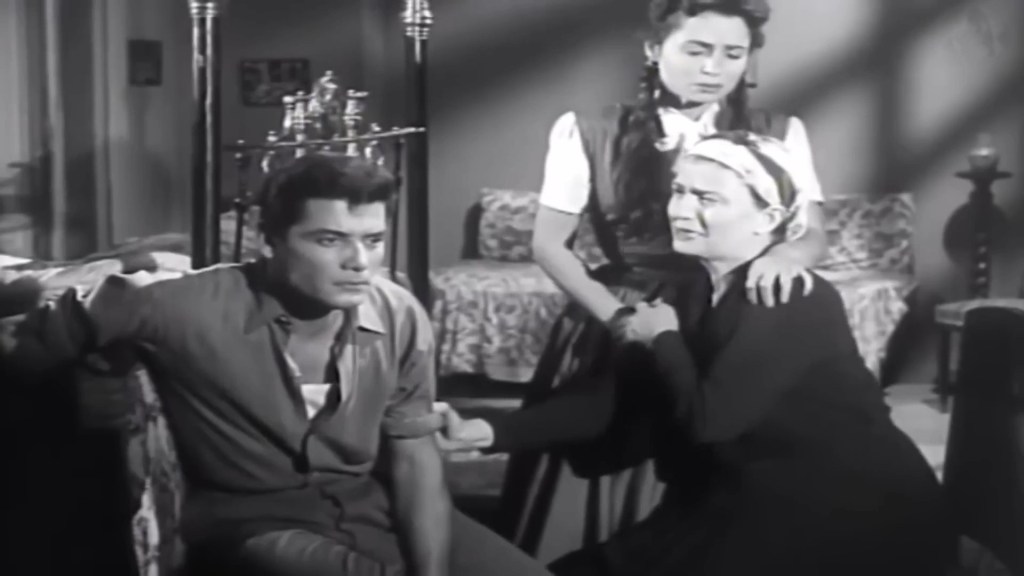
Professor Mahmoud Fahni, who is in fact Hussein’s cousin and his best friend since childhood, suspects him when he sees him so distraught. Fahni does not take his eyes off him, which increasingly angers the student Hosni, who in turn reproaches Sumaya for working in such a vulgar place, serving and sitting down to drink with gentlemen.
One of the builders or workers blames himself and causes a scene when he arrives at the police station while Fahni is questioning Ahmed for the umpteenth time. Upset, Fahni pressures Ahmed to confess and gives him 24 hours to do so, in order to reduce his sentence by returning the jewellery and money. It is a pity that in the middle of Hussein and his sister Nabila’s wedding, Ahmed must leave them to go to the police station and turn himself in, just as the play ends.

 Pantagruel´s liquor
Leave a comment