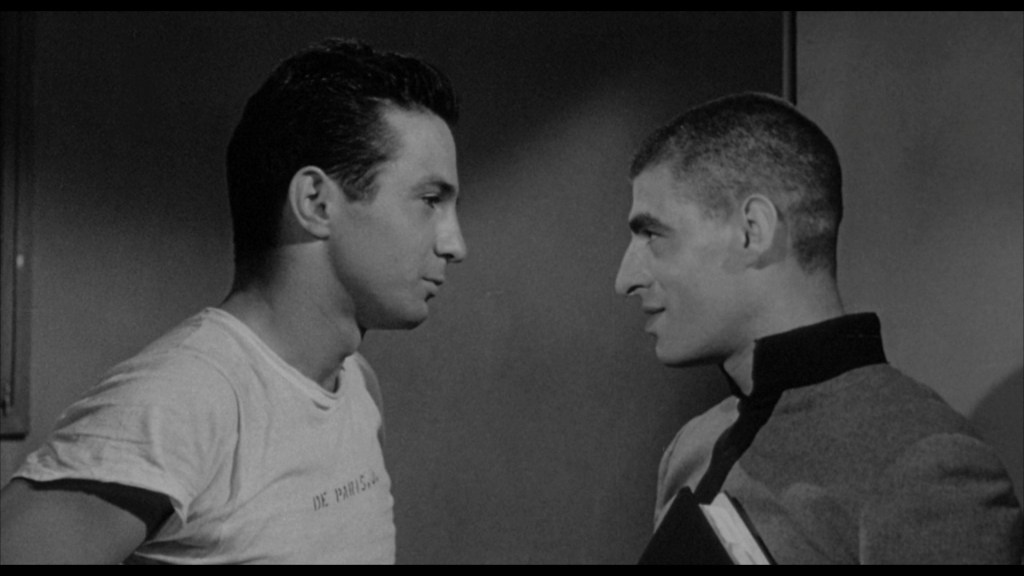
A terrible film, whether censored by the Hays Code or not, it betrays Calder Willingam’s literary gem, which exposed—exactly two years after the end of the war—the dehumanisation of cadets through a veneer of generals and high-ranking officers with medals that exalt honour and justice for the country but in reality reward Foucauldian disciplinary mechanisms with corruption. The original story was mangled, blaming De Paris as ‘the bad guy’ with Manichaeism, when in reality it is General Draughton who intimidates and supports violence within the academy. Read the novel or the summary I wrote at https://wp.me/pguJCZ-qn

To begin with, this film makes the mistake of starting with the clandestine poker game as part of the Hair of the Hund Club – which, incidentally, is not mentioned in the plot until 1:02:20, when De Paris arbitrarily imposes the date with the blonde on Simmons, despite knowing that he aspires to be a chaplain and that the timid cadet’s family would disapprove of his romantic contact with women. Starting this way makes it impossible to understand the bullying that Simmons suffers from the moment he arrives with his Ohio accent, and the character of Roger Avery, the general’s son, is invented with terrible luck and consistency to justify the entire film as if the story were about a bad apple in the military school. George Avery accuses senior officers of holding a forbidden meeting with alcohol and gambling, but when he arrives at the scene, De Paris and the other three are already lying down pretending to be asleep. As soon as the authorities find no culprits, they take Avery hostage and force him to drink until he is passed out in the courtyard and put on display – I repeat, this is a sequence invented to make Gazzara’s character appear as a perverse manipulator in the film, instead of consenting to all the misdeeds of Lieutenants Cadet, Cleer and General Draugton in the novel. That is why I said he masturbates (using his ‘hand’ to cause pleasure, he fondles the script and the novel and the whole story that will revolve around the suspicion that it was De Paris who orchestrated the expulsion of his superior’s son, George Avery. At all times, this film protects exactly what the novel exposes: the authority or superiors of the cadets, but it also changes the whole story because the ending is not a cadet court putting De Paris on a train. Regardless of the sword scene between Cuckroach, that is, Perrin, who likes to write and read poems to De Paris, the very title of the novel and the film cannot be understood with this horrible film version. End as a man literally refers in the novel to the way the cadet ends up becoming; alluding to the exaltation of a pernicious and degrading masculinity in terms of human values, because the cadet is a piece that is dehumanised to be filled with the passwords of moral ambiguity of the patriotic state machinery. As I mentioned in my review of the novel, the story presents an environment where emotions are seen as weaknesses and where violence — both physical and verbal — becomes the code word for optimising and achieving success as a “man”. Let’s look at the features, the expression of the expelled soldier Avery’s father when he summons De Paris. He looks hesitant, soft, and fearful. These characteristics of high-ranking officers in the original novel are completely opposite, where unity of command is not only felt but also unnegotiable. In an attempt to hide the arrogance and cult of personality of the general and others, what the film has done is present a false image that can only be pathetic and unreal.
I don’t recommend it, not even as a joke. Read the novel, it’s worth every chapter. Don´t beleieve me and read it…here I share the novel https://nitroflare.com/view/2F9BCDB2BA625C1/End_as_a_Man_–_Calder%2C_Willingham_1947_The_Vanguard_Press.pdf
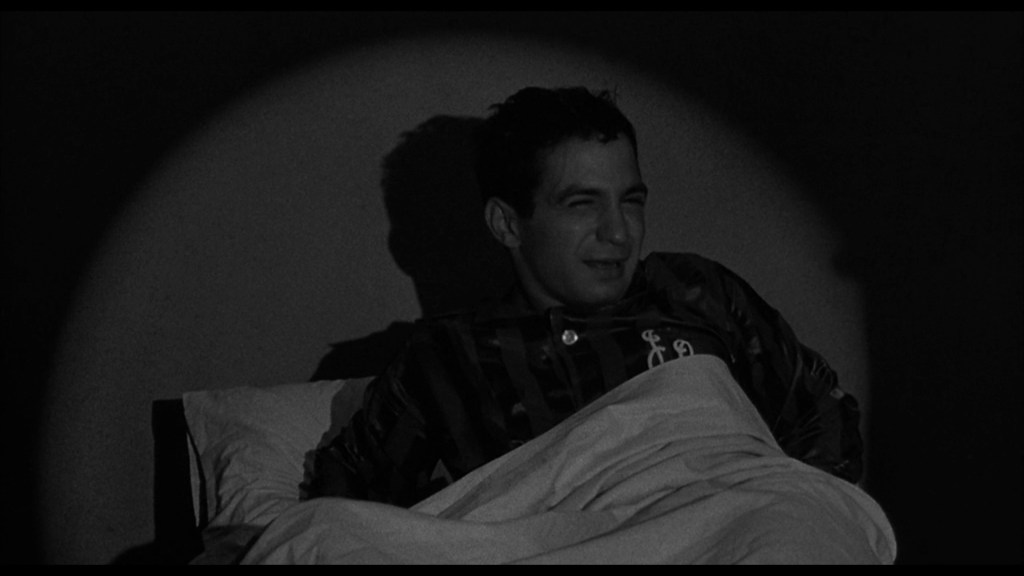
 Pantagruel´s liquor
Leave a comment