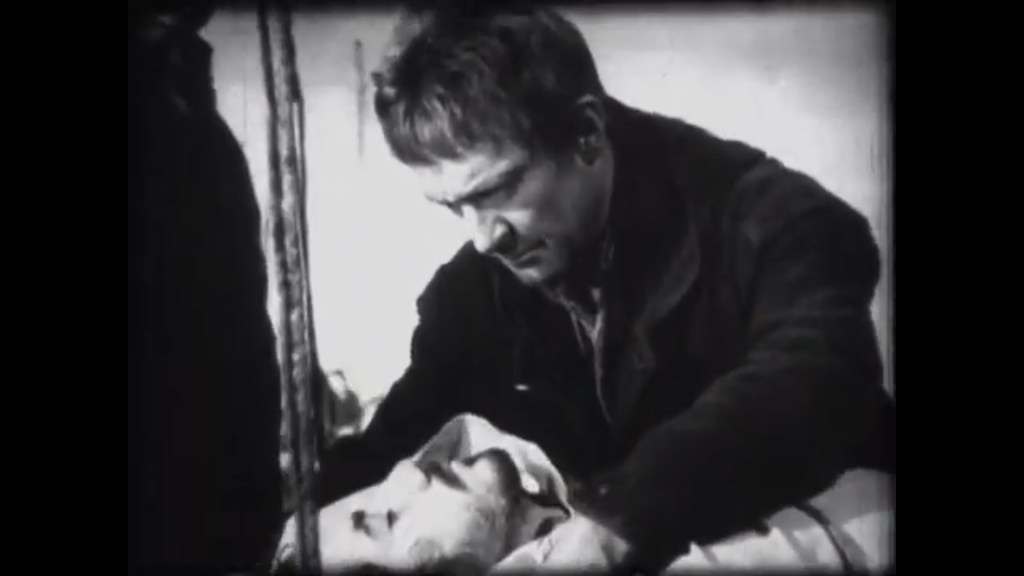
If Thomas does not believe he has the right – chance certainly did in choosing him – to grant absolution for her sins to Jeanne, a pregnant woman who believed she would die before giving birth on the high seas while being transported in a primitive boat by the cantankerous character played by Fresnay. He is not a rector, let alone a priest or minister, but while Thomas was scrubbing the floors of the empty, sticky church, the inhabitants of the island of Sein Île-de-Sein were demanding Mass, and the previous pastor would not give it to them because he had fled the place, fed up with seeing the sinful microcosm of the inhabitants who took advantage of shipwrecks, such as the last one from Nantes, to plunder it completely for their subsistence.
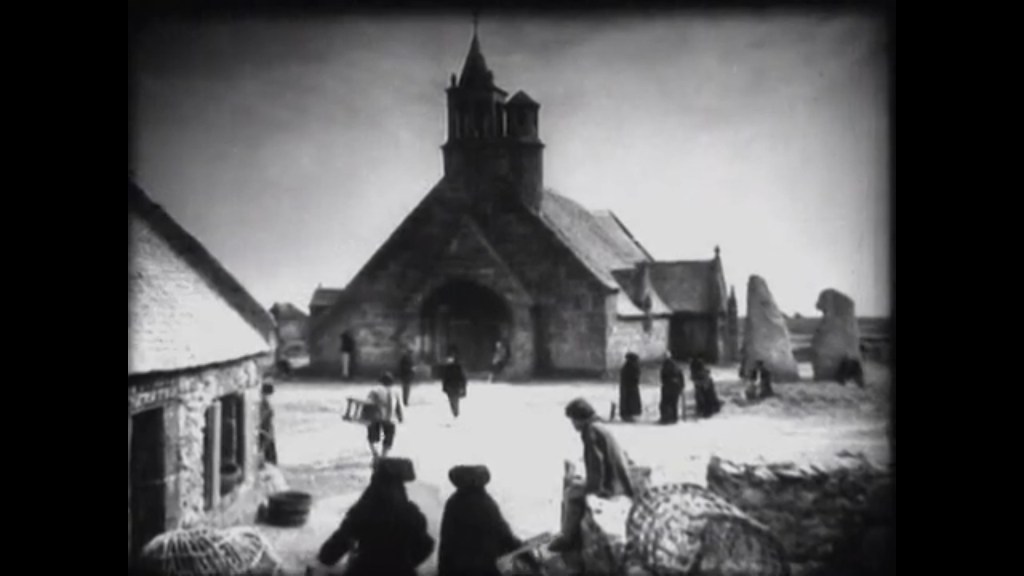
The reality is that Thomas only asked for alms and called everyone to sing, but the villagers begged him to stay in his post while another minister was sent. No one wanted to have anything to do with the island because of its bad reputation for savage pragmatism in taking what God gives to everyone, to put it in non-secular terms. In any case, the 35mm cinematography, which almost transports us to a type of expressionism, is impressive and renders irrelevant some continuity errors that are also mitigated when the viewer understands the technical difficulties encountered during filming on such an off-the-grid island with inhospitable inhabitants, or at least those who are wary of the discretion of their lifestyle. Furthermore, far from the technical flourishes and artifice of commercial cinema, Delannoy places the responsibility on the ‘improvised priest’, but not the importance of the plot, as we first observe the attraction – we do not know if it is love – for Scholastique Kerneis, which is mutual but will not be reciprocated by Thomas due to the great responsibility (replacing the priest who fled, without being a priest himself) that he has taken on.
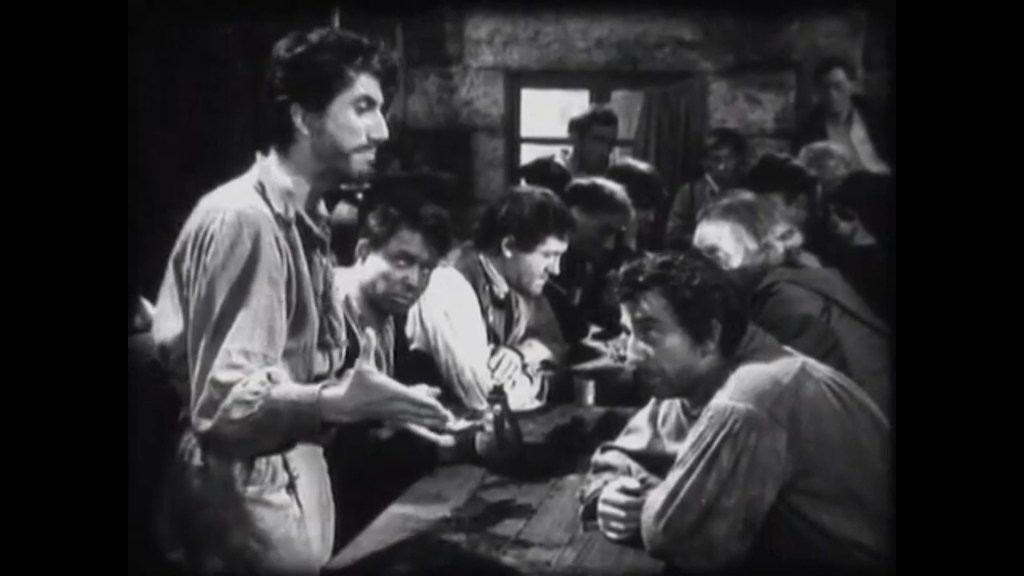
This infuriates the beautiful woman in black. Later, the viewer will ask themselves: can one allow oneself the sin of laughter at a scene in which the new improvised priest is asked to perform an exorcism? The good parishioner Joseph (Daniel Gélin) arrives with his mother, who is a kleptomaniac or suffers from another disorder that consists of giving away or selling objects – I mean literally giving them away. Joseph literally asks for an exorcism for his devilish mother: ‘You have holy water, don’t you? You put your hands like this, say a prayer and that’s it, the devil goes away!’ See 00:39:28. But Thomas refuses, obviously. This only makes things worse because when Joseph returns to visit them a few days later, amid rambling discourse, he asks for forgiveness for something he said he would do, kill his mother, but in reality he had already done so, when the woman fell from a boat and died.

Thomas does not forgive him and calls the whole incident an accident. But he does not absolve him, and Joseph insists until the end on forgiveness. Meanwhile, the other priest arrives on the island with open animosity towards the villagers and Thomas for posing as a priest without being one. The new priest takes over, much to the dismay of the people who already know Thomas and not the newcomer. To make matters worse, Joseph insists on absolution and thinks he will be punished for his sin, even though Thomas, not being religious, also insists that he cannot absolve him. The ending is tragic, as Joseph commits suicide by hanging himself and the new minister refuses to bury him in the island’s cemetery, which angers Thomas and attracts the inhabitants. In a procession, they get their way, forcing the new priest to retreat from the church entrance where they planned to bury the young man.
 Pantagruel´s liquor
Leave a comment