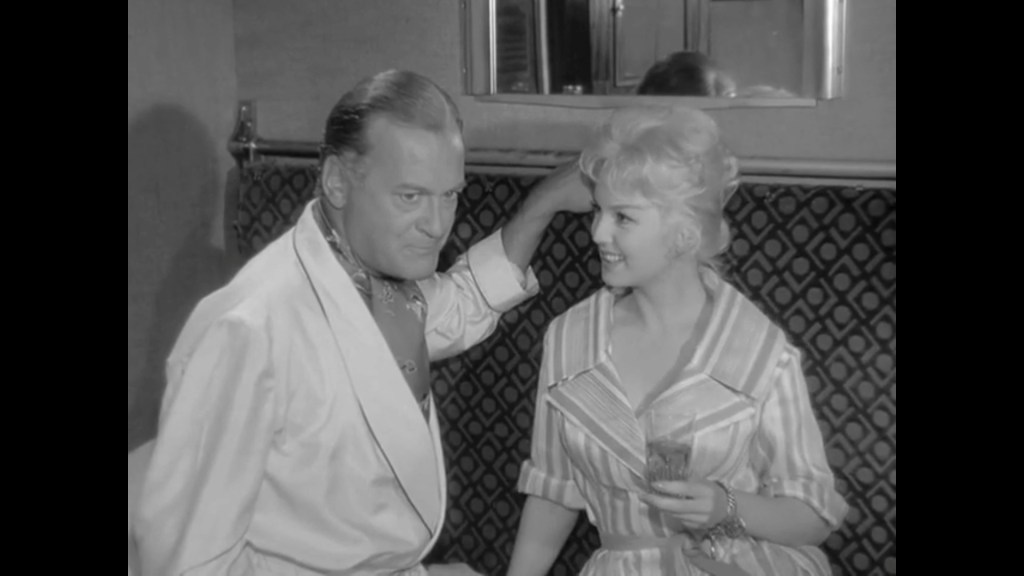
How is it possible to accept the flash of pure insanity that appeared on the face of Commander Eric Muller, once a sea captain, when he heard—disguised as Arsenio Lupin—the crazy idea of sinking a ship to collect 600 million in insurance money? Of course, Freudian theory of motivation and conflict points to a retired captain in professional decline whose repressed desires for transcendence, power and legitimacy will be satisfied by his young lover Catherine Moughin. It wasn’t the 600 million that triggered it, but rather the urgent erotic urges of a man with prestige and wisdom but no practical authority, while his lover, played by the beautiful Mylène Demongeot, rubs shoulders with young idiots who take on symbolic relevance in the practice of his life. In fact, the defence mechanism Muller uses to justify himself is intellectualisation, deluding himself that the sinking caused by the bomb will be without victims – which will not be the case when the stoker dies, as the imponderable reality will have to teach the old sea dog.
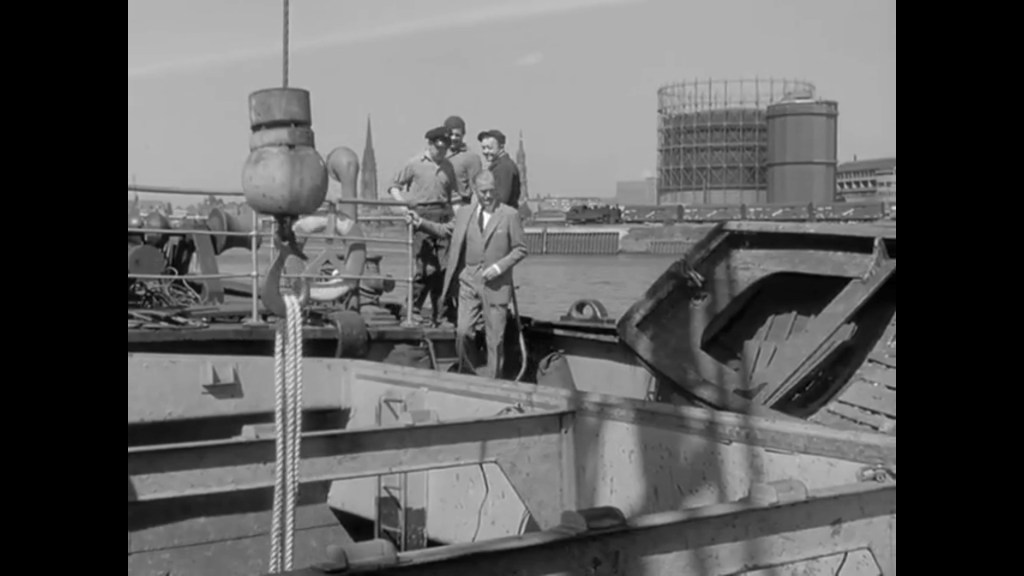
Do I sound like a broken record, fixing everything in my reviews with Freud, Nietzsche or Shakespeare? The 360-degree shots and pans of the Vieux Port (Old Port) in Nice and the Promenade des Anglais are excellent. With the bankruptcy of the company inherited by the two brothers, spendthrifts if ever there were any, announced, Muller had no apparent solution (but psychoanalysis goes deep, to where nothing is apparent or visible). What Muller did not imagine, first of all, was that Catherine would become his partner and that they would travel by train to the Volturnia, the cargo ship in question. Nor could he have foreseen that he would run into a number of former crew members with whom he had worked years ago. It was easy for him to simply rely on Mathias’ vast nautical knowledge and loyalty, and with his explosives expert, they mapped out the minefield in the Baltic Sea between Hamburg and Helsinki.

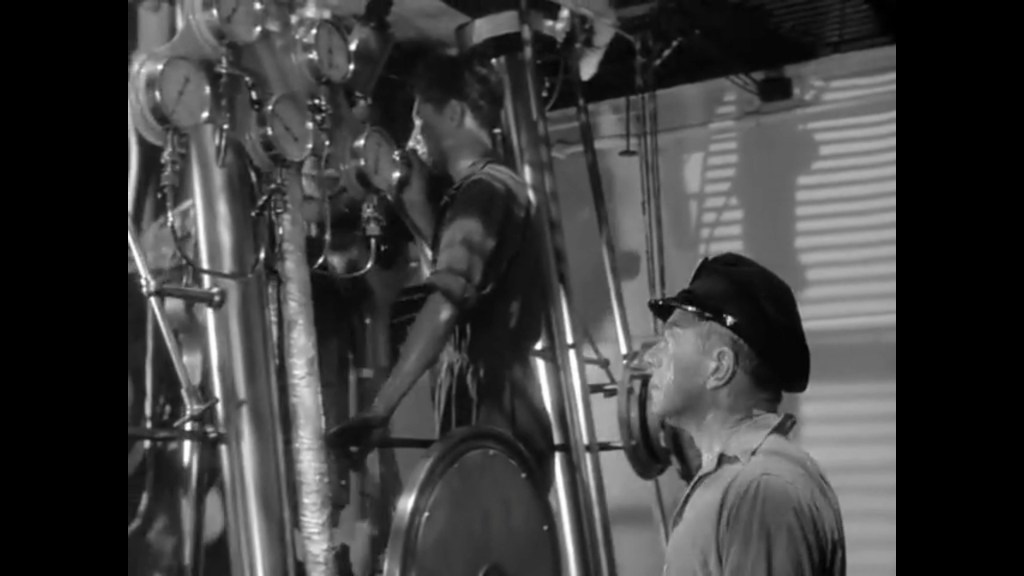
It is not an exceptional work, especially because of the odious lesson that someone added at the end as a moral for Muller’s change of plans, but at least it has a couple of interesting scenes, not only because of the drunkard looking for his dentures (the last film appearance of Jim Gérald, who died during filming), but also scenes of the steamship’s engines with coal-fired boilers prior to those used with diesel.
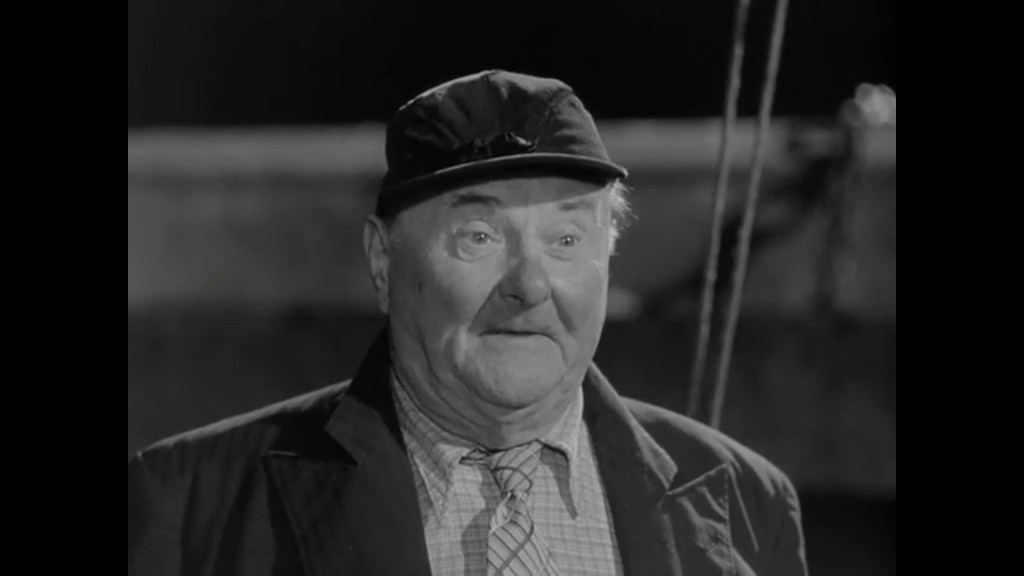
The script also has some funny scenes, such as when Mathias crosses the German customs and, when asked what he is carrying in his bundle, replies ‘a bomb’, when in fact it is a cat, or when, in the middle of the crossing, they toast with cognac and one of the sailors says as he drinks, ‘30 seconds less’, referring to the harmful effect of drinking on life expectancy, and the other, alongside Muller, replies that in 60 years of drinking, it would only be about 35 days, so it is very cheap to get drunk.
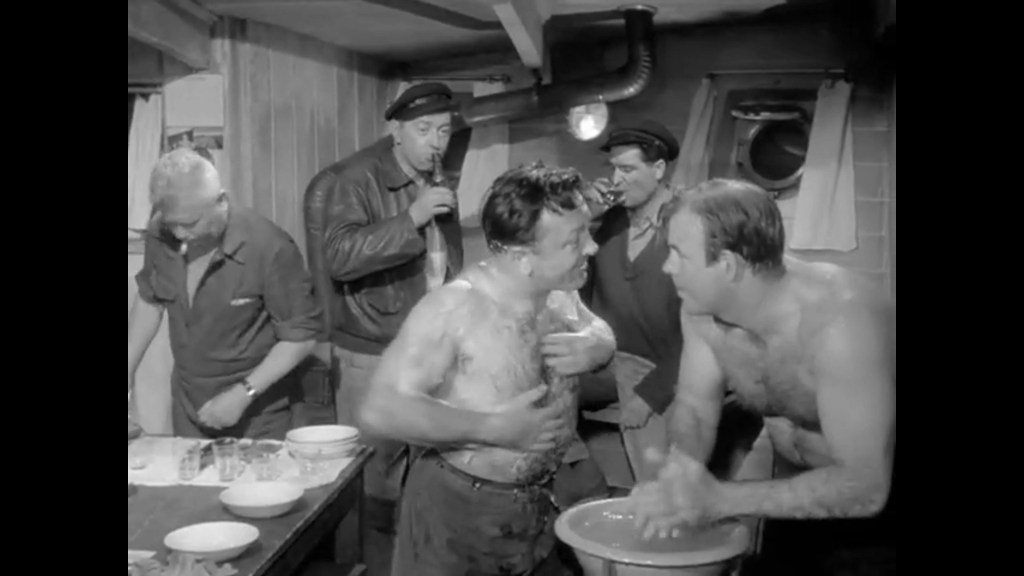
The tension between the ship’s captain and the commander over the decisions to head for the minefield becomes increasingly apparent, especially with the accident in the boilers or coal pulleys in the engine room, the death of Chewing Gum, crushed by the machines, and the remorse for changing course to the north. The captain realises that the cargo was not tea, but it no longer matters to report Commander Müller, as they are already returning to Hamburg and the newly impoverished Moughin brothers, especially Michel, will have to learn to work now that their shipping business has collapsed.
 Pantagruel´s liquor
Leave a comment