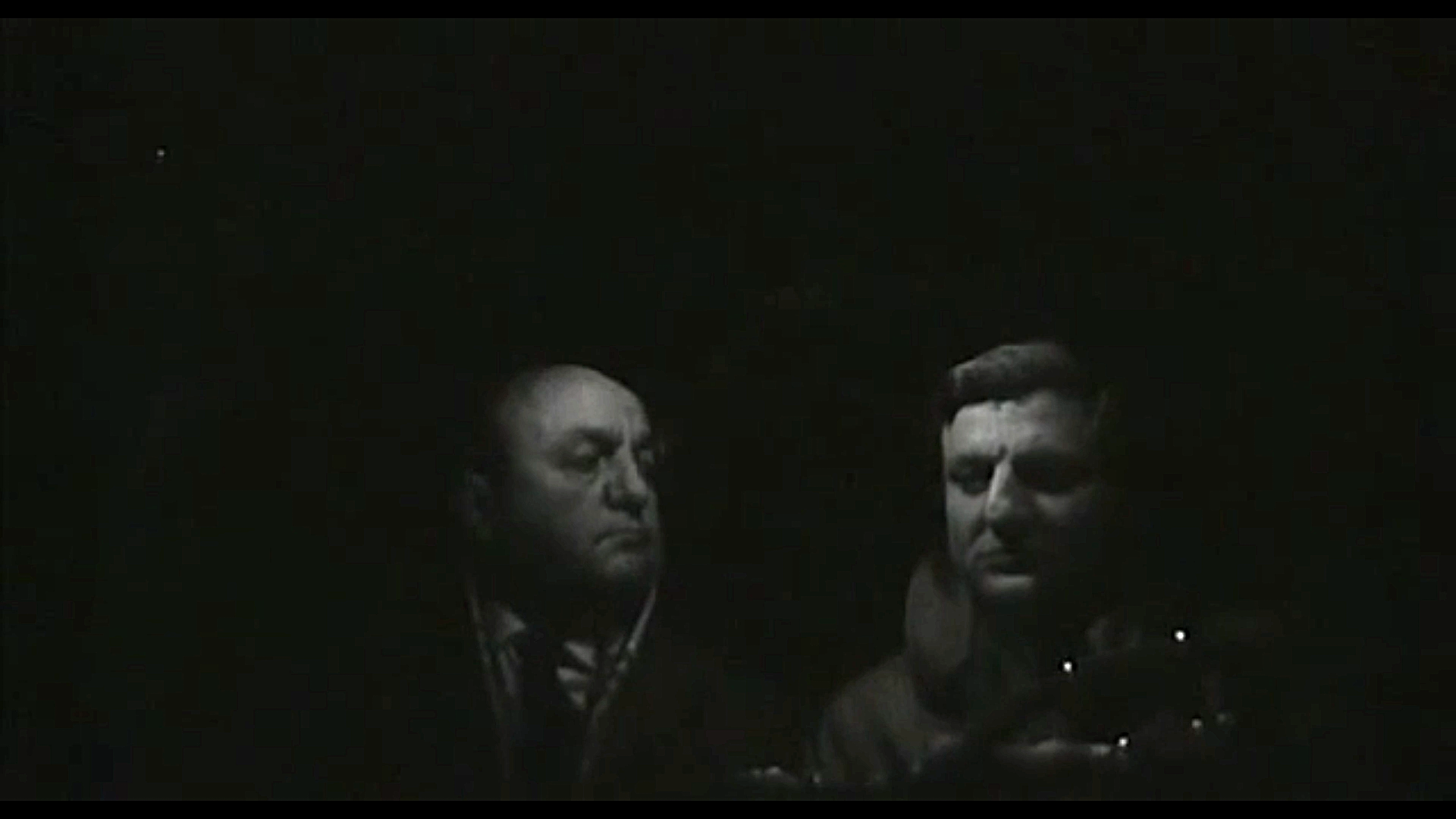
Let’s give the soft, vague mystery a chance… okay, the mystery that isn’t really a mystery. For it to be a genuine mystery, we would have to believe that Dr. Lefevre sincerely feels a deep sense of mystery at being approached by an unknown woman in the apartment building where he went to make a house call, even though he didn’t find the patient he was supposed to see at home. So far, the mystery is still in its infancy. The stranger wants the doctor to remember a man who is not his patient—according to Bernard Blier’s character—and whom he does not recognise either from the photo or by name (Guérin).
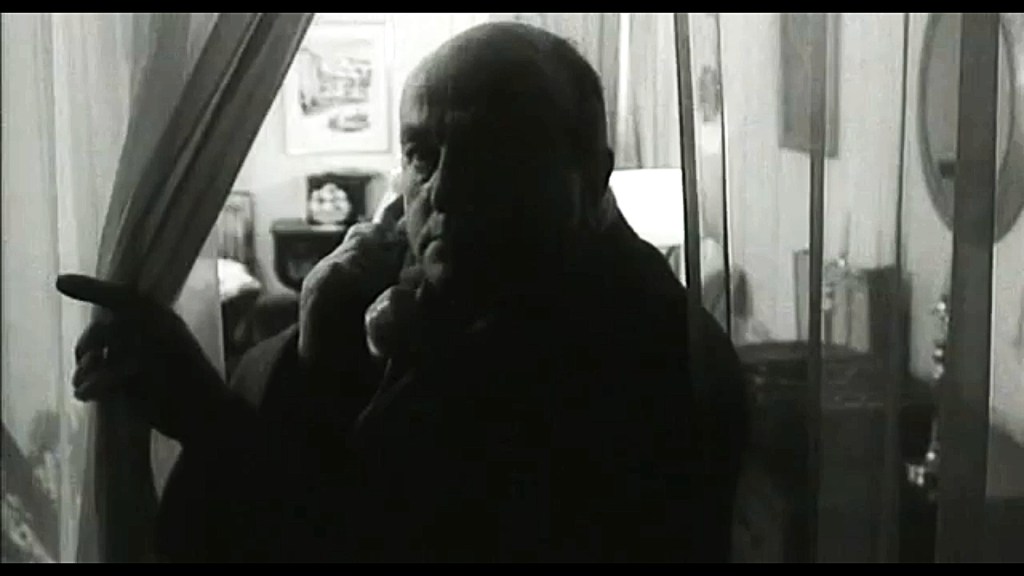
Let’s accept that if there is a mystery, it is absurd: why should the doctor be curious (which is what the mystery is based on) about a person he does not know—Guérin—when another woman he also does not know argues that he may have been her patient? Unless, of course, he was indeed his patient and he is hiding him for a reason we do not know, which has to do with the film’s tediousness and the fact that he reluctantly reveals himself a while after the film begins. But before continuing, we must not forget that 12 years later, in ‘Bufete froid’ (1979) to be exact, Blier will perfectly tie together the loose ends and sketches of the present story. Immediately, or perhaps not immediately but at 0:25:00, when the doctor is called back for a consultation – and locked in an apartment on what appears to be the eighth or ninth floor – we see that the men who summoned him there, one of them with a hoarse voice, look like the same men who pretended to be Guérin, both at the Hotel Camelia and at 12, Rue Traitengt, where he encountered the unknown woman. Finally, he admits that he does know Guérin, the stubborn doctor, recognises him as a patient and is analysing a knife or samples of it in the laboratory, which he has provided and whose results will take a week.

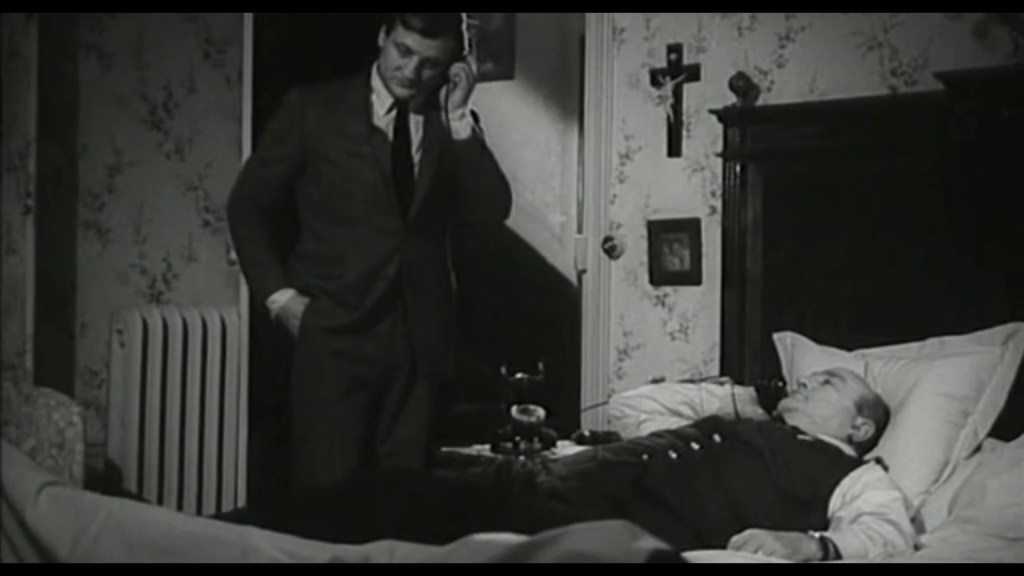
The strangers try to bribe the doctor to certify Guérin’s insanity and ask him for his current address so they can contact him when the results of the analysis are ready. Lefevre explodes in anger and orders them to open the door, but first the man with the gruff voice touches his weak spot: his daughter. They know Sylvie Lefevre’s address: 35 rue Perronnet, 6th on the left. This changes everything for the purposes of the film’s false mystery, but not for the film itself, which has no other moments of tension except for the arguments at the doctor’s house with Bruno Cremer’s character, who interrogates him for hours and assumes that his friendship with Guérin, rather than a doctor-patient relationship, has something to do with him being a spy and his trip to Poland years ago where he met him. If no one has gotten bored reading this, believe me, you’d probably have less luck seeing it in the film without changes, except for the car accident involving Dr. Sylvie’s daughter and her suspicion of her father’s strange activities, without knowing that the unknown man is urging her father to find Guérin.Worst of all, in the end, Guérin’s apartment is found anyway, and he is found unconscious. Finally, the group of gangsters led by Cremer is released.
 Pantagruel´s liquor
Leave a comment