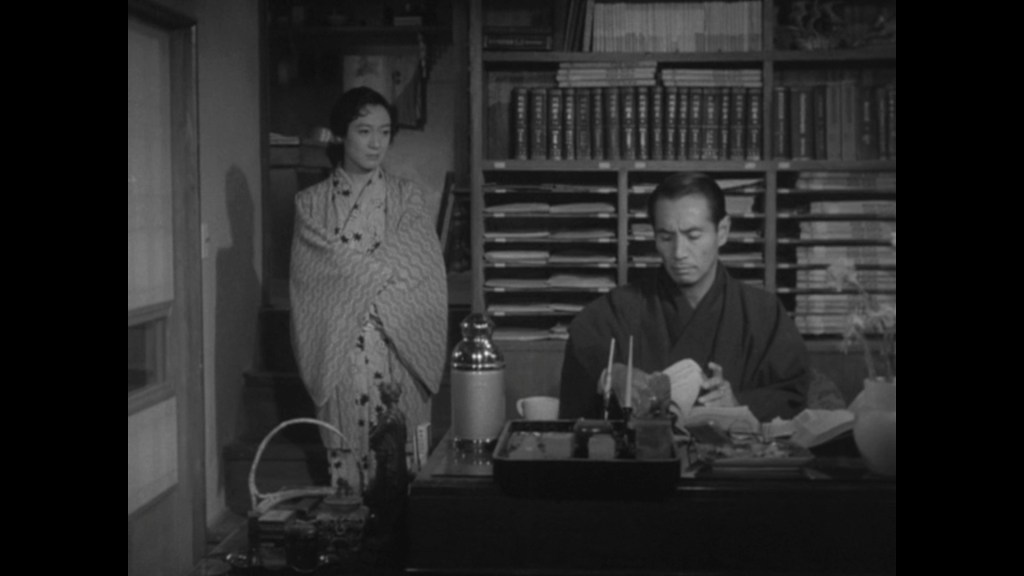
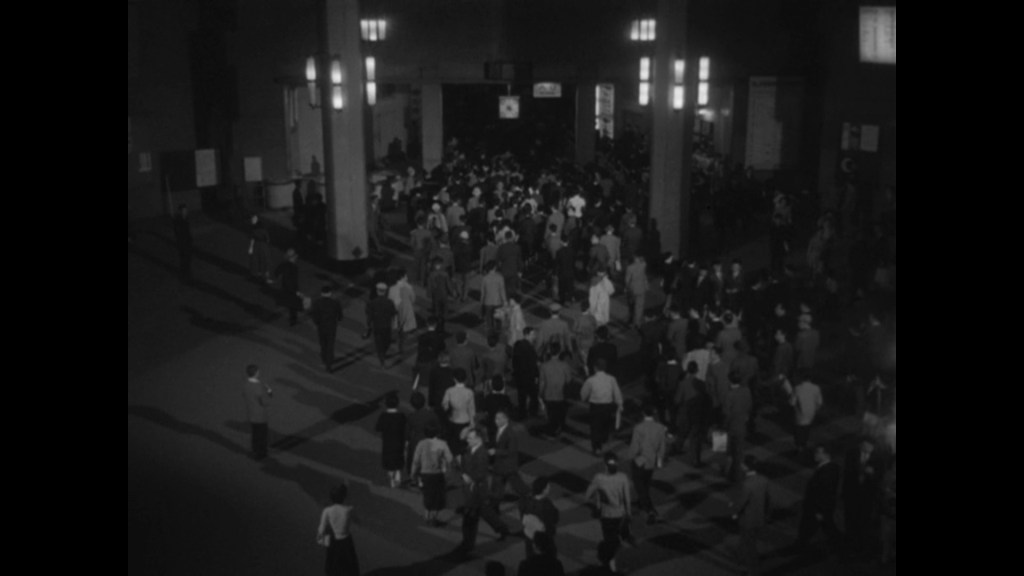
It´s an acceptable adaptation by Kawabata. The marriage between the beautiful Ichiko and her husband Sadatsugu enters into crisis with the arrival of their niece Sakae, who has suddenly come to the city. Although she initially stays in a hotel, fleeing from home, from where she shows Ichiko how she watches passers-by entering and leaving the station, she ends up settling into the Sayama home. The couple adopted the sentimental and reserved Saeko because they have no children despite more than 10 years of marriage, and the film indirectly addresses social pressure through the jokes of friends who say, ‘They’re not a united couple.’
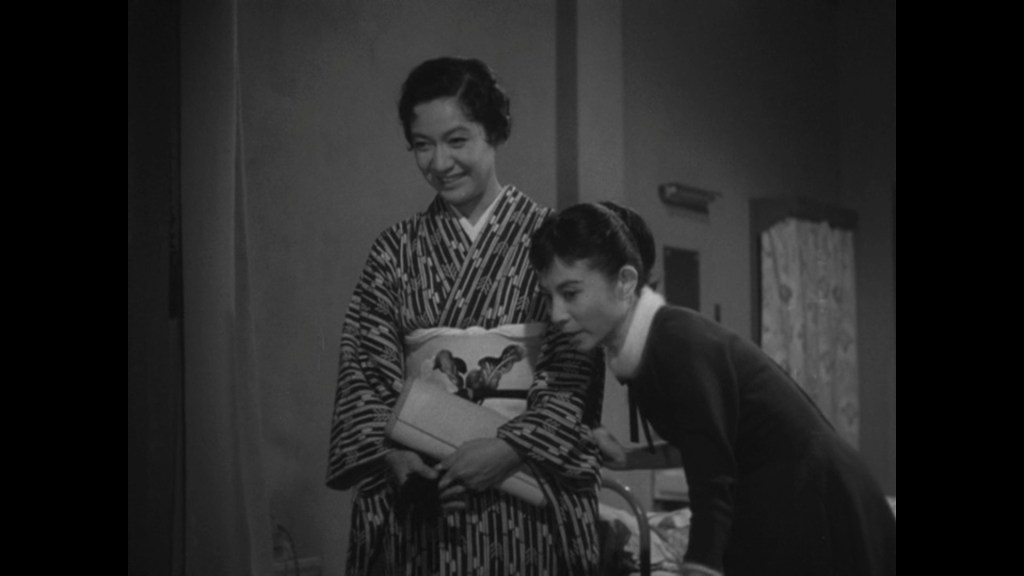
At the heart of the film is the vulnerability of a stable marriage, but with the aforementioned details, which is first affected by the legal situation of the father of their adopted daughter Saeko, who is in Kosuge Detention Centre for murder and has been sentenced to death, and then by Ichiko’s reunion with her childhood sweetheart Seino, whom she bumps into one day, and the behaviour of her attention-seeking and power-hungry niece, who has only just arrived. Indeed, the newcomer Sakae turns the household upside down with her impertinent and spontaneous personality, which borders on rudeness. Quite apart from the plot, Sakae seems to display a histrionic personality disorder that is reflected in inappropriate or unscrupulous behaviour, such as flirting with her uncle, quite apart from her intentions to learn everything she can at the buffet or office where she works in the case of Saeko’s father, and it is also noticeable in her exaggerated emotional expressions and need to be the centre of attention in her interactions. It is a remarkable work for following a stylistic pattern reminiscent of Kenji Mizoguchi, with its intimate shots interspersed with staggered depths of field to convey suspicion or a kind of surveillance, for example, Sakae eavesdropping or voyeurism during the chance encounter between his aunt Ichiko and Seino.
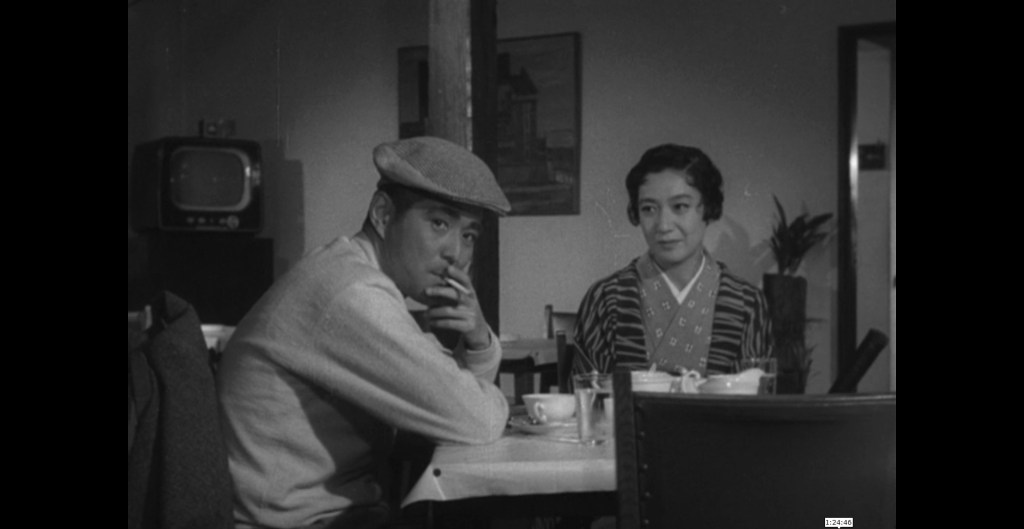
Unfortunately, it also overdoes the melodrama and is exaggerated at times. Sakae practically destabilises everyone, starting with her closest rival for attention, Saeko, first with regard to her father in prison and then by secretly meeting her boyfriend and, in a way, sabotaging their relationship, which in any case ends in simple friendship at the end of the film due to the immaturity of both and so that she can continue helping her mother with the washing and other chores. She also makes Ichiko suspect her of marital infidelity, even though this is not the case, because she manipulates him with tears and outbursts when they return home in the car and she runs towards the river, causing Sadatsugu to arrive late. Finally, she tries to make her aunt jealous by flirting scandalously with Seino, who leaves for Canada anyway and sends a postcard at the end of the film.
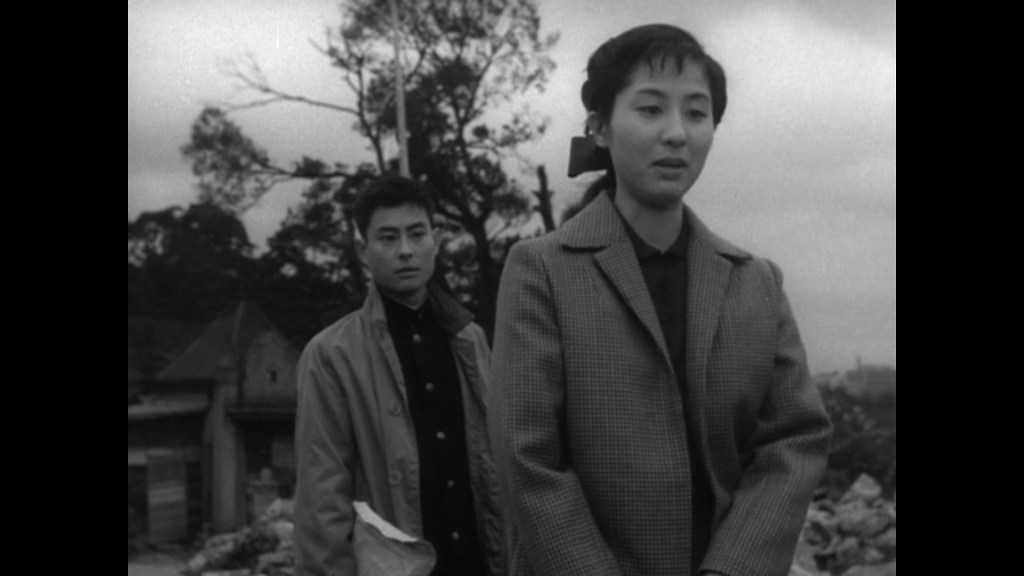
Another aspect of the work is the well-considered subtlety of the marital role of a woman who left her true love, Seino, for a lawyer who is clearly bored with her, given that Dr. Sayama, a legal advisor, is solely dedicated to saving the father of his adopted daughter from the death penalty, which he achieves, although he suffers a heart attack or nervous breakdown and must rest. In the end, fortunately for the stability of the household, the impetuous niece announces her departure to look for her father in Tokyo and does not even want to enter the house to say goodbye to the others so as not to miss the train. If it had not been so melodramatic, I think it would have been much better.
 Pantagruel´s liquor
Leave a comment