
The main premise of the plot is weakened by the comedic flashes that seem to slip deliberately into the script, for example in the interrogation of the witness Kreps, played by Kreps. From the opening scene, when the real estate architect Faguet meets Inspector Servolle on the street, solely because of his bicycle, it seems as if he has approached someone he knows from childhood or something similar. This is not the case, but the staging of the scene is not the most spontaneous, and following that rain-soaked night at a bus stop, the two become friends, and a jump forward in time shows us the great companions or friends competing in a cycling group on weekends. While the camera shows Faguet honouring Servolle with a small sculpture in recognition of their 13 months of sporting camaraderie, a sniper shoots the architect’s lover. What is the premise of the plot?
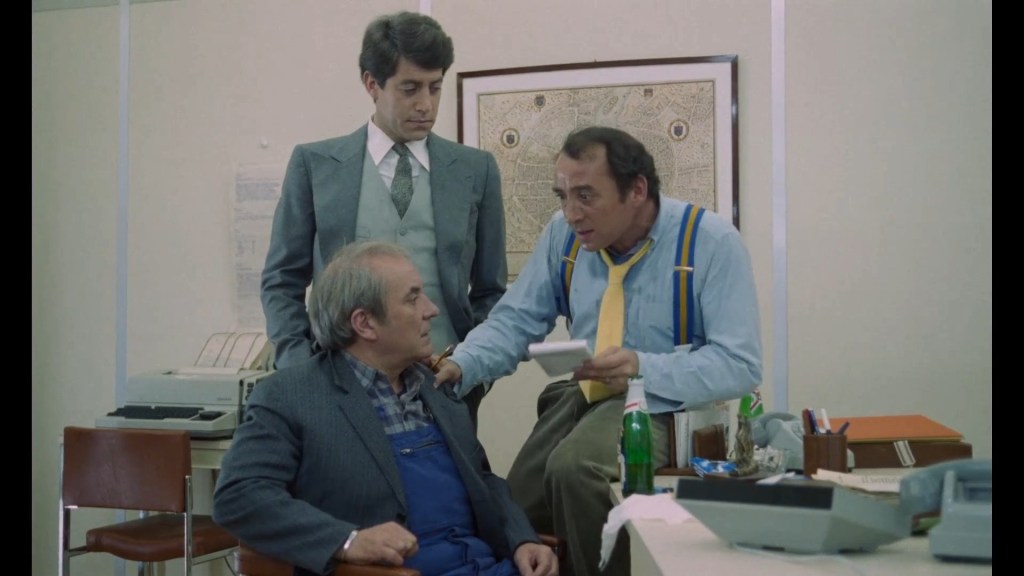
Sylvia Faguet is murdered, and until then the architect, played by the mysterious Trintignant, had introduced her as his wife, although thanks to the crime and the media, all his colleagues find out that she was his lover. Servolle loses some of his trust in his friend but takes charge of the investigation. When he reaches a point where he is unable to make any progress, he decides to give up the case due to his closeness to the victim, but the investigation is taken over by the detestable Ensor, Servolle’s protégé, whom he considers a fool. The mistress was murdered on 20 February between the 16th and 17th turns between 11:15 a.m. and 11:35 a.m., so due to the location of the apartment, he apparently would not have had time to go there, climb onto the roof and shoot the victim. While Faguet is arrested, Servolle continues to trust his friend and conducts one of his typical abusive interrogations of the detainee Kreps, who, after verifying his alibis, could not have participated in the four murders, let alone that of Sylvia Faguet (this is because the deceased was the fourth victim killed by a shot from a distance at different times). Krep could not have been involved because he was at a football match between Nancy and Bordeaux, which ended in a 3-1 victory for Bordeaux.
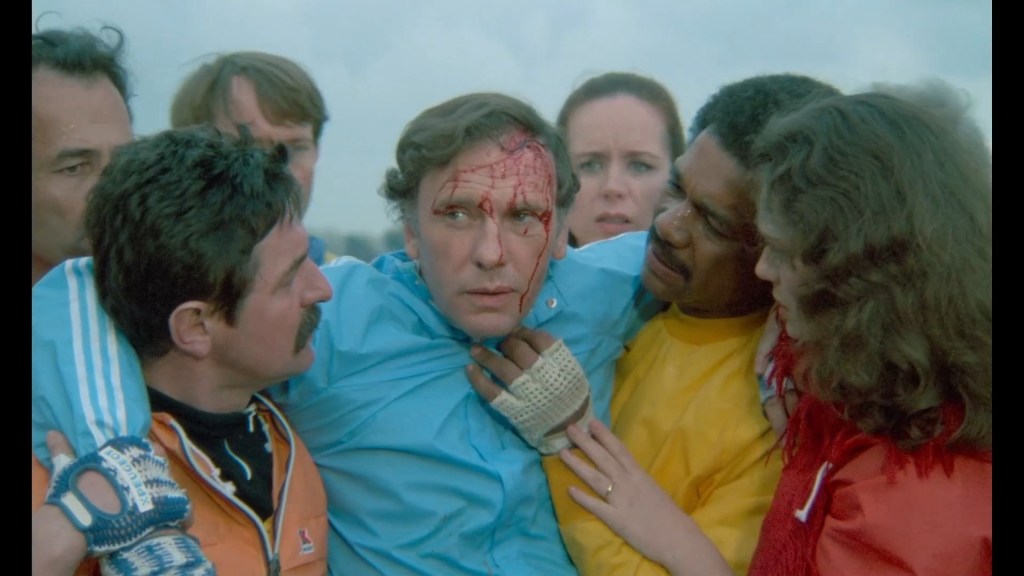
He is released. Servolle’s confidence is undermined, however, because another cyclist, Jean Jousselin, remembers seeing Faguet stopped without pedalling on the 16th and 17th laps, thus fulfilling the requirement of having enough time. But he finally loses all confidence when, exhausted and sleepless, Servolle remembers the day he gave him the statuette and recalls the tyre marks left by Faguet’s car in the fresh snow. That detail changed everything, although due to lack of conclusive evidence, Faguet is released. In the end, with reasonable doubt, all his teammates accept Faguet back into the cycling team or peloton. But not Servolle, because he realises that it was all planned long ago by the architect of the crime and that he, Servolle, was used, even receiving the benefit of only 8 per cent interest on the flat he bought thanks to Faguet, where he lives and for which he paid 600,000. The final competition, in which Servolle knocks Faguet down, is a metaphor for the inadequacies of justice, which lacks sufficient evidence and is powerless to prove that he was used by the man who claims to be his friend and continues to treat him as if nothing had happened.
 Pantagruel´s liquor
Leave a comment