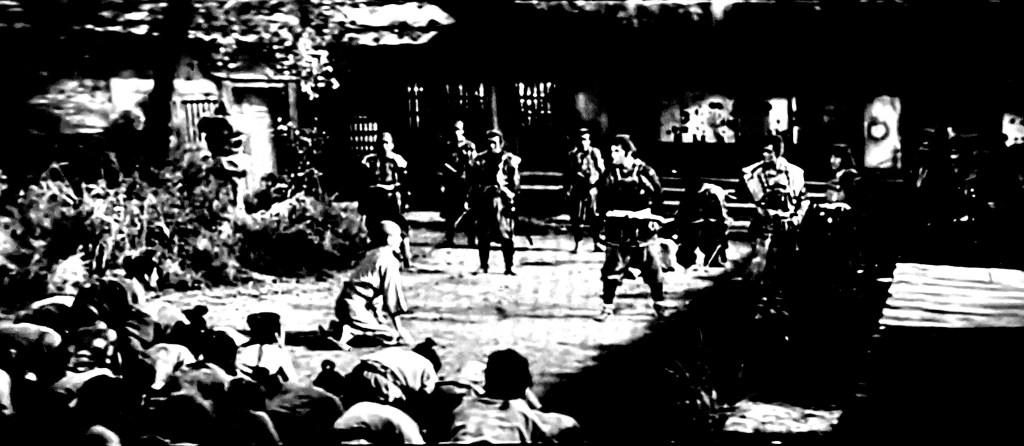
A highly entertaining sentimental metaphor for the revolutionary counter-feudal insurgency led by a motley crew of bandits with no trade or profit… or almost none. Given the bloody beginning, it is not immediately obvious that any of the rogues led by Kashira would ever be interested in freeing the 28 farmers from Yaeyama who have been enslaved to build, at a forced pace, the enormous wall called the White God of War. When the farmer Seisuke arrives to rejoin the band of thieves, they make a little party of joy, and in the same bunker there is a clash between several of them, especially between the libidinous Hayato, skilled with the katana, and the young Gen (an expert dagger thrower) who always carries a flag with a strange symbol.
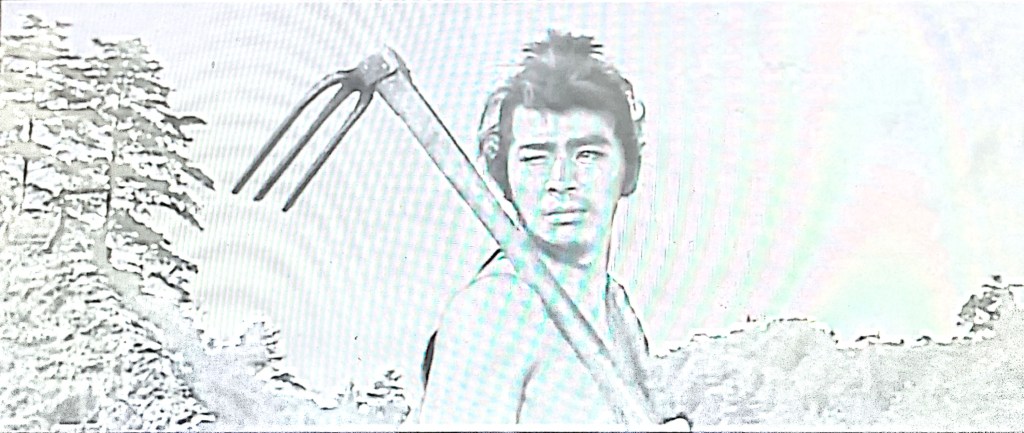
Another of the assailants assures them and shows them on a rough map that there is a village where ripe rice, buckwheat and millet are grown, and where rapeseed flowers abound everywhere. Encouraged by what seems like a land of plenty, they set off on their adventure, but when they arrive at the village, what they find is a settlement of starving men on the verge of becoming wanderers, with no young people. For example, an old woman is cooking a boiled cat in a stew, which makes more than two bandits vomit. To make matters worse, although there is wheat, rice and flour, they will have to wait until the next day to eat bread and other foods because they have to be ground. At least three young and very beautiful women grind the rice by hand: Kayo, Sato and Sawo.
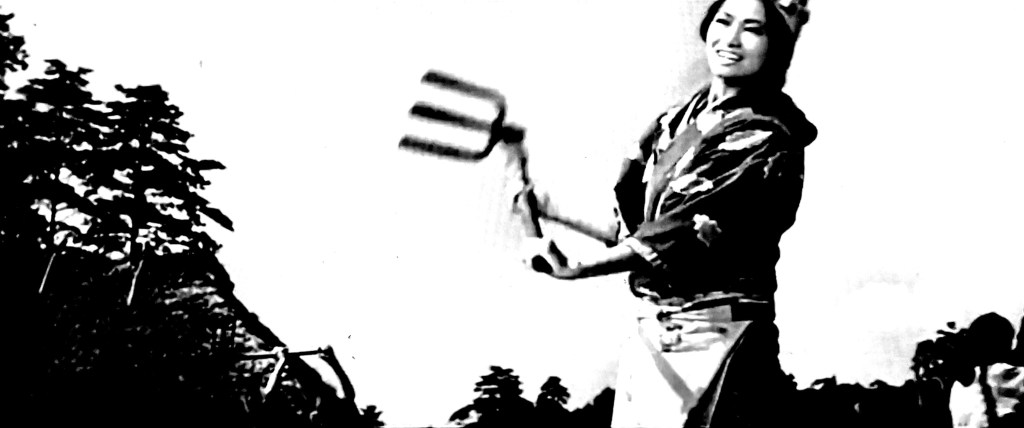
While they do so, one of the four or five scenes with choral songs in the entire film takes place, the next one at 00:53:00 and the following minutes until 01:01:00, with everyone working the land and ploughing in a bucolic and touching musical sequence. They all had a dream: Gen, after tearing up the flag because of Hayato’s taunts, carries the flag wrapped around his stomach; Seisuke does not forget his days as a farmer ploughing the land; and the leader Kashira imagines himself building a castle where he gives the orders. The local villagers mistake Gen for a prince of the Amagasaki family, and the bandits take advantage of the confusion to settle in the village without being pursued as thieves. From then on, Gen impersonates a certain Kazuko-sama, and meanwhile, the girls develop feelings for the bandit leader, Hayato, and Gen. Impersonating Kazuko, they agree to save the 28 farmers of the village who were enslaved day and night and who were already known to be killed once the wall was finished.
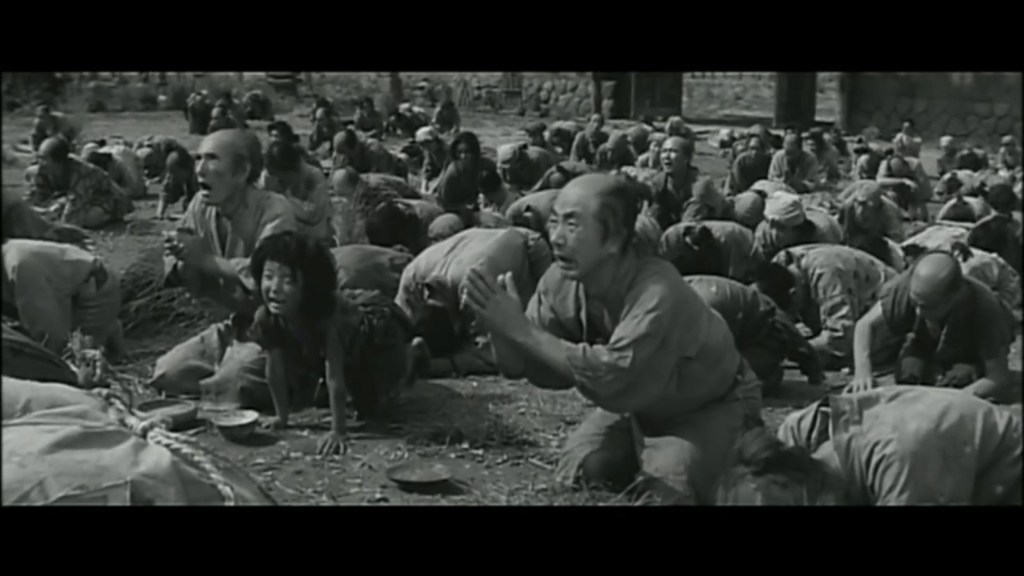
Two of the bandits take Gen’s flag scraps and go to the high lord Akechi and, by deceiving him about their identities, suggest that he help them and his men build a castle to repel imaginary enemies of the kingdom. When they show him the flag, Akechi is convinced, and in the battle, the thieves emerge victorious, freeing the peasants. Unfortunately, word of the incident reaches other parts of Kanto, and more than 5,000 soldiers are sent to eliminate the false Kazuko-sama. It no longer mattered that they were not Kazuko or anyone who resembled him; there was no turning back. When Akechi’s soldiers arrive, they raze the place to the ground and the attackers die for a cause they never believed they would have, even though none of them fulfilled their dreams.
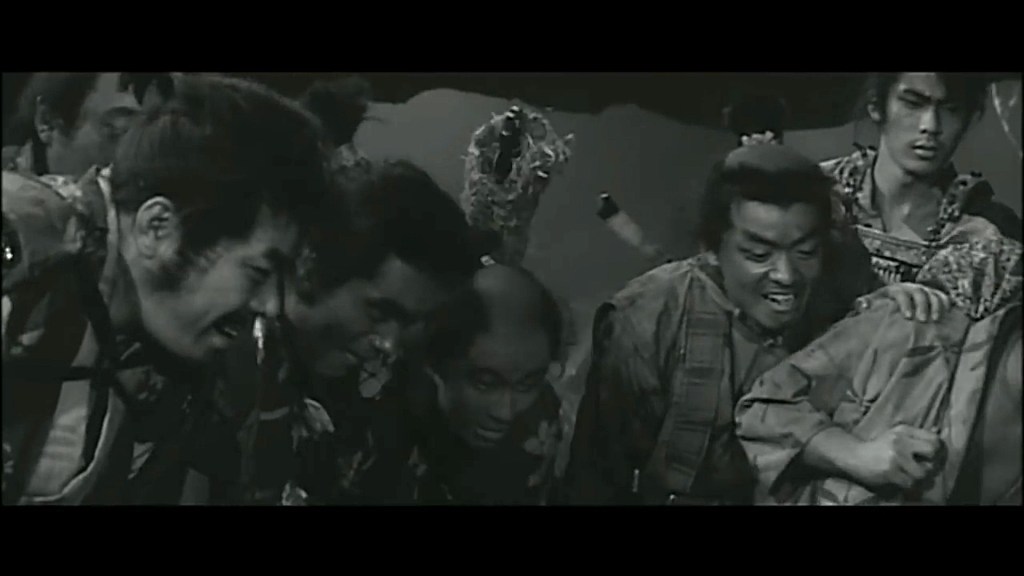
What can be called the epilogue is the fierce but at the same time fearful Hayato, arriving in the village many years after the bloody event and discovering the memory of his companions in a discreet monument on the site. Before the final battle began, Hayato said he would not take part in a fight that was literally suicide. That must be the difference between a thief and bandits with a samurai soul. A thief will always be a thief and easily abandoned the defence of the villagers and the place. That is why he will continue to live, and we do not know if he will remember what he never dared to do or defend as a cause.
 Pantagruel´s liquor
Leave a comment