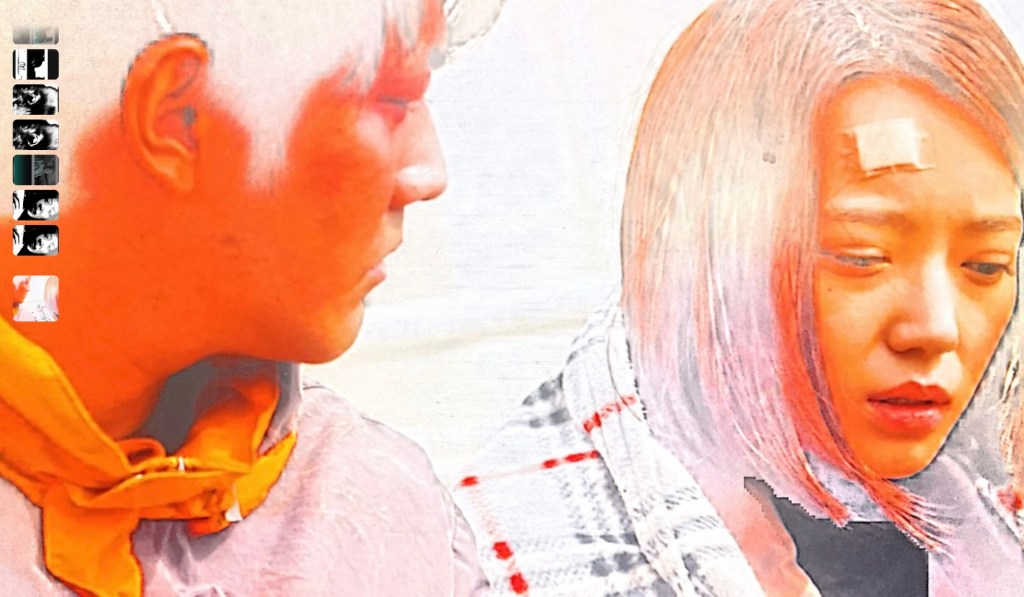
The Cro-Magnon man, played here by Ma Dong-seok, perfectly illustrates the counterarguments to Rousseau, the exceptions obviously not foreseen by the Genevan philosopher, who rejected the civility achieved in large cities and proposed a return to nature because social structures contaminate and ultimately corrupt humans. At the beginning of The Social Contract, he warns, ‘L’homme est né libre, et partout il est dans les fers’ (Man is born free, and everywhere he is in chains). Note that he does not say chains, as is often mistranslated in many places. He says ‘fers’ = shackles; shackles are made for punishment and to punish a condemned person. With the term civilised seen as contaminated or corrupt, Rousseau was perhaps thinking – like Plato – of democracy in villages or towns whose number could well allow for the control of exceptions to the rule. Unfortunately, we cannot seriously expect that today, as if we were living in the Greek polis, the same subjects and inhabitants would resolve their disputes and differences arising from ‘democracy’ or rights inherent to ‘civilisation’ using Rousseau’s natural law. In increasingly sclerotic and overpopulated societies, it is once again clear that places off the grid will, because of their exotic nature, be an unbeatable opportunity for an idyllic getaway—say, a weekend break—to recharge their batteries or heal certain wounds, small marital issues such as Joon-sik’s alcoholism and his wife So-yeon’s bitterness over the abortion they suffered. But curiously, this time the remedy the couple chose will be worse than the disease.
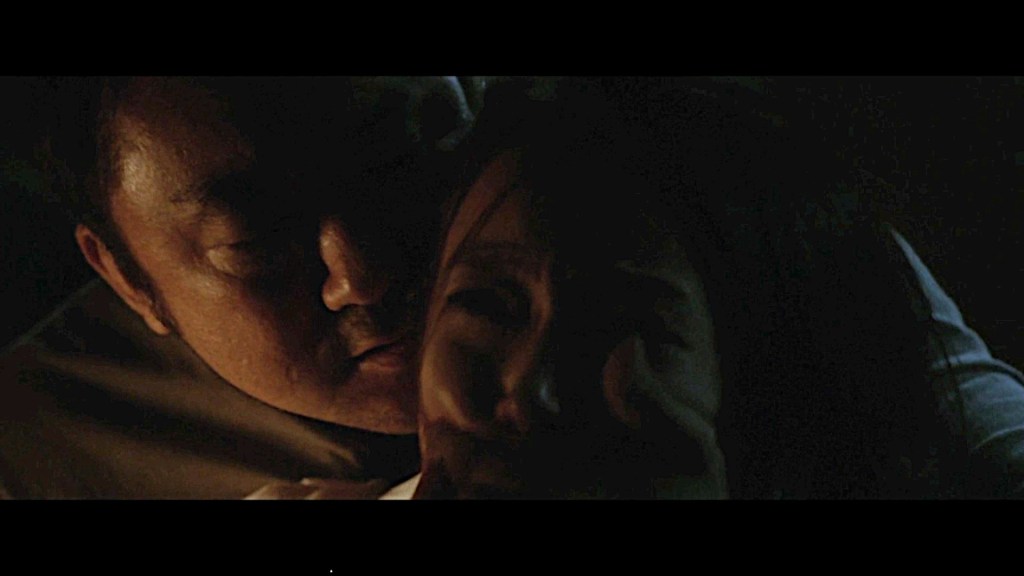
The contrasting narrative flow of this thriller brings together both the overwhelming crisis of the couple and the solution to soften the loss, as well as the insane, abrupt and pre-civilised microcosm of the island that is suddenly offered to them by the media for recreation and comfort. The island is ruled by the Neanderthal-like hegemony of Sung-cheol, who controls the mute girl, Minhee, presumably the cook, in the same way that he violently manipulates Joon-sik and So-yeon, and anyone else who arrives and becomes aware of his dissociation from the self.
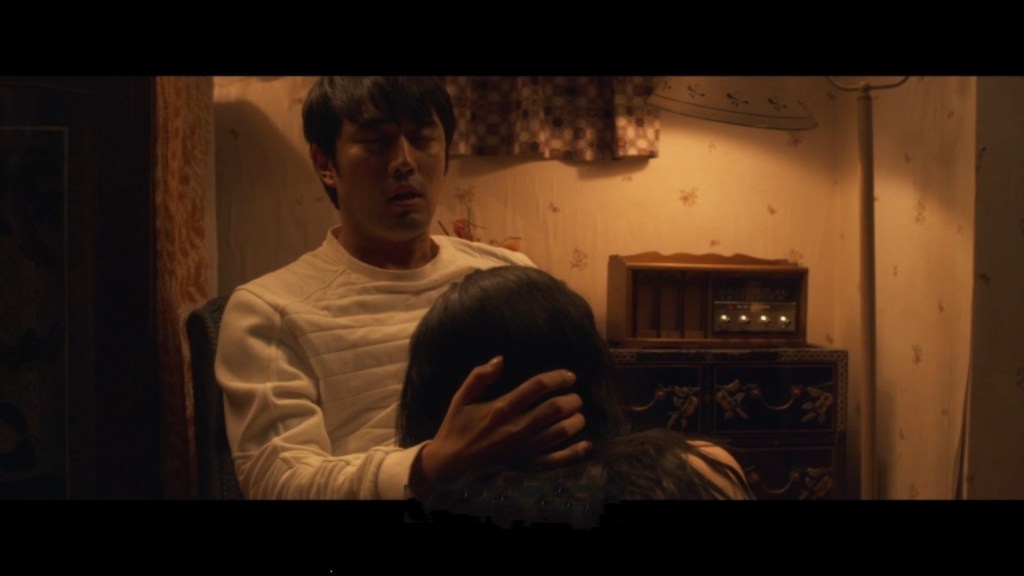
From the moment they arrive at the remote location, Sung-Chul cooks dishes and mentions snakes, and even for the chicken broth, he takes the liberty of killing the animal a few metres away from the new arrivals. The stunned So-yeon cannot believe where they are staying: during the karaoke session, the host is almost manipulating her husband with the dance he encourages him to do, and insists on offering his wife the silent blonde who seems to know more than she can say. The strange thing is that the mute woman does not seem to enjoy her task of seduction either, and the big loser, isolated and alone, is the one who obtained the information and sources about the place. But this is not a case of white disappointment or base instincts for power. At the same time, the film explores the dissociation of the self as a survival mechanism. Sung-cheol, played by Ma Dong-seok, embodies an individual whose identity is built on domination and control, alienating himself from social norms.

Probably, without in any way defending him in this article, Sung-cheol did not believe he was committing a serious crime by being the patriarch of a remote clan on ‘his’ island, manipulating a man married to another woman, Minhee, who was literally kidnapped, and, for dessert, forcibly dominating the other man’s wife in the next room. What is interesting about the film is that there are no dialogues or amoral or moralistic premises for his behaviour, another factor that could be explained by itself, since no one expects a golden eagle to apologise to the forest for capturing and eating a squirrel, or a beaver for gnawing on a tree and damaging the ecosystem. On the other hand, cognitive trauma theory suggests that extreme experiences create a rupture between established identity and lived reality. This is manifested in the main couple, whose relationship fractures after their loss, and in Sung-cheol, whose sadism seems to stem from a pathological disconnect with empathy. So-yeon and Joon-sik must reconcile themselves with their failure as parents and as a couple, a theme that connects with Sartre’s philosophy on the anguish of freedom and responsibility. Finally, Sung-cheol manages to provoke Joon-sik enough.
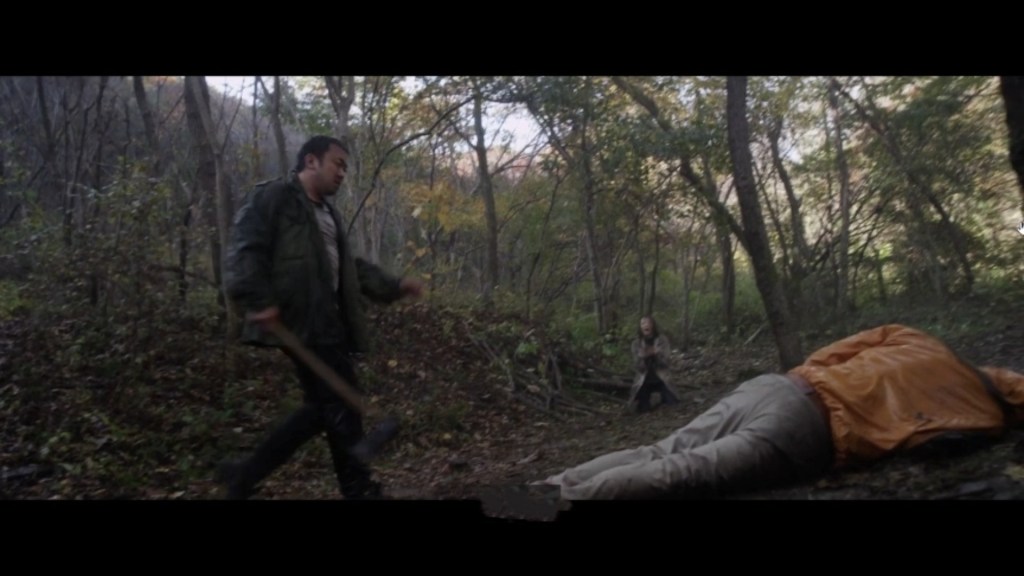
He takes him to the bedroom with Minghee and the two fuck resolutely, but Sung-cheol wastes no time and shows the wife – through an interconnected window – her husband in the act of sex. She has no time to be outraged because the enormous Sung-cheo sexually assaults her, hugging her from behind and undressing her to abuse her completely. There is no morality to speak of, no lessons in ethics, only sexual instincts through domination and humiliation of the guests who manage to arrive. Incidentally, those who arrive after So-yeon and Joon-sik end up murdered for resisting the uncivilised nature of the island (just like a fawn by a predator or the squirrel I mentioned above). We already know how the story will end in the middle of the forest. Chance would have it that that piece of iron was there when the huge predator rolled over and almost killed the unfaithful husband with the stick. As I said, sometimes, and this was the case here, the remedy is worse than the disease.
 Pantagruel´s liquor
Leave a comment