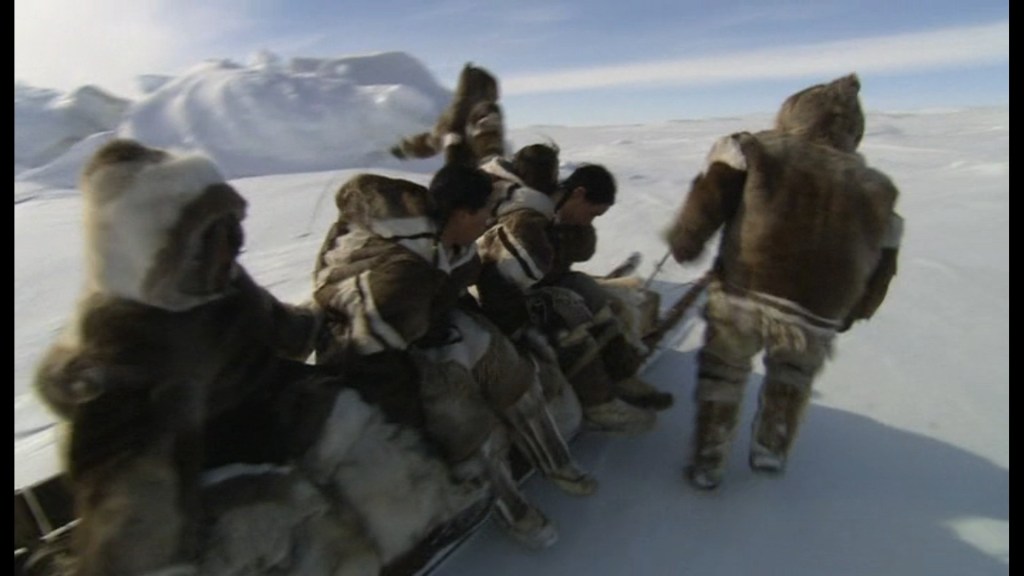
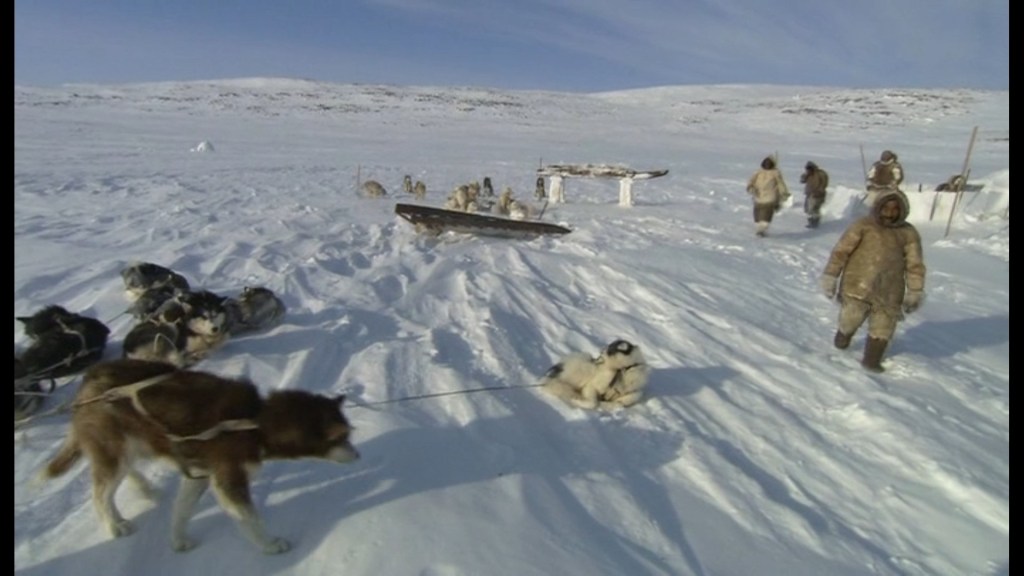
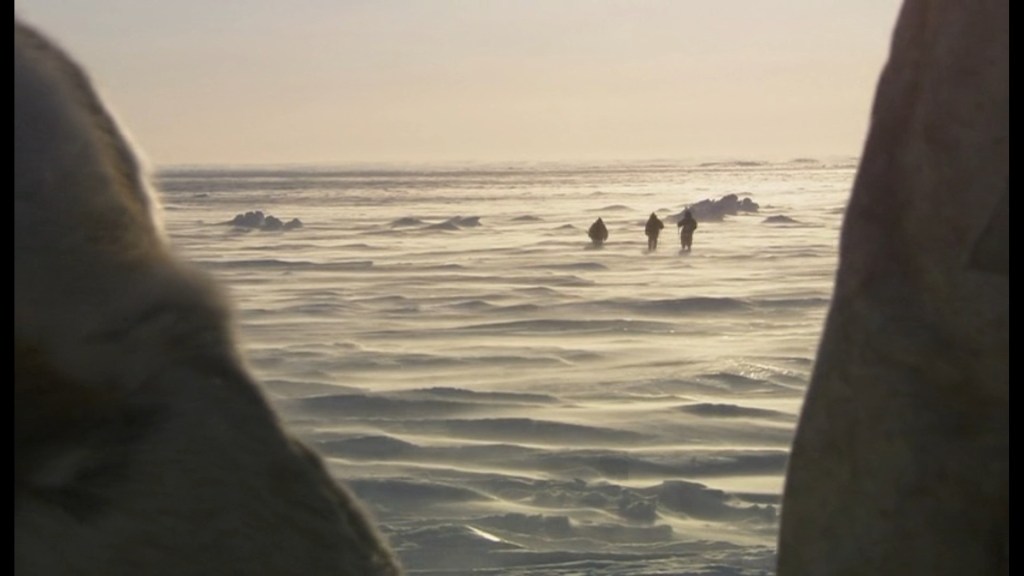
This is a sublime work, not only because it takes us by the hand through the Canadian Arctic along impassable trails in Qikiqtaaluk (Baffin) on a genuine indigenous expedition with the Inuit tribe, but also because, for the purposes of the film and the accuracy of its worldview, it is spoken in the Inuktitut language and features the grandchildren and great-grandchildren of the ancestors with whom the collective work directed by Knud Rasmussen and other ethnographers was achieved in circa 1920, a diary known as ‘Report of the Fifth Thule Expedition 1921-1924’.
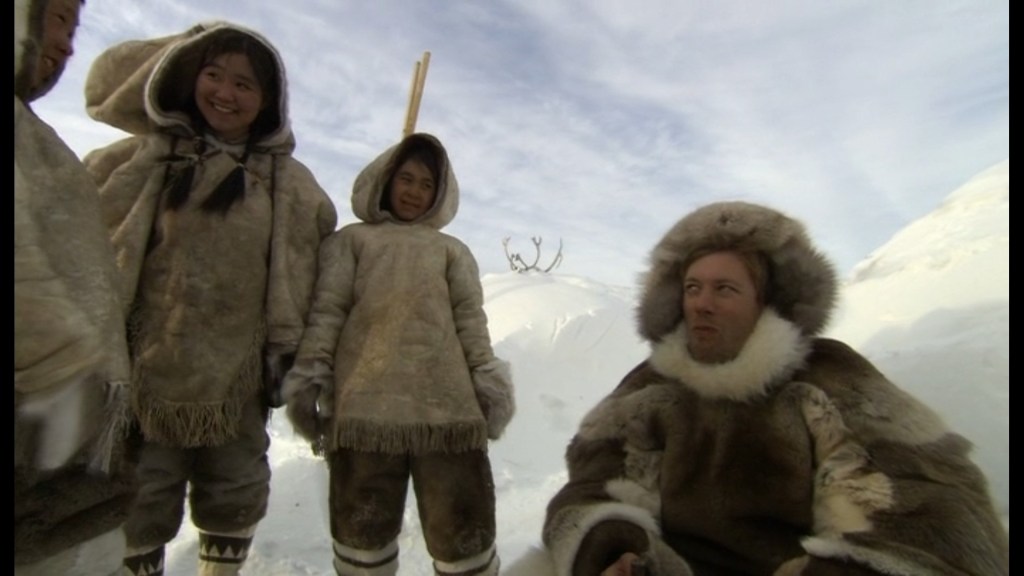
This journey will follow the route taken by Rasmussen with the shaman Aua almost a century ago. One of the two directors, Kunuk, was born in Kapuivik and grew up in Igloolik, hence his particular desire to keep the cultural memory of his ancestors alive through film. It is disconcerting to delve even a little into Inuit customs. A woman who, upon being widowed, prefers to make love to her first husband in a ritual rather than with her second husband. The Inuit Netsilik group practises wife swapping as a social strategy, and the father reproaches his daughter for preferring to give herself pleasure with a dead man rather than with her second husband. In order for the journey to Igloolik to take place, visitors to this off-the-grid site must satisfy the shaman Avva by singing for their hosts, in their language, of course, as he warns them in advance that no Inuit work for white men. They do so, and we then hear the outsiders singing like Caruso a piece from the opera Martha, ‘M’appari tutt’amor’.
Later on the way, the shaman recalls his initiation or how, as a child, he received the revealing light of his powers after harpooning his first walrus; in his head, these powers manifested themselves as those with which a shaman is endowed, followed by the appearance of his first spirit, which was a small woman, and later his second spirit, a shark. As they advance, hunger becomes excruciating and the shaman Avva realises that his daughter Apak also has powers. All events will lead to Christianity because the system of shamanic practices cannot explain the tremendous scarcity and suffering. Did the Inuit already contemplate Christianity before finally converting? Yes, but as a complementary system, not a substitute. Before the mass arrival of missionaries, groups such as the Netsilik used Christian concepts such as “heaven” to explain phenomena such as the Northern Lights, without abandoning animism.
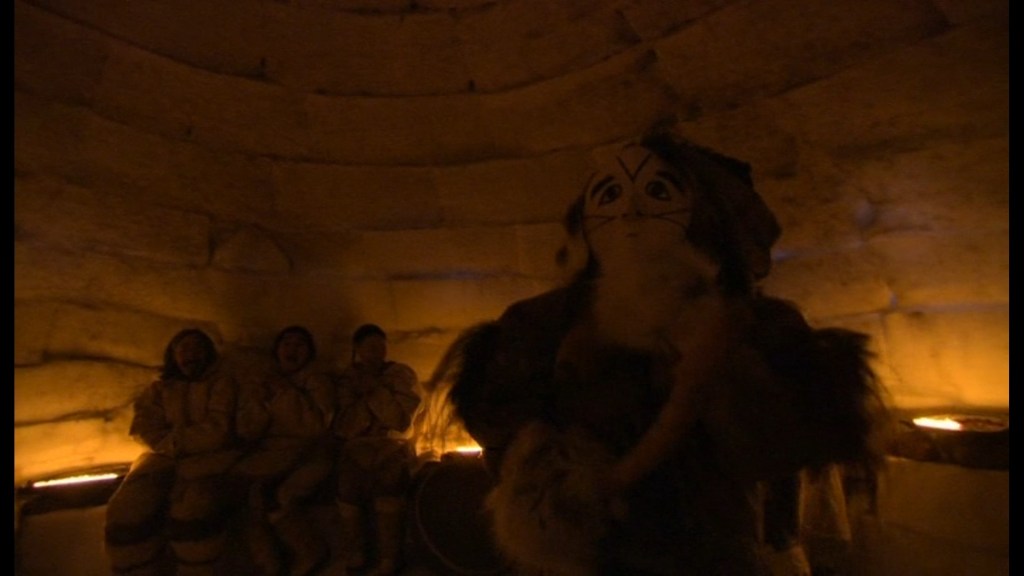
The Inuit shamanic rituals linked to spiritual invocation and cultural transmission ceremonies expressed in this film are called Kelek (or Agayuyaraq), a ceremonial celebration that integrates carved masks, dances and songs to interact with the supernatural world. One scene shows dancers wearing caribou and seal masks, symbolising the interdependence between hunters and prey. We now know that, despite starving to death, the entire family achieved their goal at a high cost because the Christian community denied them any food until they converted. This was undoubtedly a form of blackmail. Total conversion was a process imposed through starvation and stigmatisation, not a free choice. The missionaries forbade talk of ancestral practices, branding them ‘satanic’, which led to their concealment, not their disappearance. Finally, Ava must give in so that he and his tribe do not die of starvation, and this is the unfortunate defeat of traditions that accept Christianity even if they are reinvented, even though Kunuk and Cohn made this invaluable journey to refresh cultural norms that are more than just exotic, almost extinct, even if they are so far-fetched for today’s huge cities.
 Pantagruel´s liquor
Leave a comment