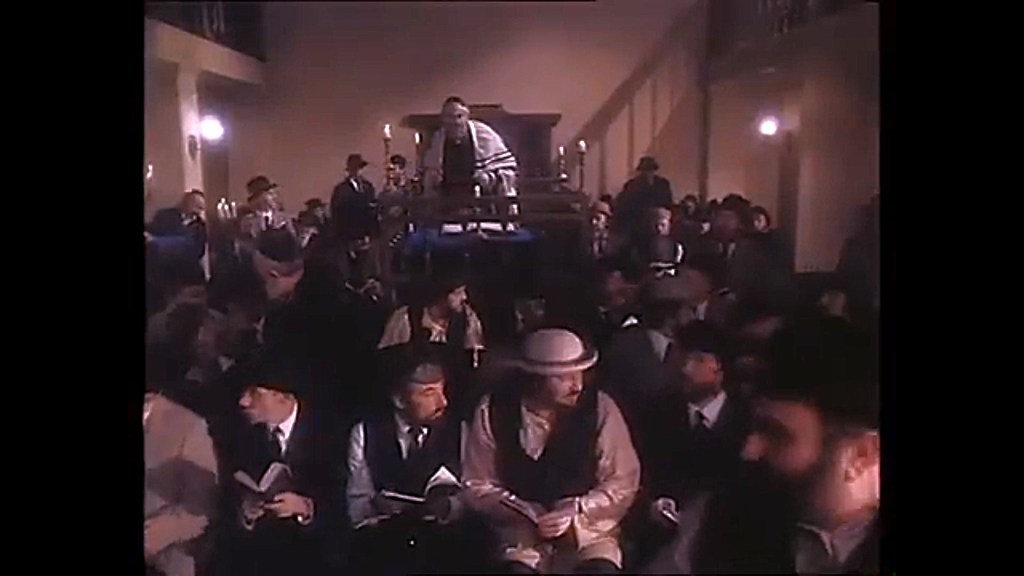
Review by Fernando Figueroa.
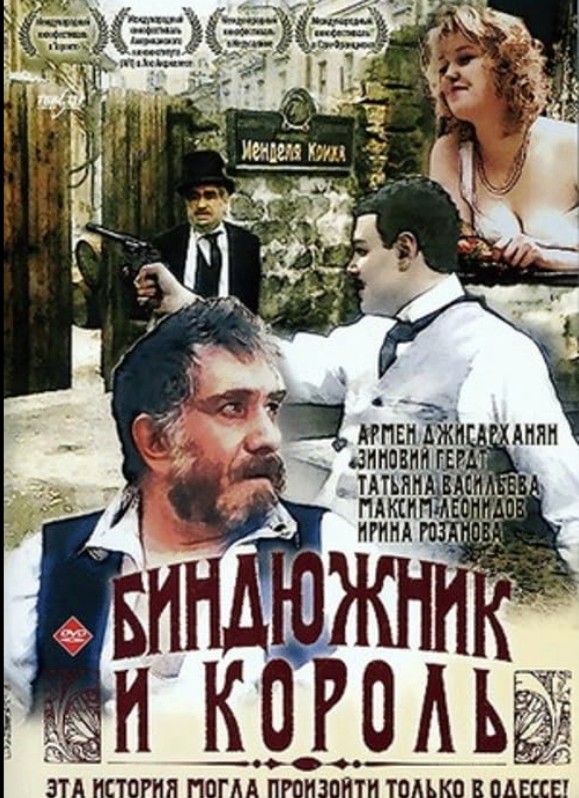
More than a tribute to Isaak Babel, from whom Alenikov took only the characters, it is a vivid and, I admit, at times charming fresco of the complex multi-ethnic mosaic of Moldavanka, where the author of the Tales of Odessa was born, grew up and studied Hebrew. The plot is set in the microcosm that is, in itself, a powder keg of Tsarist corruption and its well-known counter-revolutionary response in the form of banditry and robberies by King Benya Krik. The boastful tone of the folk songs in the first five minutes, God knows whether more Jewish than Ukrainian or vice versa, follow the old cart driver Mendel, father of the local trickster, while the camera pans in on the portrait of Babel. Then, the melodious female voice that occupied the background is abruptly cut off and will be intermittent throughout the film, as part of the cheerful resilience of the Jews in this story in the combustion of corruption and smuggling endorsed as a countercultural response to tsarism. Neither the sun lasts all day nor can spring discourage winter. Thus, the credits begin with the grim melodic humour of composer Aleksandr Zhurbin, and we see the old cart driver Mendel Krik enter the city, reviled by the chorus of the townspeople’s scornful glances as he passes by the soot-covered houses that denote poverty, indolence and failed businesses.
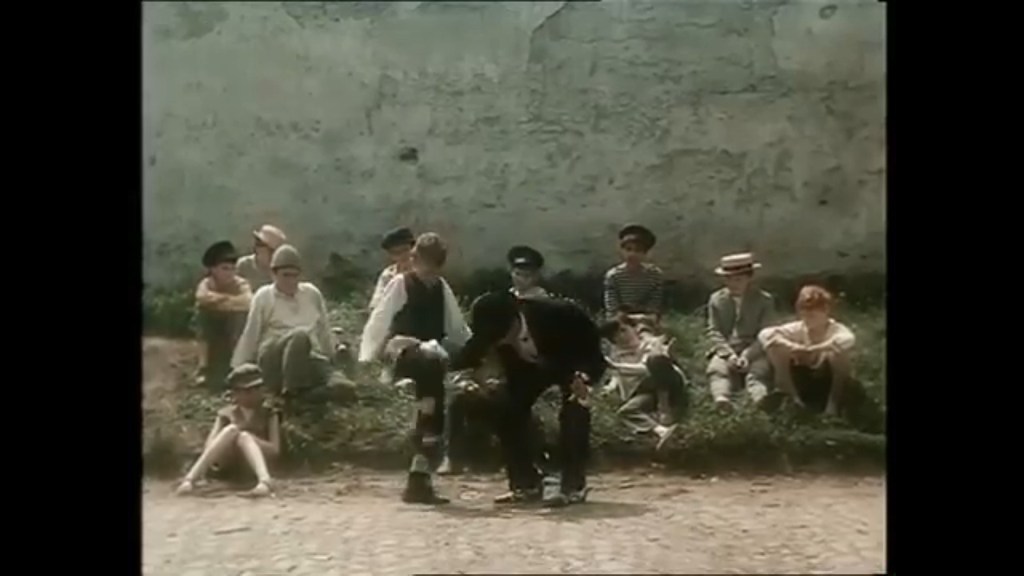
The dialogue highlights a certain cheerful misery because it is musical (‘We’re out of money’) and the irony of celebrating life in the midst of chaos (‘going for a walk won’t bring him back’). Mendel Krik, the patriarch who abandons his home, appears to set himself up as the one who destroyed traditional family structures by selling his property to go into the arms of Marushka, while his son Benya, the marginal ‘king’, emerges as a somewhat pedantic figure of dissent, insinuating that if the authorities want to control him with bullets, he will whistle at them in response. ‘There is no trade without gadgets,’ he sings in the second part after his father’s death. In this sense, there is a generational conflict and the ethics of the marginalised, because Benya Krik embodies opposition through crime in his rebellion towards a search for dignity in the Jewish quarter. The director respected this because in Tales of Odessa, we remember the King, laconic in his words upon learning of the arrival of the new sheriff, not only confronting him, but also not caring in the stories about fulfilling his mission to blackmail Moses Eijbaum, who kills his cows in front of him for not paying protection money, and immediately sets out to set fire to the cowshed, but Eijbaum gives in and pays him.
Right there, King Krik falls in love with Eijbaum’s beautiful daughter, and their honeymoon lasts three months in Bessarabia. Returning to this film, King Benya equates violence with an act of romantic justice. At the same time, the cart driver Mendel justifies his abandonment with phrases such as ‘I need to go to the port’ (12:10), showing the crisis of patriarchal roles. The scene of the wheat theft (1:06:10-1:07:04) illustrates how Benya redistributes resources, challenging both tsarism and community hypocrisy.
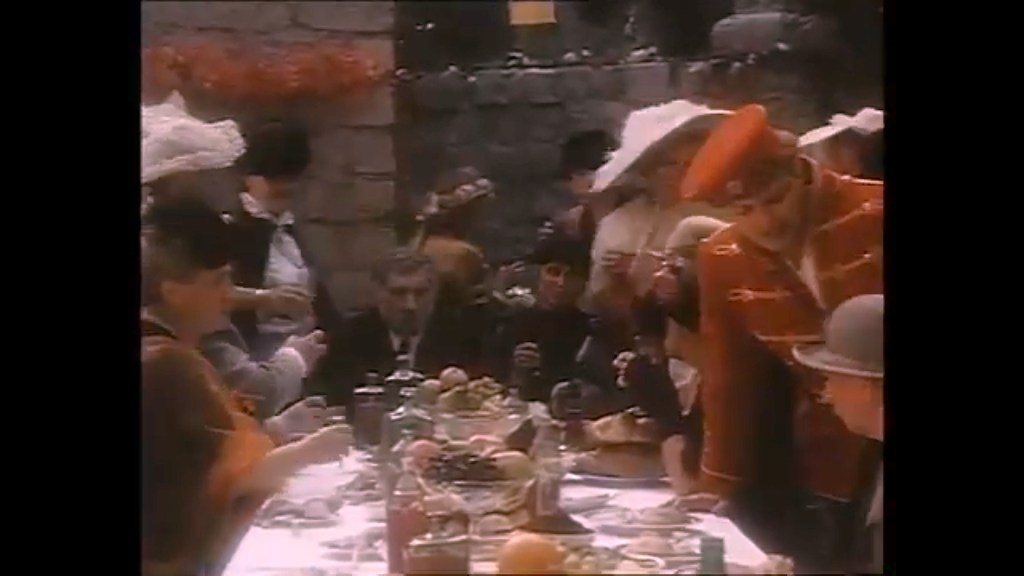
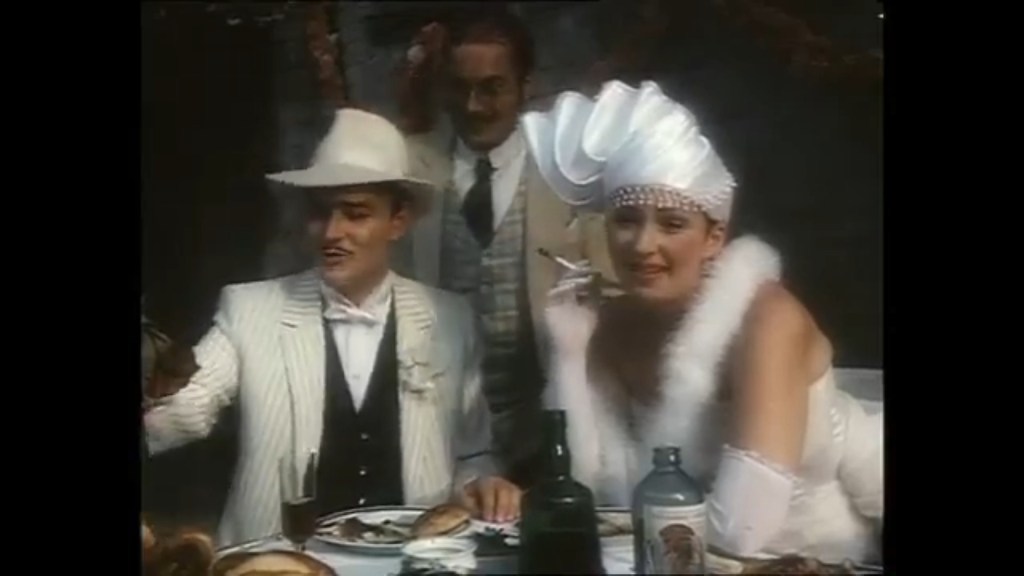
By far the two best scenes in the TV film are those depicting the failed romance between Benya and Marusya (48:01-50:20), which serve as a counterpoint to the violence and abuses of the son. This part of the duet ‘Dress Yourself in Snow White,’ the lyrics contrast dreams of purity with the harshness of Moldavanka, and incidentally, Mariushka looks severely erotic in a dress that leaves almost half her bust exposed. The sequence of the failed wedding (1:04:09-1:05:03), where the guests sing ‘We’ll get along fine’ while hiding tensions, reflects the duality between appearance and social reality. At the same time, the disputes over the dowry (53:09-54:07) expose how incipient capitalism is corroding traditions. The song ‘Haz la noche, hama’ (Make the night, hama) links individual lament with collective struggle, using Yiddish symbolically. The song performed by Mariushka in the second part of the TV film, in the twilight of the celebration, resembles a Portuguese fado in its plaintive tone: ‘the lips whispered, the eyes swore, she is a fortune teller, a natural happiness, hands intertwined so that they cannot be separated’, and the chorus of women in the equally dark corner “it is dark for me”. And while the inequality is evident, Belets arrives with a newly purchased tram. In short, the film lives up to its title with the terms bindyuzhnik = cartwright, i.e. Mendel, the father, and korol = king, which is the fundamental clash between honest manual labour (the cartwright) and social aspirations through Benya’s delinquency.
 Pantagruel´s liquor
Leave a comment