
I would say that two contemporary indispositions put a gem like this, which resonates with Bela Tarr’s contemplative cosmic style, at a disadvantage: (a) the increasingly widespread strangeness in today’s societies towards the sacred, such as these Hui Muslim practices, and (b) the ruthless and poisonous fast pace of life of the average viewer today, for whom – a priori – this film could become a slow and dense, and for some even boring, plot. However, it demands the same measured pace from the audience in order to empathise with the story.
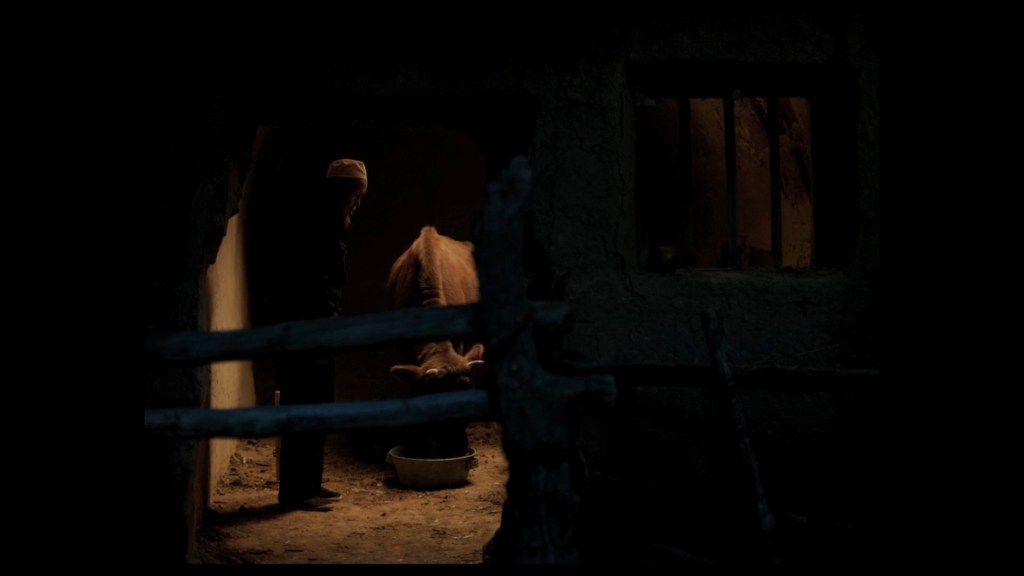
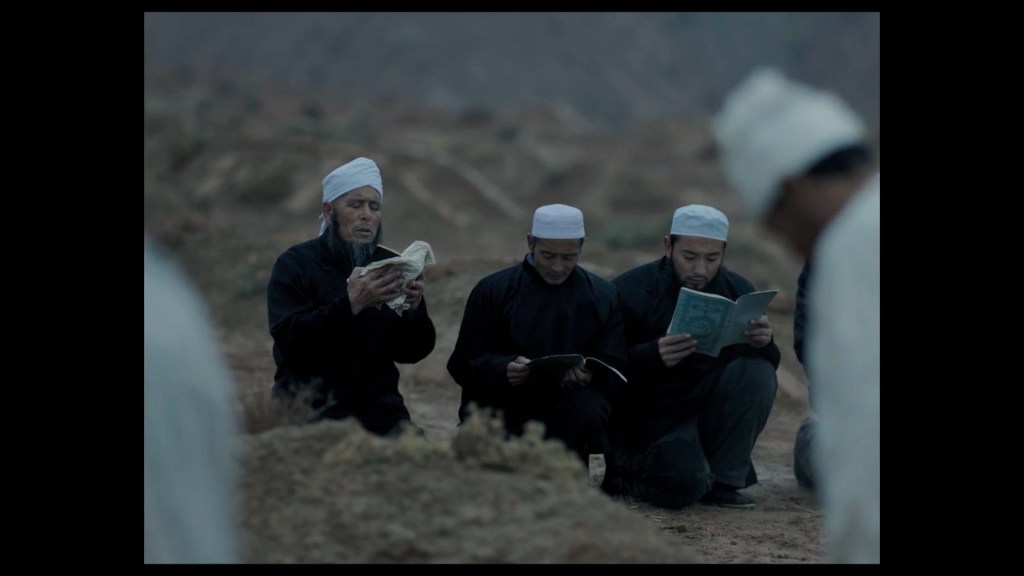
From the beginning, there is an extremely solemn ritual and chanting, but without voice-overs or preambles. The viewer is simply plunged into the Islamic procession and then, through Ma Zishan’s son, we learn that it was his wife’s funeral. Relatives gather at the cemetery to recite Koranic suras and clean the grave. From Morocco to Hui China, the practice of visiting the cemetery and performing the final ritual for 39-40 days is still observed. The son proposes an exceptional ceremony, not just pancakes. The bull that has lived with the old man will be sacrificed. It is important to emphasise an intolerance to anything that is different from our customs. Sacrificing an animal for a deceased person, who in any case can no longer receive honours in life, could be objected to. But we would have to refer to Mircea Eliade, who warned us not to see sacred objects that were worshipped as mere stones or trees. They are hierophanies; it is no longer just a bull. It is not an animal, it is a hierophany.
(b) It would be easy to say that one is not willing to invest time in films like this, whose lighting, photography and simple details (as is evident) required time. Let’s go to minute 26 of the film. Zishan has just taken a shower with a clay or terracotta jug – I don’t know – and when the scene cuts, we see him in a wide shot, crouching pensively, almost at dusk, in a static shot and focal length; seconds pass without any camera movement, the rain falls, we see how it soaks Zishan, seconds pass and the downpour intensifies, but the old man does not flinch. Seconds pass and with his left hand he picks up what appears to be a tiny stone, which he manipulates with the fingers of his left hand as if it were a rosary, his gaze still fixed on infinity, and he continues to crouch. There is a change of shot but in the same place. What is the focus? Zishan looks to his right and in the distance his bull is grazing.
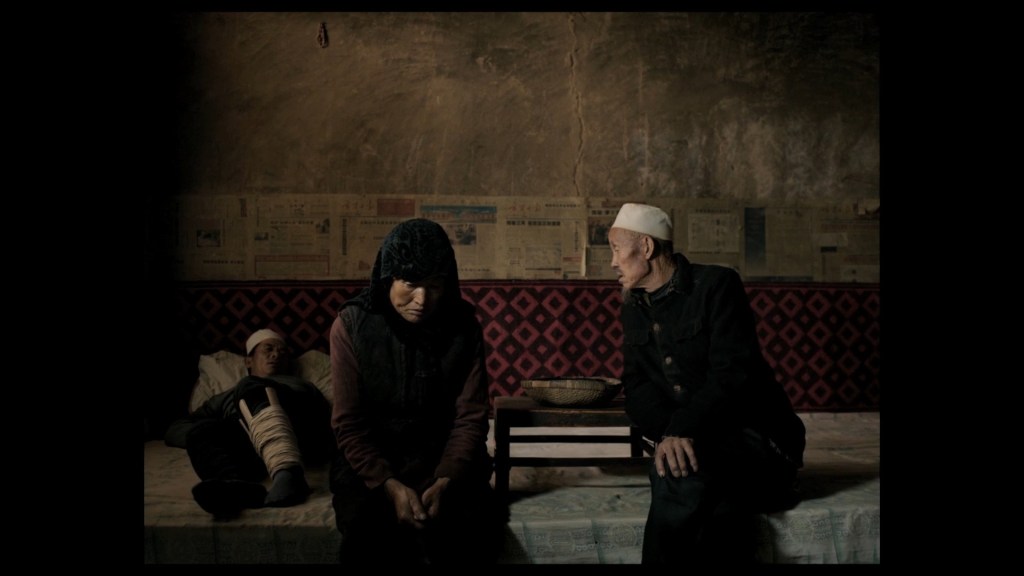
Director Wang Xuebo uses a minimalist aesthetic to transcend the pretensions of Hui culture and construct a universal reflection on the pain of loss and, at the same time, measure human impermanence, seen when Zishan himself asks to check the mosque to see which niche to prepare for when his turn comes. The fate of his bull marks and reminds him of his own temporality. The film intertwines two dimensions: ethnographic exploration, as it documents specific funeral rites of the rural Chinese Muslim community, and universal ethical dilemmas about sacrifice and the human-animal relationship. The key moment occurs when the bull, rejecting its food prior to sacrifice, performs a gesture of animal autonomy that questions human constructions of the divine. This act transcends its immediate cultural context, questioning the boundary between institutionalised sacredness and non-human manifestations of consciousness.
 Pantagruel´s liquor
Leave a comment