Review by Fernando Figueroa
The central aspect that emerges from this archaeological expedition is the function of writing as a technology of power, legitimisation and cultural memory in Nabataean civilisation. The inscriptions discovered are not mere graffiti, but a sophisticated system of territorial marking, status affirmation and historical record. Deep in the Arabian desert, an ambitious archaeological project seeks to unearth the past of one of the most fascinating civilisations of the ancient world. Archaeologist Laila Nemé, a researcher at the CNRS, has devoted more than thirty years of her career to the study of the Nabataeans, those skilled traders who in the 4th century BC developed a powerful civilisation in the heart of the eastern desert, specifically in the north-west of the Arabian Peninsula. The Nabataeans were not mere merchants.
For almost four hundred years, they dominated the trade routes that crossed the desert, transporting incense and myrrh from Yemen to the ports of the Mediterranean. Their legacy was immortalised in the desert landscape through inscriptions carved into the rock that they left behind on their journeys, signing their names and titles to mark their presence in those inhospitable lands.
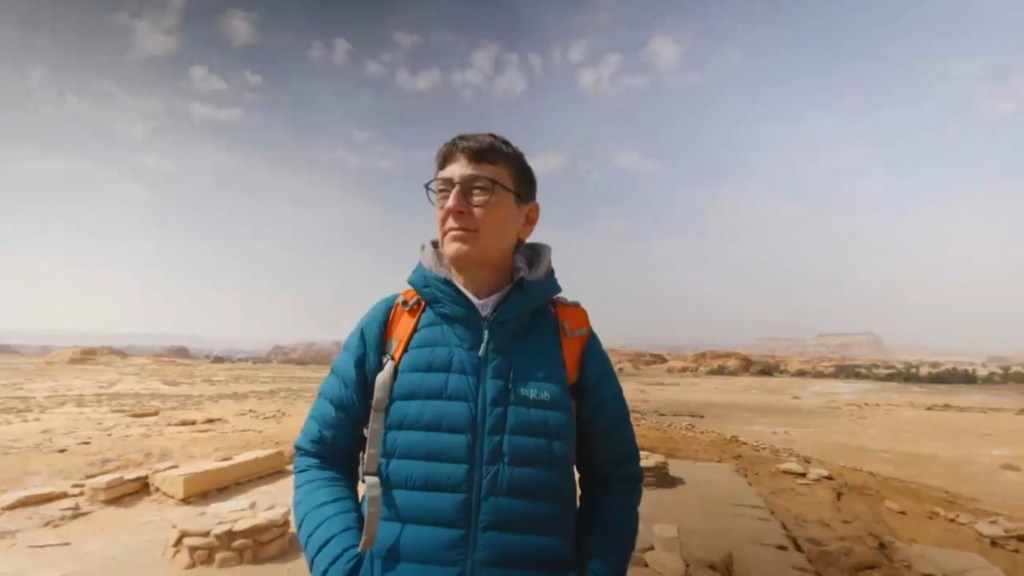
The project that Laila Nemé has conceived over the last decade represents much more than simple archaeological research. It is an ambitious dream: to reconstruct one of the Nabataean caravan routes, following in the exact footsteps of those merchants to better understand their travelling conditions. The archaeologist, who co-directs the Franco-Saudi archaeological mission in ancient Egra (now in Saudi Arabia), has assembled a team of specialists to embark on this unprecedented adventure that promises to reveal new dimensions of Nabataean life. The expedition aims to connect two strategic oases of the ancient Nabataean kingdom: Egra and Taima. This approximately 140-kilometre journey, which originally took seven days, presents a considerable challenge for modern archaeologists, as time has covered the ancient roads with sand.
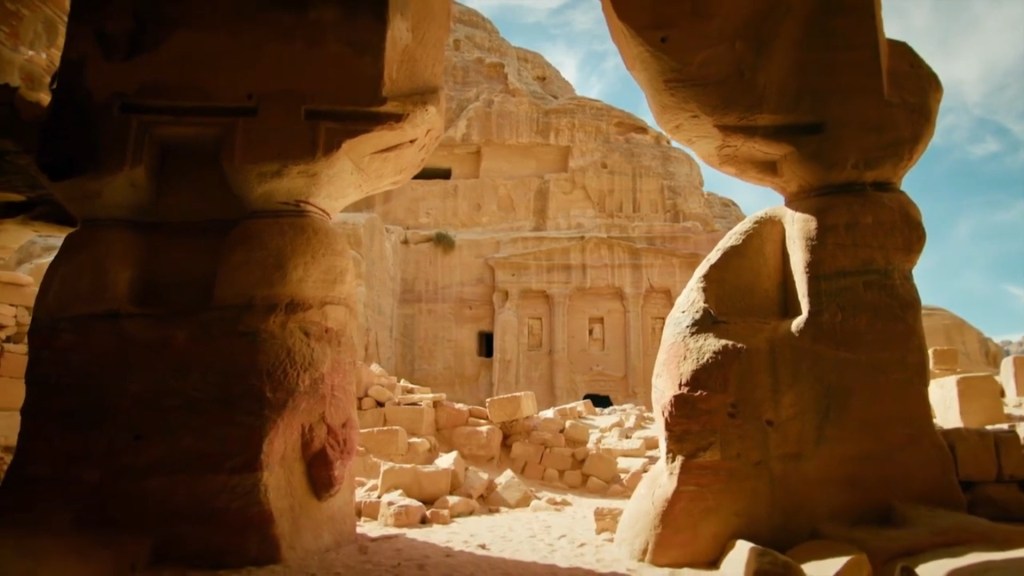
The chosen starting point is Egra, where the imposing tombs with Greco-Mesopotamian façades reflect the multiple cultural origins of the merchants who travelled these trade routes. Before embarking on the journey itself, Laila and her team carry out a reconnaissance mission at the tombs of Egra. The aim is to identify the names of wealthy Nabataean merchants whose remains lie in these monumental tombs. These names will serve as crucial clues, as the same individuals often engraved their signatures at different points along the caravan routes. Among these notable figures is Rabibel, a strategist who lived in the 1st century AD. He and his family controlled numerous cities in ancient Arabia, and his tomb, strategically located in an elevated position, symbolised the greatness and power of his lineage. For Laila, finding this strategist’s signature in a desert canyon would provide tangible evidence of the existence of the ancient caravan route they are seeking to reconstruct.
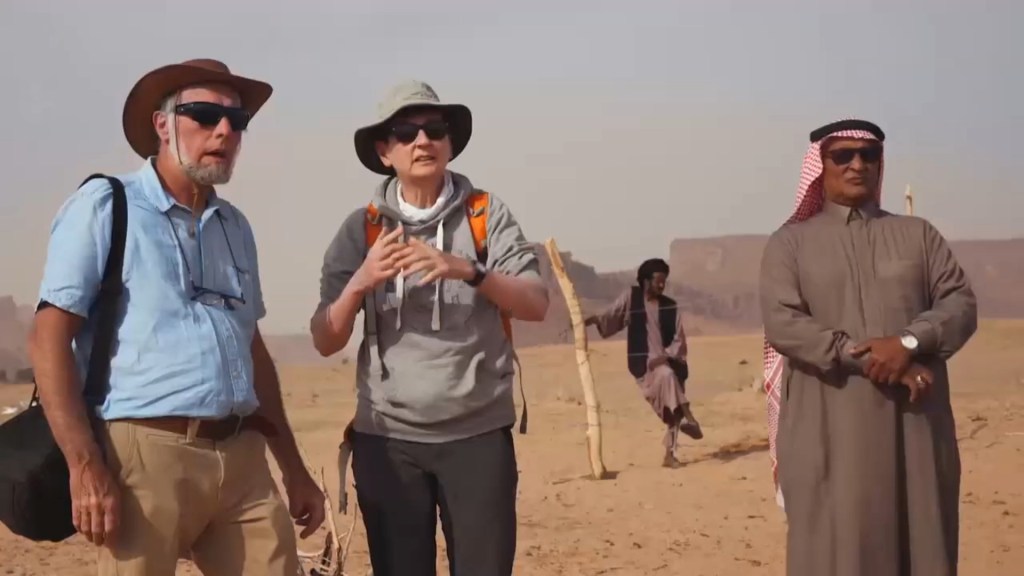
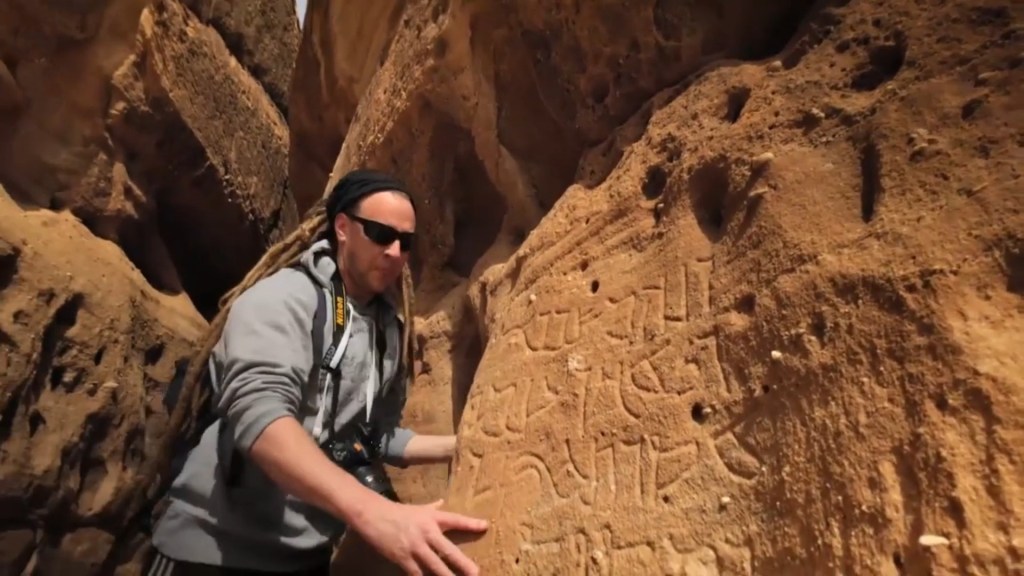
Jerome Norris, a specialist in Nabataean writing, accompanies the expedition to help decipher the inscriptions found. His expertise proves invaluable when, examining an inscription near the tombs, he establishes a connection between Rahanem, another strategist, and his father Damasipo, who bore a Greek name. This detail reveals the openness of the great Nabataean families to Hellenic cultural influences, illustrating the cosmopolitan character of this merchant civilisation. The Nabataean inscriptions function like scattered pages of an open book, whose entire content is engraved on the rocks of the desert. Locating them and identifying their authors will allow archaeologists to authenticate the crossing points of the ancient caravans, thus revealing the clue sought by Laila and her team. To carry out this expedition faithfully following the original conditions, Laila has decided to use dromedaries as a means of transport. The right choice of animals is crucial to the success of the mission, so she is being advised by Bernard Fay, an expert camel driver who is accompanying her for the first few kilometres to help her select the most suitable animals for this extraordinary adventure.Along the way, the team is not only looking for inscriptions, but also trying to identify temporary water sources that were vital for the survival of the Nabataean caravans in the hostile desert environment. Detailed accounts from two priests who previously explored the region provide valuable information for reconstructing both the route and the location of these essential water resources.
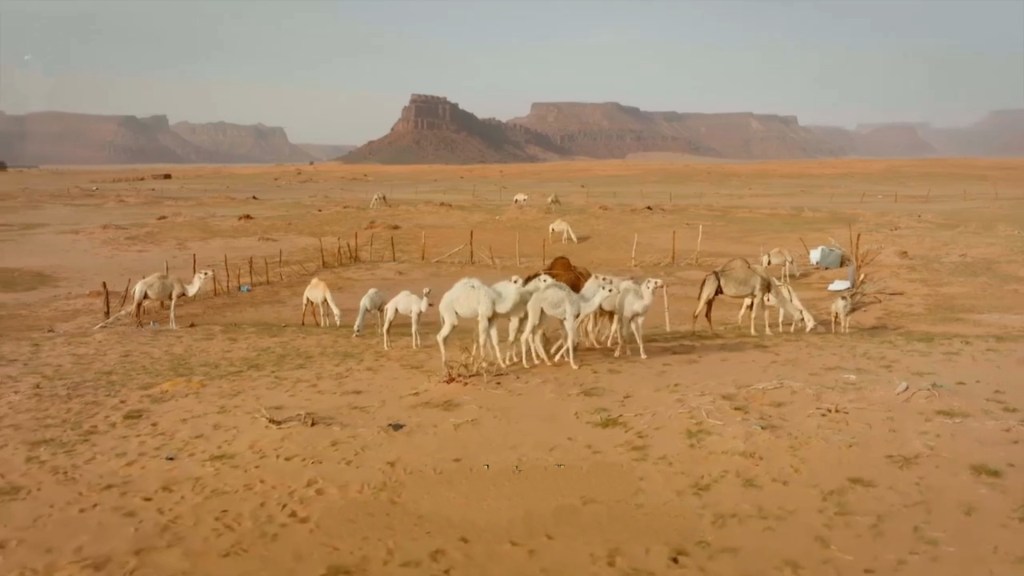
On the eve of departure, the entire team of archaeologists gathers at the excavation house on the outskirts of Egra to finalise the details of the itinerary. Although Laila has been preparing this expedition for months, they are aware that the slightest mistake in the desert could prove fatal. To meet the challenge of finding records discovered a century earlier by other explorers, Laila has brought Pablo Cervantes, an archaeologist specialising in cartography, onto her team. He has carried out meticulous preliminary work, cataloguing every site discovered by two Dominican monks who explored the area previously. Based on their descriptions, he has transcribed the information in the form of coordinates using satellite images to deduce the most accurate route. Complementing this work, Dominique Cabaret, a specialist in the writings of the Dominican priests, has provided a valuable photographic corpus that includes black-and-white shots of certain relevant sites. This visual material is an important reference for identifying the places described a century ago. The team has divided the route into two main sections with very different characteristics. The first segment runs through rugged terrain, a kind of canyon where the route strictly follows the course marked by the Nabataean inscriptions. In contrast, the second section crosses plains where the path can vary by up to 100 metres, adding complexity to the precise identification of the original route. Through exhaustive research, archaeologists have identified some twenty sites with Nabataean inscriptions between Egra and Taima. For some of these sites, they have exact coordinates because they were visited recently, while others were only documented by Dominican explorers a century ago, adding an element of uncertainty to the search. During the expedition, each discovery of inscriptions represents a valuable find for the team. At one of the sites, they find a Nabataean signature in exceptionally clear letters identifying an individual named Taimou, son of Khalafi. These individual signatures gradually piece together the human and cultural map of the ancient caravan route.
 Pantagruel´s liquor
Leave a comment