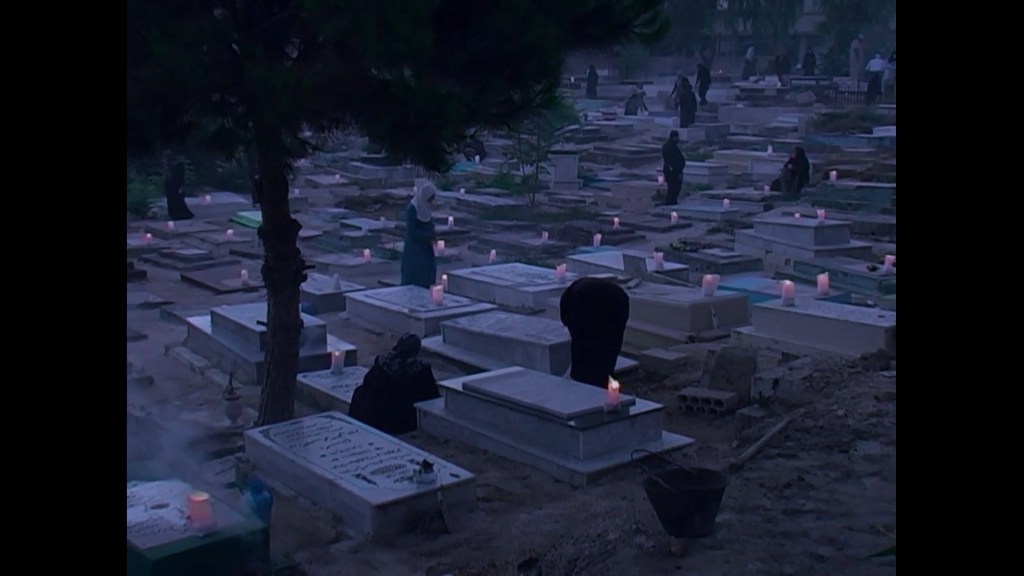
I like Mansour. At first glance, his work seems amateurish, but then something happens—an anecdote, an aphorism—and the subjective camera moves forward, and I realise that Mansour is a flâneur. He wanders like Walter Benjamin, collecting material for his own book, The Arcades Project. Benjamin was convinced that micro-stories, like Mansour’s, are the building blocks of a genuine history.
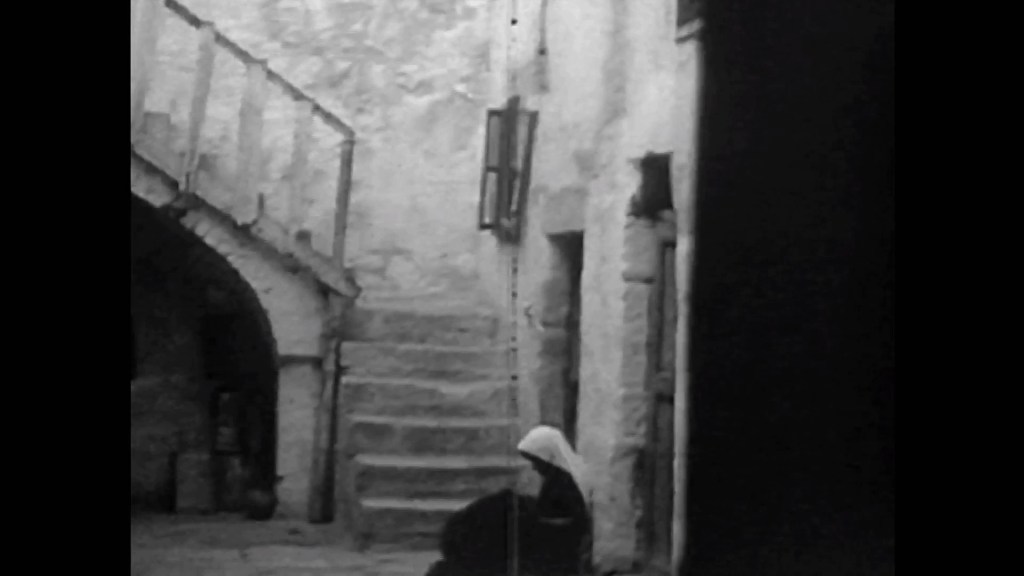
In his ‘Theses on the Concept of History,’ he observed that the past only exists when it bursts into the present through everyday objects or stories, rejecting linear narratives and emphasising the ‘messianic force’ of the fragmentary. And isn’t it true that, when you look closely, there may be more authenticity in the women who carry photos and shout in the street: ‘Remember them, they are the ones who fought against Israel!’ The documentary is fragmentary, but that is exactly what reminded me of Walter Benjamin’s methodology, piecing together bits and pieces of speeches that no one would listen to, but which are quotes and more quotes that challenge not only the official historical construction but also the media’s agenda setting.
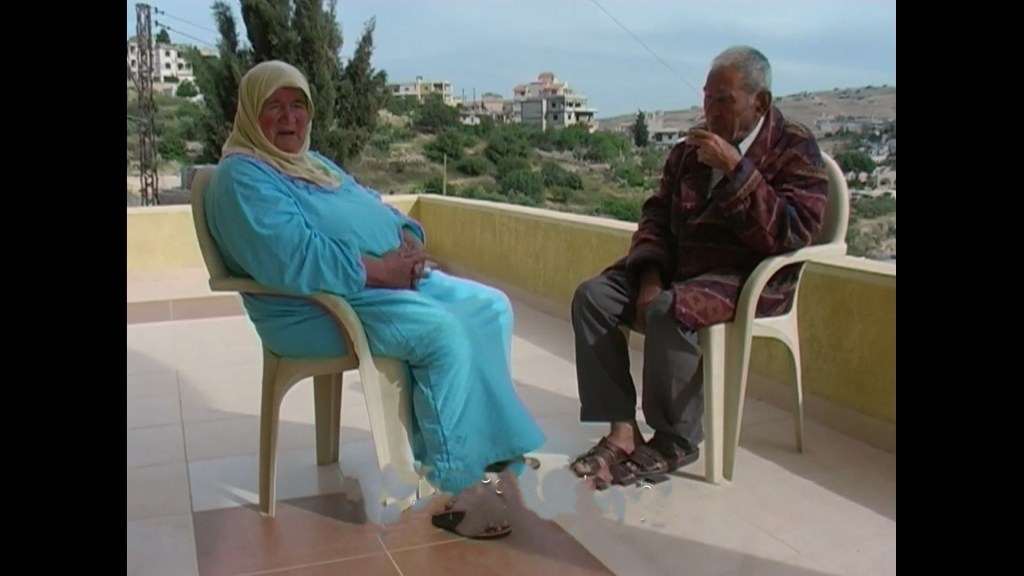
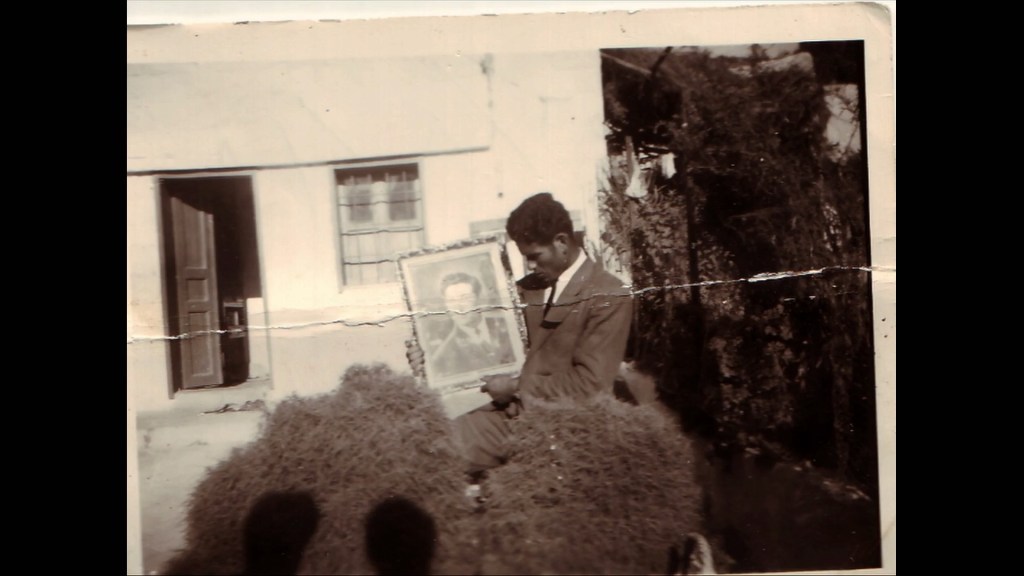
For example, was it really true that there was a young man who beat up two soldiers in southern Lebanon, Aïnata? The answer is yes, the boy from Dib Meslem. Israeli tanks, soldiers and officers were looking for Abbas Nehme. His mother explains the personal harassment, or bullying, he was subjected to on a daily basis, until he had had enough and knocked both soldiers to the ground, in a shameful manner, it must be added. And it was only when his own brother went to look for him that Abbas came out of hiding. Or what about the houses that are over 100 years old, whose interviewees are hardly interested in the subject, and yet, the old man remembers that the house had arches and was destroyed twice, at least as far as he can remember. One in 1978 during the war, then Palestinians came to hide there and he had to flee to Jowaya, although he later settled in Asdlon in the district of Arkoub. Mansour does not allow us to see whether his documentary thread is autobiographical dreams or true testimonies. He is entitled to declare, as the master Godard did mutatis mutandis, that we are shipwrecked in a mirage of slogans and symbols but, like Benjamin, I insist that instead of material places such as houses or photos of women in pain, what he revisits are dreamlike fantasies that are embraced in the social imagination of each country. Rather than memories of his own childhood, he draws on fictions based on real events or fictions based on his own memories, which are interesting in any case.
 Pantagruel´s liquor
Leave a comment