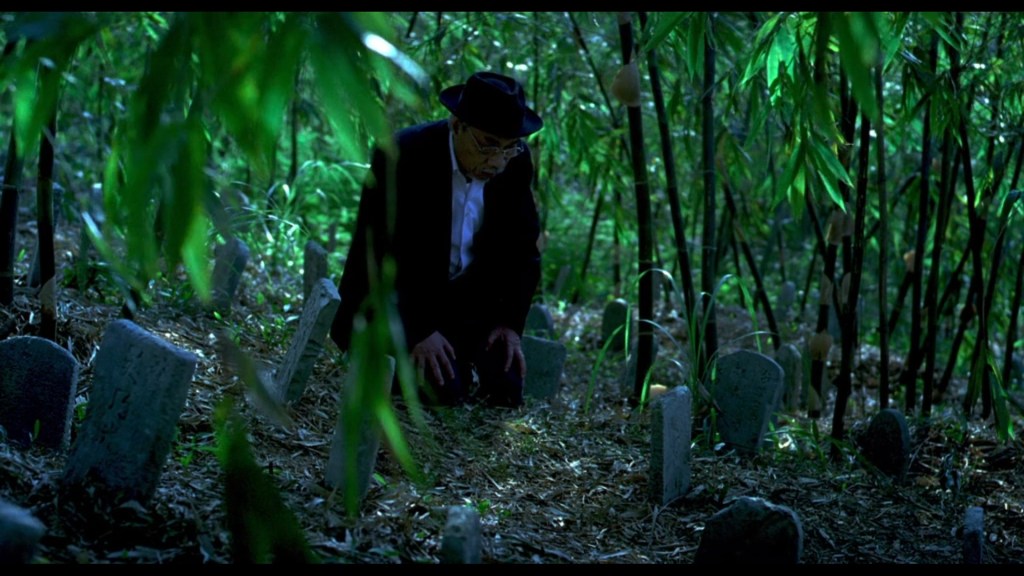
When I see this kind of film, I can’t help but think of King Crimson’s Epitaph, which I used to listen to over 30 years ago with my friend Alejandro Campos Bravo. Take out your “Wings,” my friend, smoke one, I’ll get you a bourbon over here. Enjoy the show.
It is not true that prison was his torment. Ko’s real punishment was the real world, the post-Martial Law Taiwan he encountered. To step out into contemporary Taipei and find Machangding as a family park, rather than the site of horror where thousands of dissidents were executed during the White Terror. If his hopes had been for the modern, Westernised Taipei he now experienced, rather than the one that redeemed his imprisonment and justified his socialist causes for the 38 years he spent behind bars, he would have been better off either having no hopes or never having been released. The script for this gem was written by Hou Hsiao-hsien with Wu Nien-jen and Liao Ching-sung, essential collaborators on the film. Wu Nien-jen incorporated elements of his childhood in Taipei during the 1960s, and they conducted first-hand oral interviews to bear witness and accurately construct the narrative thread, especially with regard to the incident of 28 February 1947 at the dawn of martial law.
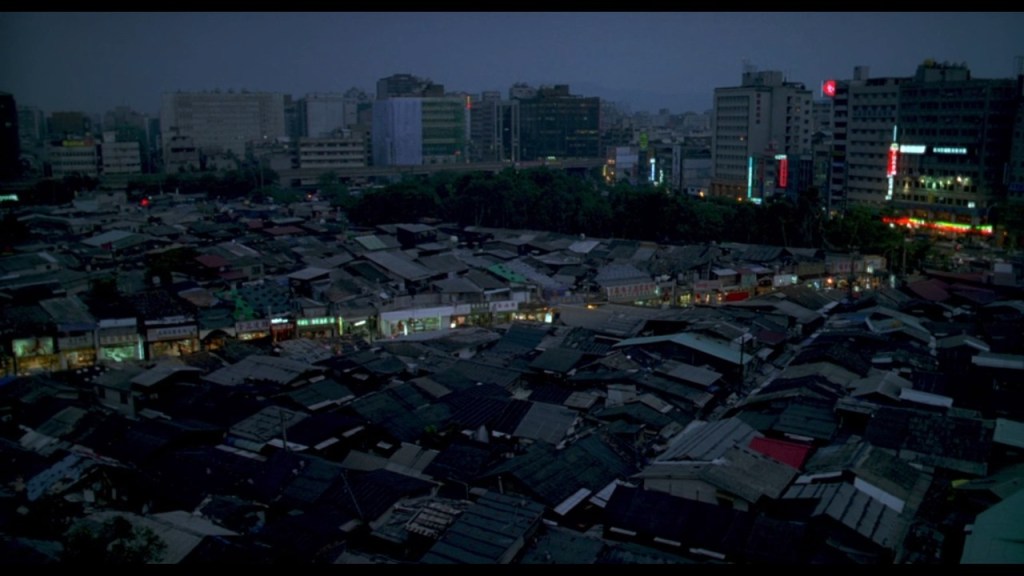
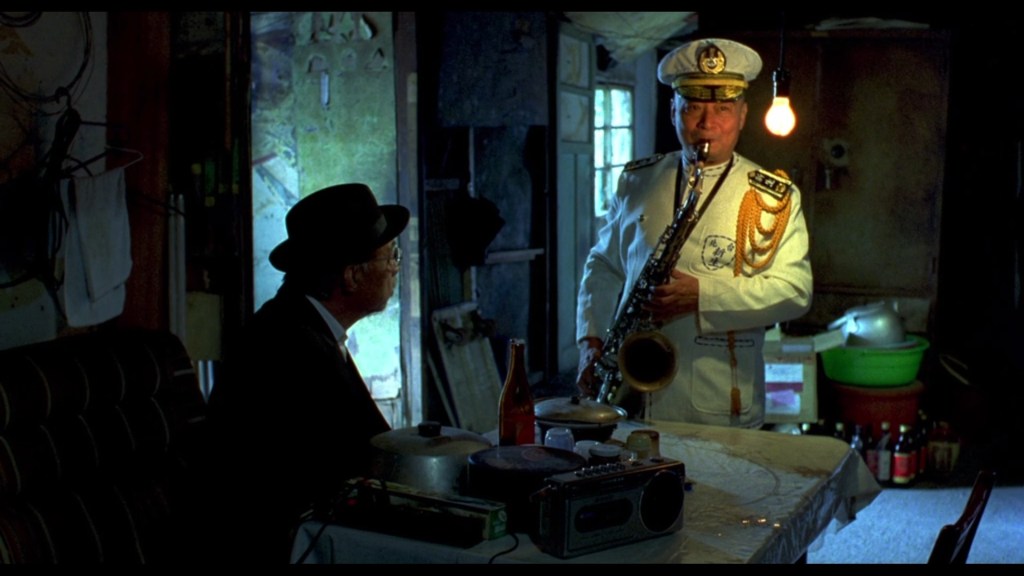
You can imagine Ko’s journey, following his departure from the nursing home and arrival at each of his daughters’ homes. If you listen to “March for no reason” by King Crimson, you will understand the idea. First, he observes the city carefully and seems to be somewhere else, especially from abroad. Then comes “the march”. He visits his friend Yu, the saxophonist. He almost seems afraid to ask him ‘how are you?’ Well, he seems about to smile, but you can tell right away that it’s a sad smile. And he adds, ‘just eating and waiting to die.’ Yu is now a member of a band and plays the saxophone at funerals, which seems ironic. He was imprisoned for eight years just for talking briefly to Ko during the KMT’s White Terror. But when he asks about Professor Wu and learns that Wu’s sister was sentenced to three years just for offering them cups of tea during some of their socialist meetings, he realises that perhaps he shouldn’t ask any more questions, or that the saxophonist wasn’t so badly off after all.

And what can we say when he visits Professor Wu, who, incidentally, the film suddenly flashes back to in his youth playing the piano with his daughter while Chopin plays in the background. When Ko visits Wu, I repeat, the professor comes out of his room, greets Ko warmly and sits down opposite him in the small living room. Ko insists on knowing what really happened—or rather how—to his friend Chen Cheng-i, who was executed. However, when Ko asks Wu, the professor remains silent, and after about 20 seconds, he takes the headphones and puts them on without looking at Ko. Wu’s wife comes out looking quite upset and explains that since he got out of prison, he has been wearing headphones because he is sure that the repressive KMT planted a hidden microphone in his chair and that only by listening to music can he prevent them from knowing what he is thinking. And what does Professor Wu listen to on his headphones? Obviously not King Crimson. Ko, visibly upset and sad, approaches Wu, sits down next to him, takes one of his earbuds out and listens to the haunting chorus repeating: ‘We must return to reclaim it, we must return to reclaim it’. Wu is listening to ‘Chorus in Two Parts,’ a poem that Mu Dan set to music during World War II, after his unhappy personal life listening to the bombings, and whose lyrics literally say that ‘his homeland and mother earth must not be occupied by communist bandits nor mutilated by Soviet scoundrels.’
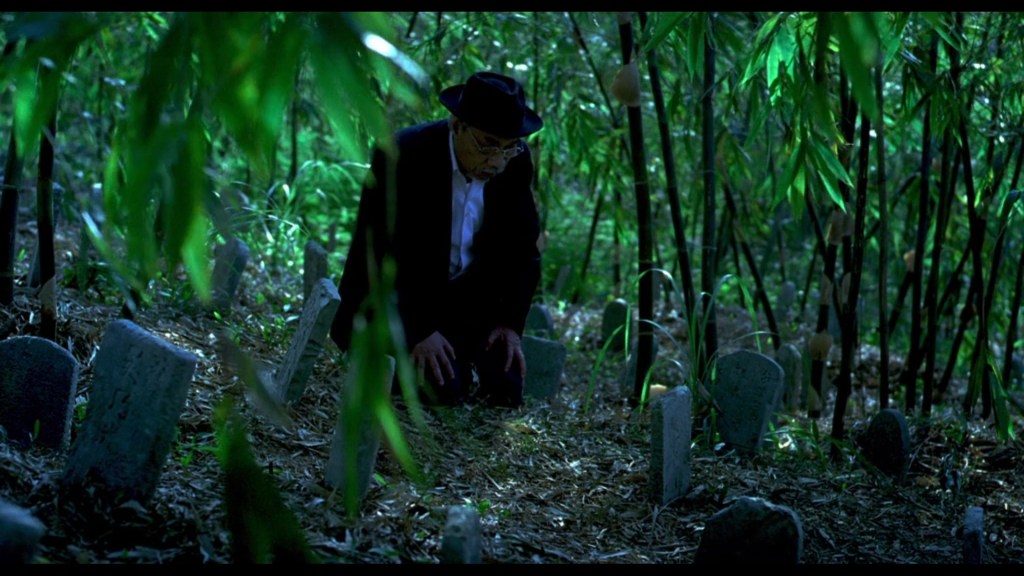
On his way out, Ko visits the East Hongan Temple from outside, the building where his fingernails were torn out and which is now a shopping centre. He then asks himself in a meta-cognitive monologue: ‘Youth and idealism, what do they really mean to an old man like me, who has only the past left and cannot see the future? They are just like lost photographs.’ When Ko’s son-in-law tries to get involved in politics, the old man’s daughter receives threatening phone calls: ‘Mrs Tsai, your husband had better come back.’ The ending could not be more disheartening, especially after hearing his daughter’s opinion and her previously untold anecdotes about how her fellow music students rejected her, calling her a traitor. In the end, Ko apologises to his friend Chen. Ko unwittingly betrayed him during his arrest and imprisonment, assuming he would be safe or in hiding, but Ko was wrong and it cost the life of the man whose grave he now visits to light candles to warm the cold ground.

 Pantagruel´s liquor
Leave a comment