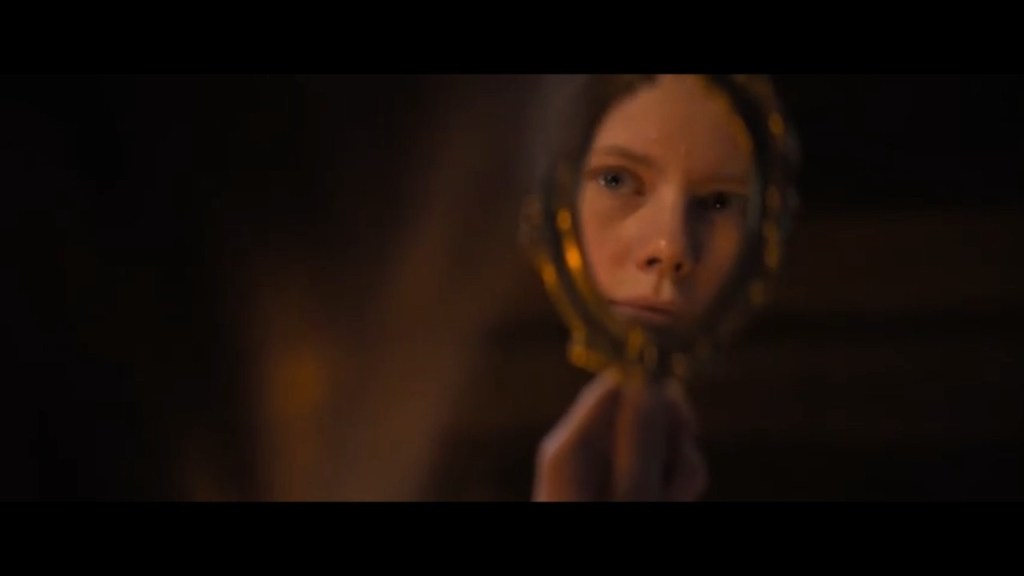
Once again, seven first prizes (Jussi Festival in Finland) have been awarded to a work with the ingenuity of ‘Finding Nemo’ for adults. I have said it before, forgive me for repeating myself, but it really does seem at times that the competition judges and large sections of the audience have just been born when they are shown this type of work. No one who has previously enjoyed the measured objection, the subtle but firm reluctance to be chosen by men – without having a say as women – of, for example, Lizzy Benneth in Austen, or Effie Briest in Fontane, no one who has been moved by those female bastions of the same 19th century as Maya in ‘Stormskerry Maja’, would accept such a poorly drawn psychological portrait of a character, to which is added a chaotic commercial script, to say the least, thanks to a mixture of myths, true historical facts such as the Crimean War, and an enormous amount of creative licence to invent nonsense and vagueness.

Maya is the young girl who argues with two boys about the existence of elves, and then runs to the lake to ask the mermaids, ‘Oh mermaid, oh mermaid, show me a photo of my future boyfriend.’ Who told them that in Norse legends mermaids grant divination? The Norns: Urd, Verdandi and Skuld, yes, but they are not mermaids. It is only a simple scene, it is true, but when the film lasts more than two and a half hours, it is not a minor detail that there is a plethora of Walt Disney-style excesses and Manichean arbitrariness, where there are only beautiful and ugly, evil and honourable characters. I repeat that the conflict between social pride and personal stereotypes called prejudices between Elizabeth Benneth and Darcy is a test of overcoming obstacles that creates tension in the story, while here, from minute 15 of 140 minutes, the Maya in the film already knows that she is helplessly in love with the boy who stood next to her when she summoned the mermaids, before arranging her marriage to Yanne. I apologise, I don’t mean to offend, but I find it extremely boring that she adapts to an arranged marriage, has three or four children (I lost count) and takes care of them while her husband runs away.

The script is not sufficiently scathing or innovative, nor does it show me all the feminine strength she is credited with just for selling fish and sailing the boat as well as mending nets. I’m sure many women did that and more, even if their names weren’t recorded, in order not to starve and to feed their children with an absent father. The fact that these roles were indeed for men and that social criticism did not forgive this is no relief for the script, which never builds up any tension or sustained conflict. A little more interesting, but not enough, is her role when the English ships arrive during the war and her fall into prison. In any case, the work does not warrant its length as if it were a mini-series, and if it had been a mini-series, it would surely have been better to insist that it should be a feature film, but a well-written 90-minute one. At least I expected more detail, an abundance of images of the Åland archipelago, or more details about the 19th-century habits and customs of that area, but neither. It’s not worth it.
 Pantagruel´s liquor
Leave a comment