
Once again, Klassiki’s curatorship shows a sublime touch in selecting this indigenous gem from the impenetrable tundra, not only performed by non-professional actors—which is evident in the inexpressiveness and rigidity of a couple of the characters when they speak—but also because it is spoken in the Nenets language. I cannot imagine the endless research work involved in giving it anthropological content, but also spark or life to weave the feature film together, with superb cinematography, given that the levels of albedo from the snow and ultraviolet radiation meant that many sequences involved incalculable difficulties in order not to saturate the photography.
Ver video corto: https://wp.me/aguJCZ-cG
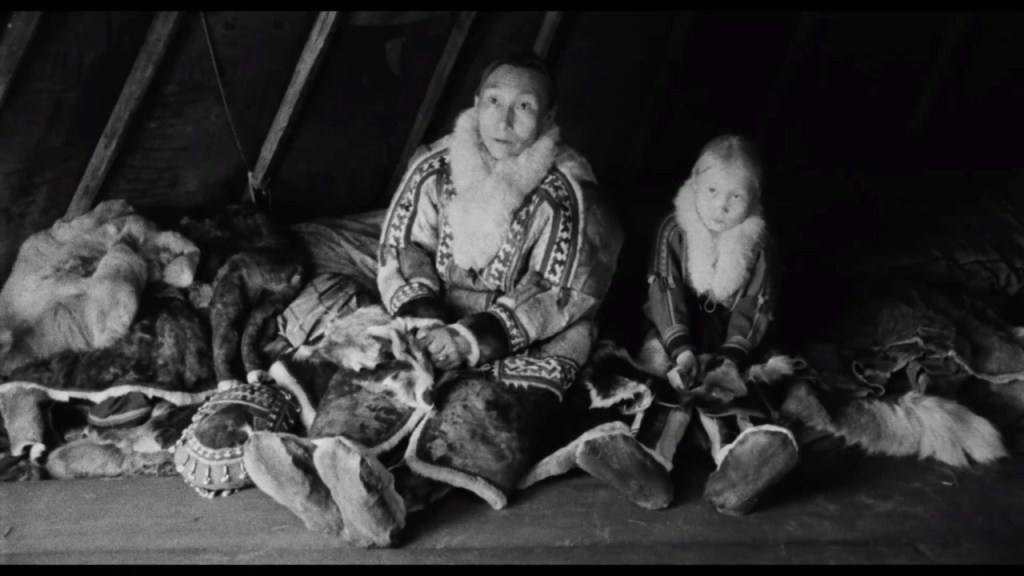
An invitation to see this delightful yet sad work (sad because of the girls like 9-year-old Syako who are torn from their parents to be sent to Soviet communal schools) is to begin by saying that ‘Seven Songs’ should be taken literally here, as it is a plot made up of that number of more or less independent stories, oscillating between documentary and dramatisation of the Nenets tribe or clan, adapting to the cruel nuances of forced acculturation by the USSR for its colonisation. It should not be forgotten that the director, Anastasia Lapsui, is of Nenets origin, so it is natural that there are sequences of open denunciation of the Soviet Union and the past to which she alludes and which she places in stories that are also steeped in tradition and myth. The songs include (1) the Sacrifice or ritual sacrifice of the reindeer – using the blood for anointing next to a tree chosen for the event – whose animistic practice dates back to prehistoric times, although, as understood here, it was used as a practice of the Nenets in the 18th century with the rearing of reindeer. (2) The bride, which is apparently a mixture of Nenets tradition and Soviet custom, begins the ungrateful bride singing about the 3,000 reindeer of her brothers, the Vengas, and the infamous tipi where the three Tesda brothers live.

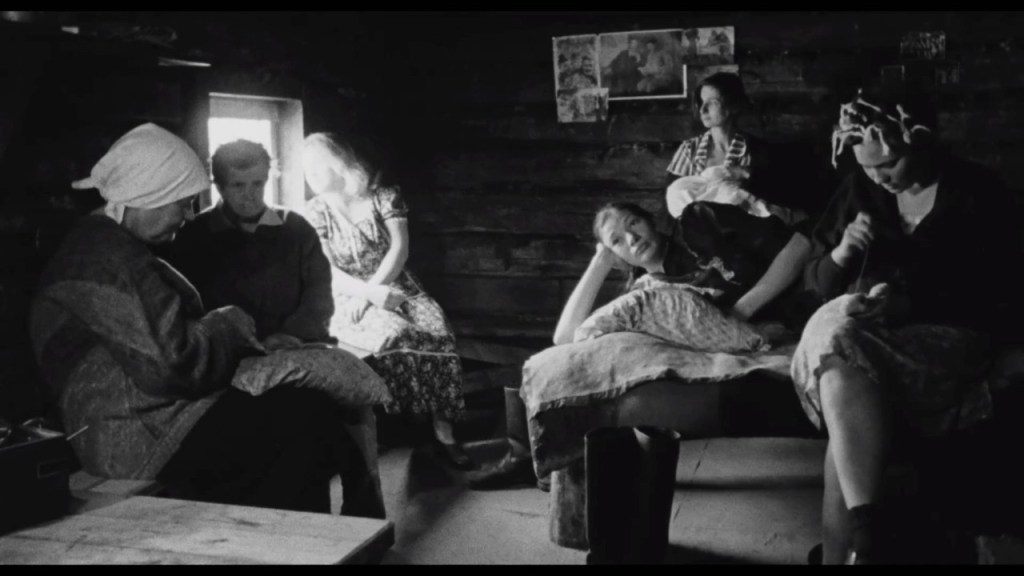
The song (3) about an independent person sings that for seven days he did not know who his enemy was and lost consciousness, but when he came to, he realised that grass had grown on his vertebrae. He would have continued singing if the Soviets had not arrived to remind him that, due to the law, the kolkhozes had come to the Tundra and the kolkhozes needed reindeer. In short, they expropriated the reindeer from the singing shepherd and everything ended in a confrontation. The song (4) made me laugh because it ridicules the images of Lenin and Stalin, a criticism that returns in the penultimate song when they come to snatch the 9-year-old girl and demand that her impoverished parents explain why the images of Lenin and Stalin are not hanging on the walls. (5) revolves around exiled women of different ethnicities who live near a Nenets community during the pogroms and purges of Stalin’s time.
The aforementioned (6) is about the resistance of a girl who is sure she will be bullied at school and fights to prevent them from taking her away. Even her mother rebukes her father for not doing anything, and they can only watch helplessly as the visitors take her away because, according to them, she should have been studying a year ago. Finally, (7) shows a mother singing amid the cries of a newborn baby. I recommend it for immersing yourself in the Nenets worldview. Delicious photo.
 Pantagruel´s liquor
Leave a comment