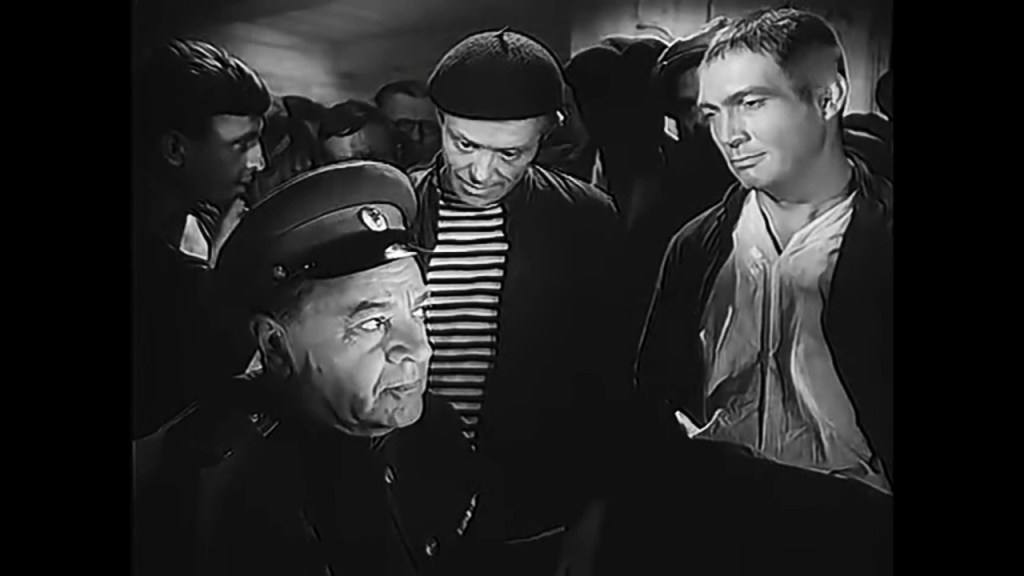
A highly interesting work of unusual post-Stalinist Soviet rarity—specifically with its avant-garde cinematography—whose protagonist, Nikolai Smirnov, nicknamed Shark (Акула), is a genuine antihero for Soviet cinema, which immediately rejected any artistic expression that showed, as here, the collective rejection of communist society towards an unreformed ex-convict, or the cowardice of the Red Army soldiers in battle in Chukhrai’s ‘Ballad of a Soldier’, also from 1959. Even in the midst of the Khrushchev Thaw, the Glavit (the Soviet State Secrets Protection Agency) could not have been very fond of this thief who escapes and exposes the harsh reality of social rehabilitation centres for inmates. Акула had already argued with the comrade citizen in charge of the prison, who reprimanded the inmates and called them to order. But The Shark mocked him, saying that he too knew how to give grandiloquent speeches. Nikolai says to him: ‘Я тоже капитал изучал. Деньги, товар, деньги’ (Translation: ‘I also studied capital. Money, goods, money!’ But the guard replies: ‘Водка, кража, водка. Философ’ (Translation: ‘Vodka, theft, vodka. Philosopher.’ Philosopher. First give back the money you stole from Gusev and Ivan.’ And, indeed, the grumpy guard’s prediction will come true almost to the letter. The Shark will be rejected by his former cronies. One by one, demonstrating not only the failure of rehabilitation for convicts, but also the normalisation of offenders to a communist regime that conforms to the system, even if deep down it seems to be doing so to distance itself from vice and crime.
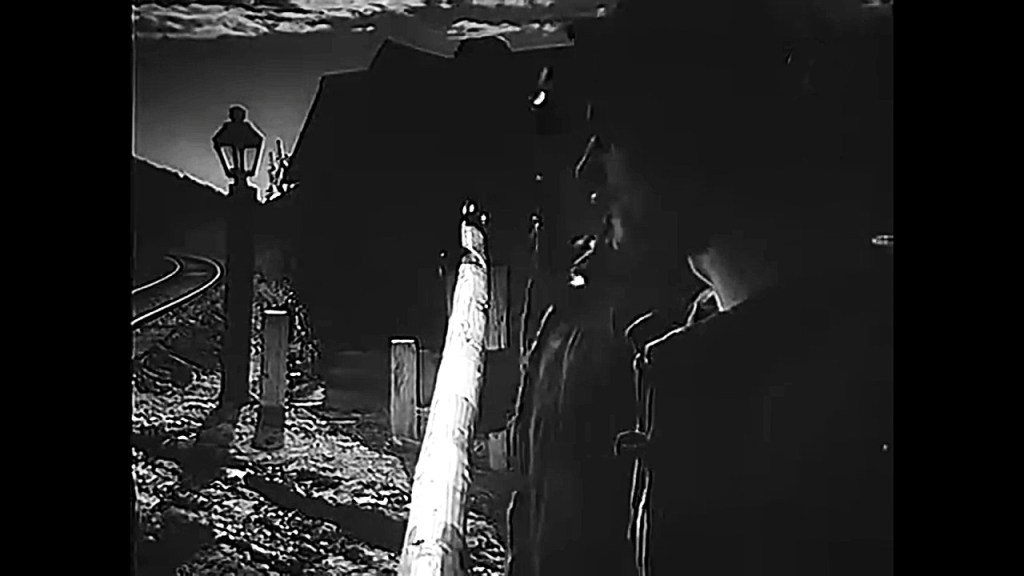
First, Innokentiy Stepanov’s mother rejects him. Then Innokentiy himself, who first invites him to pancakes and enthusiastically talks about inviting him to work with Muravushki on the construction site where he is working. Nikolai rejects him immediately and they end up in a fistfight. He is then rejected by his former lover Nina, whom he runs into in a warehouse. The Shark assumes that she will support him in his next robbery. But Nina never shows up for the robbery, refusing to return to a life of crime. Desperate, Kolya recruits a few accomplices with a few banknotes, including a young red-haired boy whom he calls Sanyka-Boldyr. In any case, the robbery at the fur warehouse is not a failure because he manages to escape with the money and returns to Innokentiy for refuge, but ends up in a less violent but irreconcilable clash between the two. However, he receives the hardest blow when he visits Nina again. She is not there and he is attended by a boy who says his name is Nikolai. When Nina arrives, she confirms that she did not participate in the robbery voluntarily.
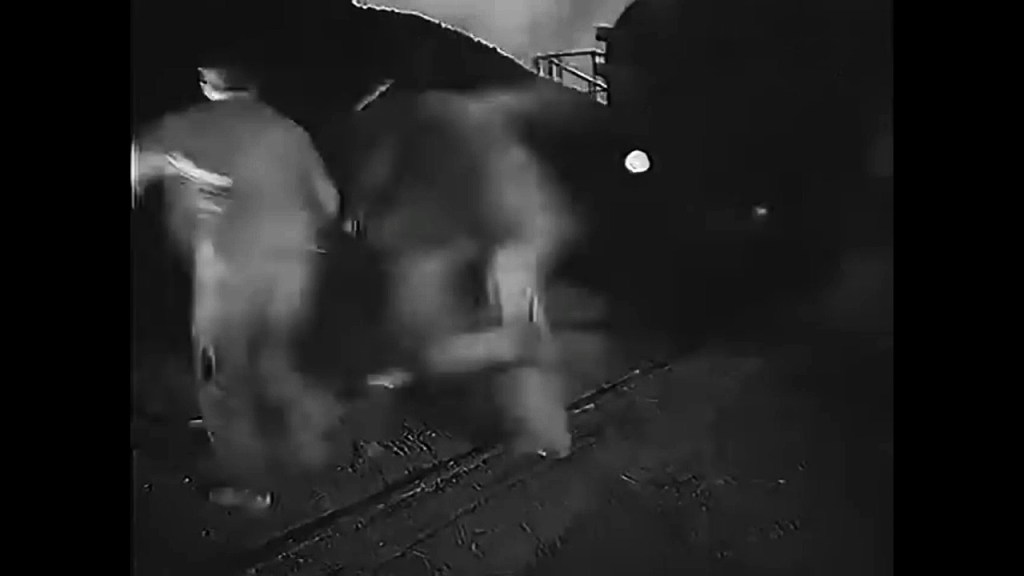
She also reveals that the boy is her son, which devastates the Shark He tries to offer Nina money, but she repeats that she is not interested in his money. The film is excellent and the cinematography sublime in the last 15 minutes. Overwhelming loneliness. It is excellent because when he finally goes to see his mother, he realises that he himself did not need the money and, throwing the wads of banknotes on the floor with the old woman, he asks himself bitterly, ‘Who will remember me?’ In the forest, he affirms, ‘I wanted to live, work, have a child.’ But he doesn’t finish what he was saying because he is stabbed by one of his accomplices demanding the money he has already given away. Pay attention to the cinematography techniques in the night scene on the train when he escapes. It looks as if Sergei Poluyanov had cut the frames and there is a stop-motion effect. In any case, it’s strange that this film has sold 27.5 million tickets at the box office and hasn’t appeared until now. I took the quote about the film’s warm reception from the book Men Out of Focus: The Soviet Masculinity Crisis in the Long Sixties by Marko Dumančić, a historian specialising in Soviet studies and professor at Western Kentucky University.
 Pantagruel´s liquor
Leave a comment