
Review by Fernando Figueroa
Once again, with a doomed character like Youssef, fresh out of prison and paying dearly with his own family fragmentation, embodies the painful transformation of an independence utopia whose postcolonial optimism and failed progress—sustained since 1957 by the socio-political and ideological reforms of Tunisia—collapses in the face of authoritarianism and censorship, rather than being driven by the abolition of the monarchy.
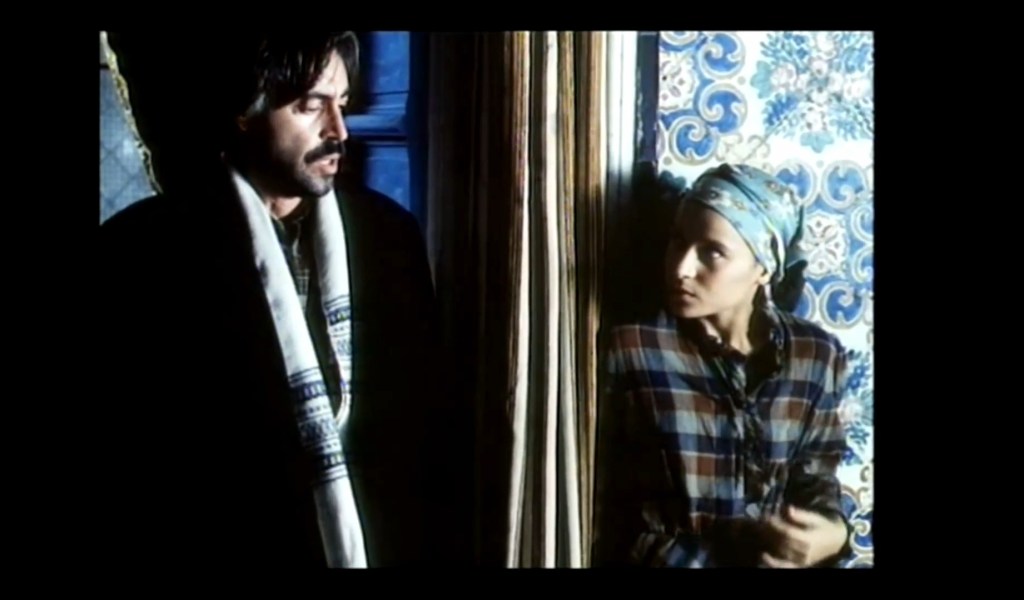
The plot begins when the ex-prisoner returns home and, far from seeing the results of his incendiary activism in the 1960s, finds a son who shuns him like Adel, a daughter, Mariem, who holds a grudge against him, and a fundamentalist brother, Abdallah, who continues to detest him for his years of protest and his laxity in raising his children, especially his daughter, whom he has slapped since she was a child because she offends Allah, and an ex-lover or friend, Zineb, who supported him because he had enough resources but now disrespects him and ignores him after he ended up in prison. His only consolation seems to be his old friend Sghaier, with whom he ruminates on the past and drinks delicious tea. Apart from a photograph that would compete in a film noir contest rather than a painting contest, it should be noted that the director of this remarkable work, Bouzid, knows what he is talking about because he paid with imprisonment – between 1973 and 1976 – for his opposition and militancy in the Groupe d’Étude et d’Action Socialiste Tunisien (GEAST), a left-wing organisation opposed to the regime of Habib Bourguiba.
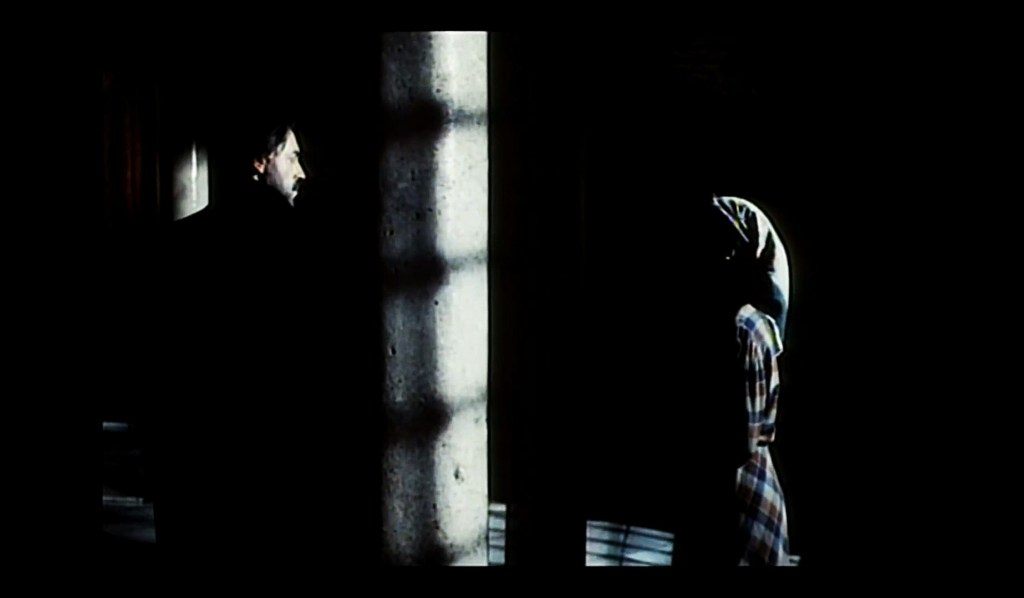
The narrative is at times nostalgic, as it painfully recalls the wasted childhood of his children; and extremely raw as it recounts the torture he endured before his imprisonment, which included not only beatings but also humiliations such as having ice water poured over him, laceration of his private parts and genitals, and even the explicit image of being urinated on by his torturers while lying naked and defenceless, hung up like an animal about to be cooked. The outcome cannot be less hopeless than reality. Beyond the rhetoric of Bourguiba’s assumption of power, beyond the reforms of women’s rights and the changes he promoted, Tunisia was left with a minority class and productive sectors that were neglected. Political rhetoric swept away real practicality and left only socially broken families. Sghaier, his friend, asks him to be patient with his son, who is reluctant to return, but the problem has to do with generations; in reality, it is his entire family context that suffered from the deterioration of the unstable and repressive environment, and now that Youssef is free, it is as if he would rather not be. This film was mutilated but miraculously managed to be presented at Cannes in 1989.
Tag: Postcolonial African Cinema Tunisian cinema

 Pantagruel´s liquor
Leave a comment