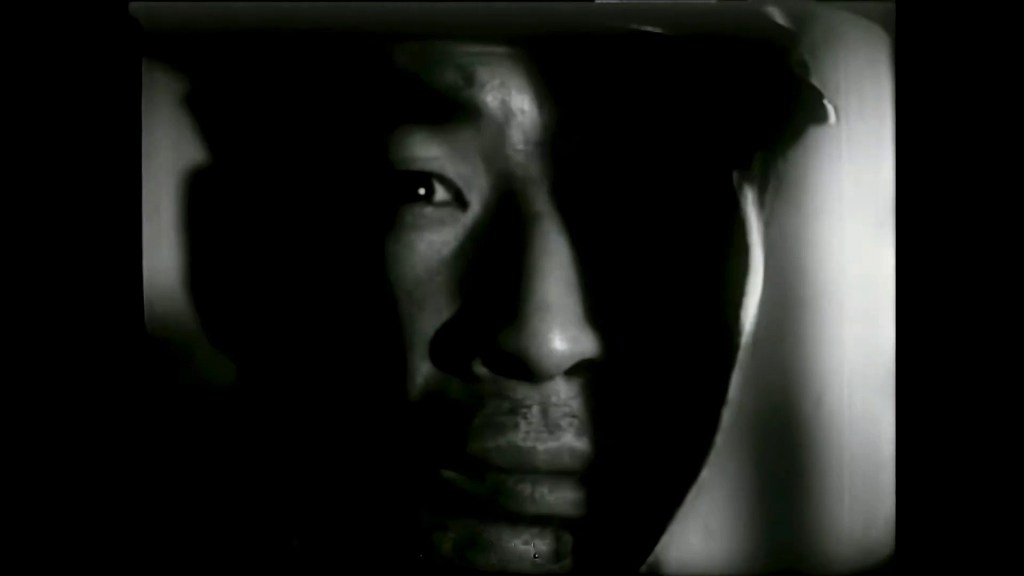
I highly recommend it. The value of this gem lies in its neutrality. It doesn’t advocate communism, nationalism, or even a People’s Republic, simply because it exposed all three. Its only weakness is its excessive melodrama, abusing the ad misericordiam fallacy. A masterpiece nonetheless.
Only by living under such a miserable and repressive government could one understand Shi Hui’s unwavering courage in filming this fierce critique of the nationalist and communist regimes of China in the first half of the 20th century. Lao She wrote ‘Wo Zhe Yi Bei Zi’ under the threat and censorship of the Japanese invasion, and his criticism of the Qing dynasty did not extend beyond 1937, but Shi Hui, 12 years after the written work was published, included in this film the nationalists of the KMT as well as the Communist Party, which took power in 1948, just two years before this sad story was filmed. Ergo, Shi Hui filmed this work knowing – in every sequence and shot – that the day after it was shown he would be persecuted by the state, which in fact happened until his suicide.
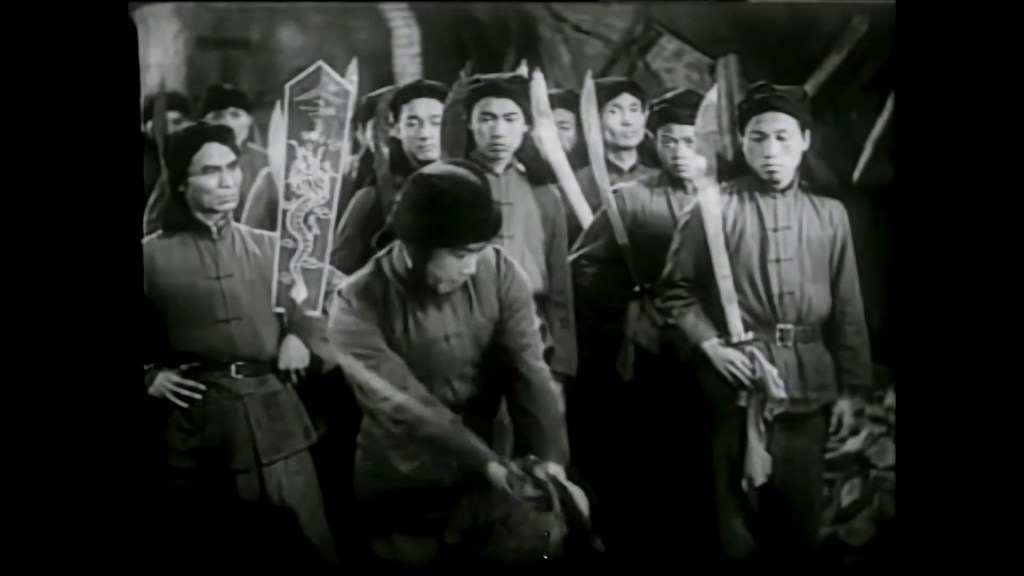
Hui exposed the economic exploitation in all the regimes of the period from 1900 with the Qing to 1949 with the Communists. The protagonist recalls from the outset, before becoming a police officer for no reason, that he had not eaten for days and was carrying and selling paper, but there was no work, and it was old Zhao who recommended that he join the police force. The police officer recounts his personal story, which lasted 40 years of service, in the context of the collective memory of abusive and corrupt Beijing. First came the riots with sabres, then the fire and massacres, with anyone who stood in the way of the Qing dynasty being killed with sabres. Alarmed before defending the innocent, he asked his colleagues for support, but one of them even replied that he would not risk his life for $6 (RMB or Yuan?). This happened before the revolution in Wuchang in 1911 and therefore during the last year of the Qing dynasty, during which, according to Wikipedia, a highly depreciated currency was in circulation, the Cash 方孔錢, a silver ingot with a hole in the centre to which it was tied so that it could be used together with others, and whose equivalent value to 1 Tael of silver was equal to a thousand Cash coins. Therefore, $6 could not be cash from wages but Yuan.
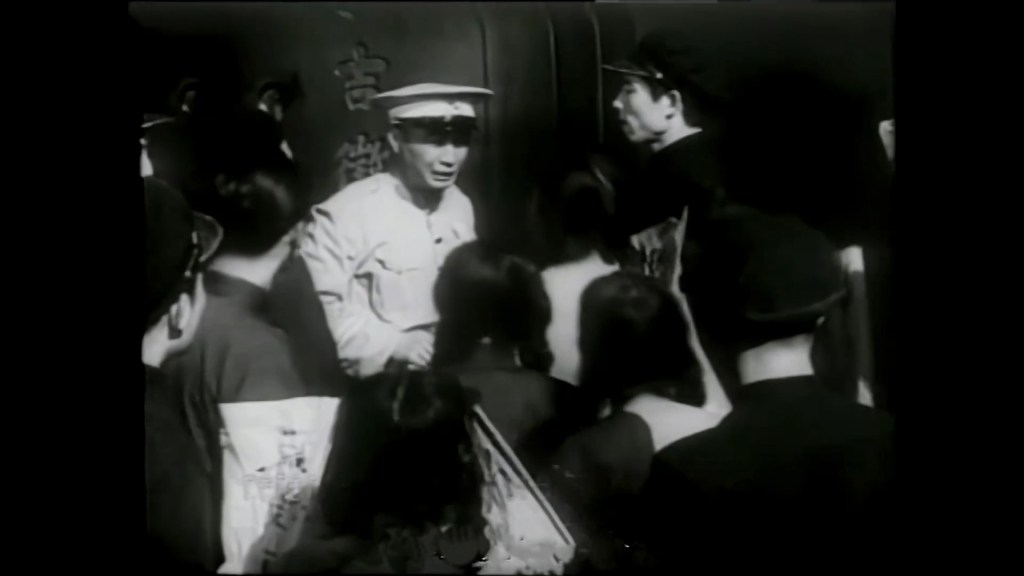
The fictional synthesis created by this anachronism is understood to be intended to dramatise the miserable wages and deplorable economic conditions with the Qing Cash, with the Yuan of the Nationalist Republic or in 1948 with the Renminbi RMB that would circulate under the Communists. In short, under any government and with any currency, the situation was oppressive. The same is true of the excesses and atrocities on the Dazhi Bridge, of which there are no records, but which is a fictional account illustrating the suffocating level of corruption in the police force to which he belongs, because when he goes to the police station to ask for backup, his colleagues laugh at him. The historical review of the character continues with this confirmation of corruption and inequality, for example when he is sent to fetch opium while on guard duty at Master Qin’s gate and the rich lords of the republic – apparently pluralistic and progressive – while the high-ranking guests drink and play mahjong with the Master, outside the people of Beijing who could be considered fortunate, if they can afford to eat once a day due to the severe feudal crisis highlighted by Shi Hui. Thus, poverty and high prices during the First World War further impoverished China. Later, while still on guard duty at the palace, the film jumps to the student demonstrations of the May Fourth Movement of 1919. The protesters, led by student leader Shen Yuan, strongly rejected the Treaty of Versailles but above all the cession of Shandong to Japan, included in the 21 Demands accepted by China, which overthrew Cao Ruln and Master Qin.
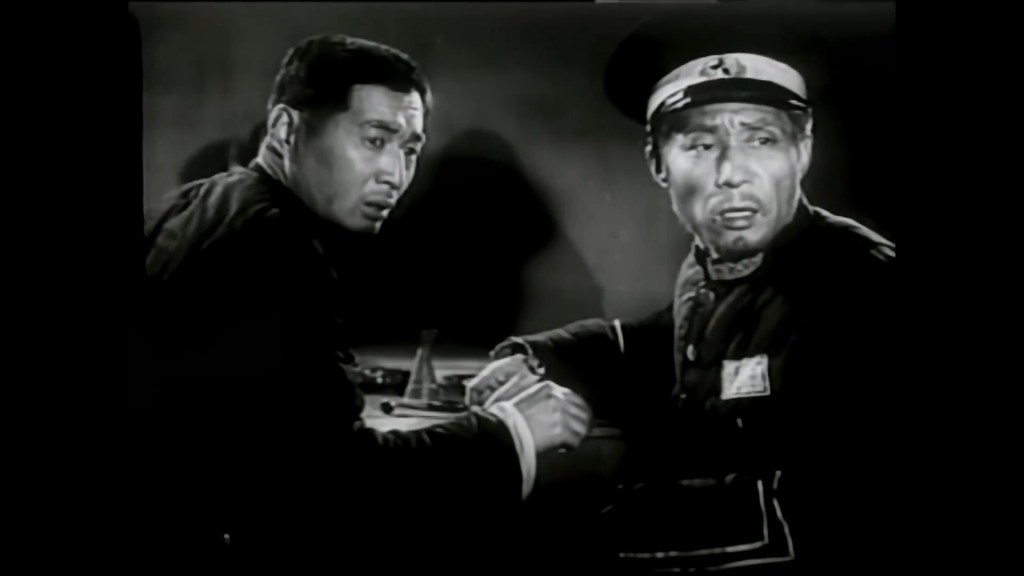
The narrator recalls that with this great triumph, he thought that every time the government treated them like animals, the students would beat them in defence of the people. The policeman could not have imagined that these protests and cultural movements would serve as a slow but irreversible transition to a worse regime, communism. Mainly because of these benevolent ideas about science and knowledge, they did not include a plan to support and address the agrarian and, specifically, feudal problem. Shi Hui, through his alter ego, the policeman who at the age of 60 recounts everything in retrospect, has already experienced the collapse of the fleeting illusion that the character cherished when he bought meat in Tianqiao, believing that the days of prosperity and everything in general would improve from then on. The policeman could not imagine that, just like in the USSR, each regime in China built its own distribution of economic and political priorities, thus securing its domination. The intelligence of Lao She and Shi Hui lies in weaving this story, which contrasts the passivity of the policeman with his honesty towards his devious colleague Hu Lui. The best example of how the May 4th uprising of 1919 was a Pyrrhic victory is demonstrated by Hu Lui’s opportunism, spreading falsehoods, hiding evidence or bribes, and ultimately working with any regime in power. The policeman stoically waits for things to settle down, and sometimes, as happened with the fierce students, the wind blew in his favour, his wife and daughters, but others like Hu Lui, who also speaks Japanese and is obedient, are deliberately introduced as the new Superintendent of Police, demoting the main character three levels, in order to manipulate evidence and crimes, or whatever else is necessary to please and favour the elite circles in power. The introduction of Hu Li has an immediate effect. Shen Yuan, the fierce fighter for Chinese freedom and patriotism who led the May 4th movement outside Master Qin’s palace, is immediately persecuted. In a sad display of humanity, the police officer searches for Shen Yuan, finds him in a bar and alerts him to the orders to eliminate him and his fellow agitators against opulence. The policeman even offers him his own home as a hiding place, and the young man says goodbye and invites him for a drink. The scene is degrading because poverty is rampant in the Chinese capital, and meanwhile, Master Qin’s wife buys a perfume for 50 yuan just because it is imported from Japan, the salesman tells her, and at the same time, in another part of the city, Mrs Sun, a mother in tears, sells her daughter so that others can eat, and only manages to get $30 yuan from the black market buyers.

 Pantagruel´s liquor
Leave a comment