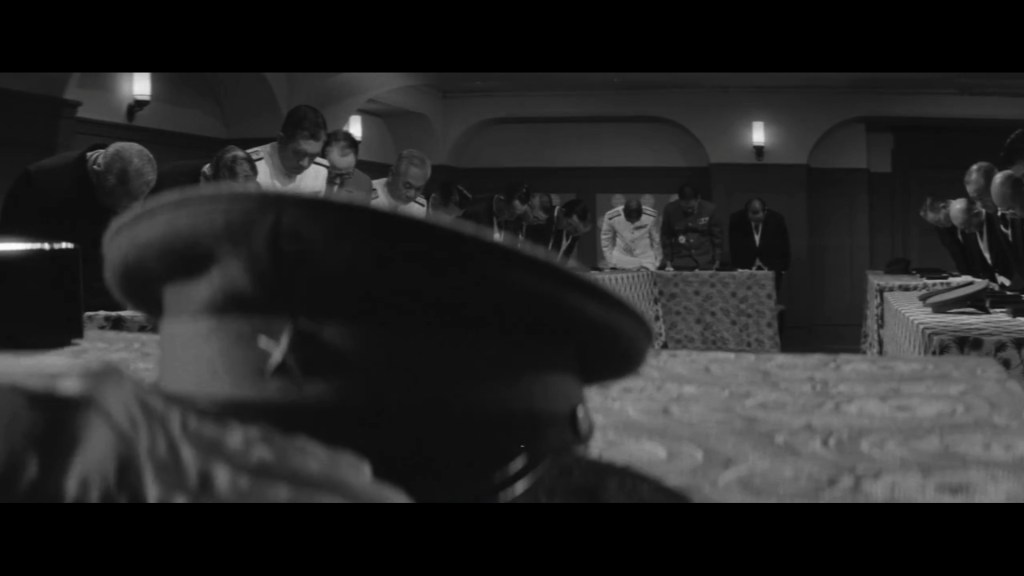
For reasons that are hard to understand, this gem by Kobayashi was relegated to dust and almost forgotten, but it offers a unique perspective that explores individual moral conscience and, specifically, the psychological conflict of questioning institutional loyalty and obedience, accepting Japan’s surrender after the atomic bomb was dropped, or embracing the extreme patriotism of a faction of young military men who rebel and go so far as to attempt a coup d’état between August 14 and 15, 1945. It is true that (a) this is a slightly local event, even though it took place in a global context; (b) Kobayashi released the same year 二・二六事件 脱出 translated as “The Escape” , which focused on the incident of February 26, 1936, also a delicate case of insubordination involving more than a thousand soldiers; and (c) that it is justified by (b), as the plot involves more action scenes than Mid-August Commotion, which focused more on the terrible psychological drama of the Kawasakis.
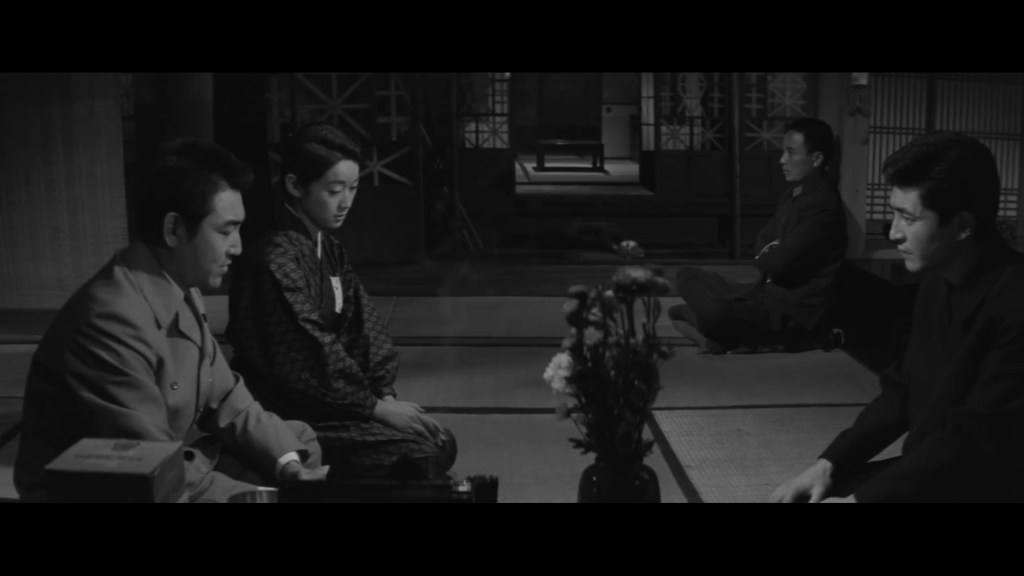
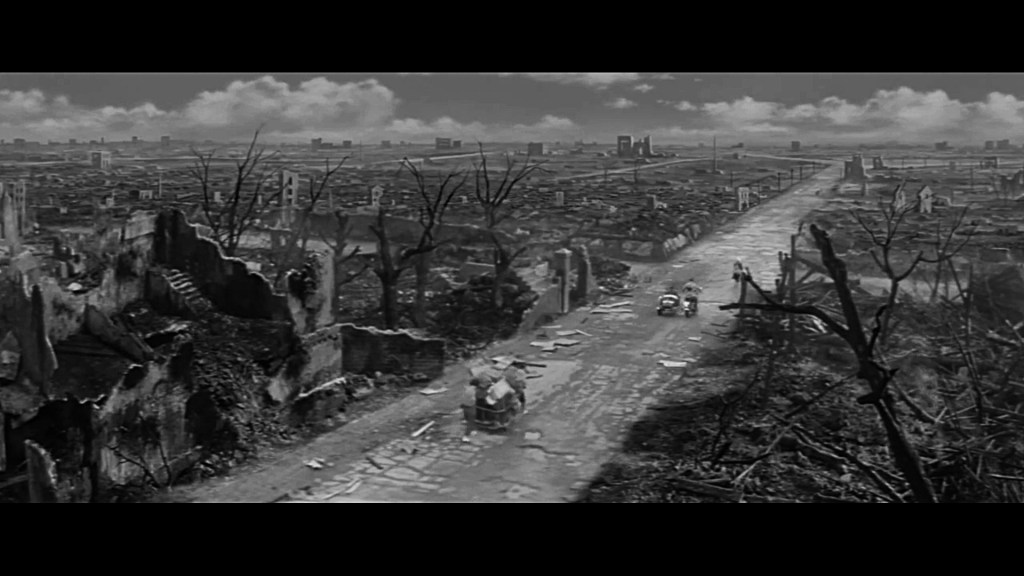
The dilemma is clear because, for the dissidents, the war must not end before many of them have even participated in the trenches, only in their detachment. Unfortunately for their honor and dedication, all the rebels will go against the events that foreshadow Japan’s defeat, such as the Potsdam Declaration and the subsequent offensive by the USSR, which had already entered the war in the first year of the conflict on Germany’s side, cornering Poland, but after Hitler’s reckless surprise attack on Russia, the USSR aligned itself with the Allies in August 1945. The relevance of this film from the outset is the human factor. Jiro, the younger brother of the Kawasaki brothers, celebrates the arrival of his brother, Kawasaki Dai, who is in the army, thanks to whom they receive benefits such as candy and other products at a time when Japan has been suffering from shortages for years. Jiro jokingly argues with his brother, who has unwavering patriotic morals. Jiro tells him that his way of supporting the country is through art and theater and informs everyone at home that at dawn he will leave on a trip with the theater company he belongs to for a week-long tour of Himeji, Hiroshima, and Yokayama. Unfortunately, a couple of days later, they receive news of the atomic bomb and how it devastated Nagasaki and Hiroshima, where the actors and Jiro arrived early. All of them died without hope of survival. Given the circumstances, it was imperative to comply with the conditions of Potsdam and accept the humiliating but necessary surrender.
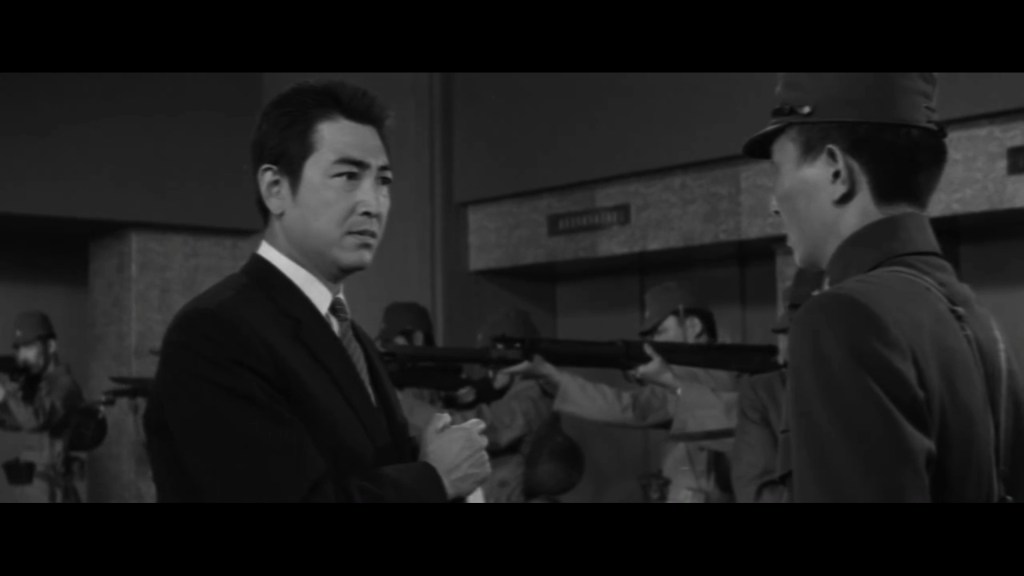
This is where the dramatic tone turns into a thriller, primarily because of the increased tension that already existed between Nakajima, the personal secretary to the Prime Minister of Foreign Affairs, and his brother-in-law Ichiroku Kawasaki Dai. Ichiroku is boiling with betrayal at the thought of surrendering, given the celebrity of his late father, General Kawasaki, who was not nicknamed “the demon general” for nothing. Kobayashi skips over all the places Nakajima visits—where he was followed and spied on by the government itself—to seek an answer and prepare for the Council meeting to be held with the Emperor. The effervescent songs are majestically captured by the director: “…the flower that blows is born, the flower of Yamato is born, the flower of Sanpei’s war is known.” In an oppressive interrogation of the Prime Minister’s secretary, it transpires that he met with former Prime Minister Okabe, former Prime Minister Yakami, Viscount Maekawa, and Minister of Munitions Oyama at the Ikeda Ryokan. While this is happening, the enemy B29 air force bombs the imperial city and Nakajima is telephoned to inform him that his brother-in-law has begun mobilizing, releasing a false statement to the press that they will not surrender and will continue the battle to the end. Ichiroku and the other angry young men turn to the stern and bitter Minister of War and urge him to support their cause. The Minister agrees but is not heard at the General Council meeting because, as he rightly said, the divine decision had already been made in advance in favor of His Majesty’s prudence. The assault by the rebels was only a matter of time. They stormed in, destroying and killing the division commander, enraged in their search for the recording of Emperor Hirohito on phonograph vinyl, the historic event that was called Gyokuon-hōsō -玉音放送, “Imperial Voice Broadcast.” Desperate to prevent the transmission of the Imperial Rescript, they could not see clearly. The group of rebels deceived Colonel Shirai, who, upon discovering everything, chose, like the Minister of War, to shoot himself in the temple in front of the regiment out of shame for his affront to the Emperor, even though he had acted under false pretenses. Nakajima was carrying the discs with Hiroito’s voice when he was about to be sliced with the sword of one of them, but he was saved by his brother-in-law, his wife’s brother.
 Pantagruel´s liquor
Leave a comment