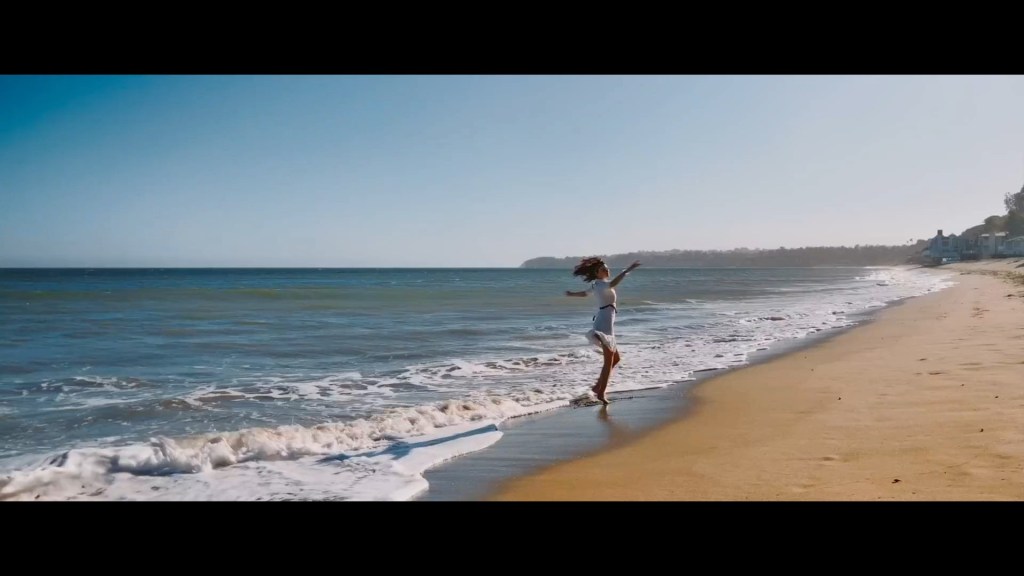
June et John
Directed by Luc Besson
★★★½
This reviewed by Fernando Figueroa
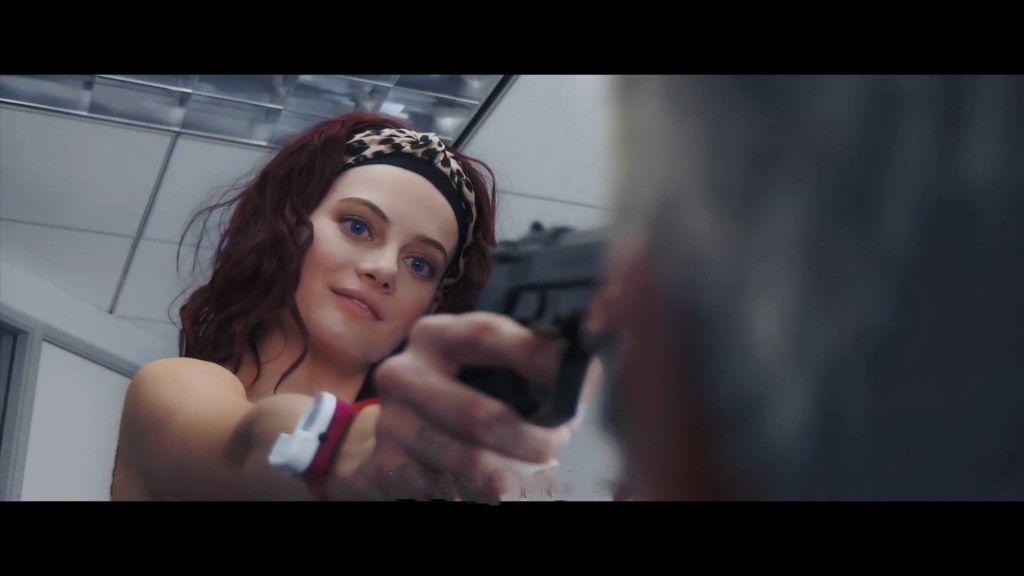
June’s revival personality encompasses everything “June and John.” Are you ready for a beautiful woman in a thin strappy top or a strappy tank top to revisit Giorgio Agamben’s concept of “nuda vita” with her scapegoat John, who, if it weren’t for her, would still be ruminating on his automatic shame—perfectly embodying Yorke’s “Fitter Happier”—without pride or dignity? Besson needed 30 cheeky minutes to get to the point, so I deducted a star from the rating for that. John embodies that definition of “naked life,” a reduction of life to mere biological survival, with no real rights despite codes and constitutions (note his car or his impotence at being reprimanded at work even though he lost his wallet in the car; his mother lovingly harasses him on his cell phone, his immediate boss harasses him for arriving a few minutes late, but one day when he arrives right on time and someone takes his parking spot, they leave their car taking up half of the disabled parking space and the weight of the system crushes him. The problem after an unbearable day is that his car has been towed away and when he gets it back, it’s been turned into scrap metal with a dented body and flat tires. When John signs up for the online dating app and opens his Instagram account, the results will be obvious as soon as he arrives at the office and sees June (viewer moment: “look at June”) sitting in his seat. The young man, and even less so the viewer, never imagined that from that moment on, he would be living day to day.

First, he points a gun at his boss, then aims it at the other employees inside until they hand over their wads of cash. John is stunned. How could this be the guy who was willing to wait two long years for a promotion in a work environment that brings to mind Guns N’ Roses’ “Welcome to the Jungle”? I gave him back the star I had deducted for dramatizing the bad joke about the piano just when they bribed a beggar to hide in his tent on the sidewalk in exchange for one of the wads of cash confiscated from the boss. But if there weren’t enough beta-endorphins from the fleeting orgasm inside the tent on the street (bought from the buffoon), and if it wasn’t enough fun to run down the sidewalk until they broke into a house with a pool and were surprised the next morning by the owners (of the house and the queen-size bed), there will still be a chance not to repeat the deepest mistake and almost get arrested for hugging a Joshua Tree (Yucca filifera) without ID, not caring about breaking into a mansion again with an old lady enjoying her delicious life, or rather her bourbon, which is part of life for those of us who love whiskey, while the husband in the next room is forced to donate $12 million to an animal rescue organization, just because June got sad seeing the handmade animal heads hanging in the living room.
The excerpt it´s on me. Visit: https://wp.me/aguJCZ-an
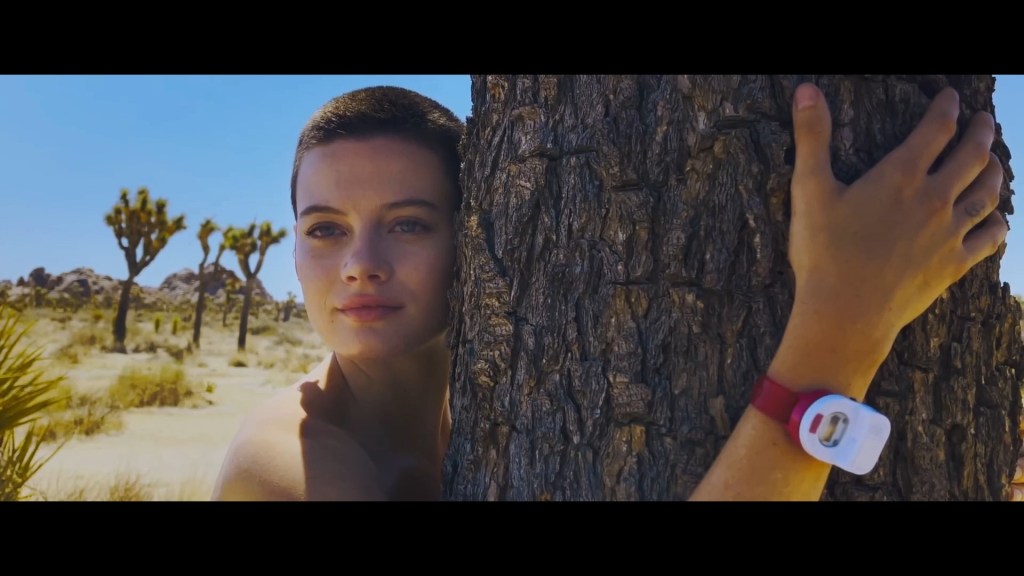
The on-the-road plot is implausible but entertaining. Of course, the viewer shouldn’t expect a shred of realism. The story is not believable (in less than 12 hours they would have been arrested since they don’t even disguise themselves or hide), but that is precisely Besson’s point, if I understand correctly. June’s attitude is childish, like an elementary school student, and she has invited John on her journey of hedonism and reloaded fantasy. So the escape is a metaphor for the opportunities lost by any viewer for doing just the opposite, that is, for living just to earn a salary and pay the mortgage. Let’s have dreams, is the immature advice of June, who is saddened because humans cannot fly. And speaking of flying, the road trip scene where they reach a junction and return to jump out of the car with parachutes was not June’s invention, but John’s, who seems to have begun to learn the lesson of the Angel of the Apocalypse who points his revolver at the living dead. A silly plot? Perhaps. Childish? Probably, but I liked it. It’s not about what’s innovative, but what it conveys, starting with the fact that the wig is removed to make love in the drifter’s tent. The story is cliché, but the human beings who acted it out made it unique. Look at her eyes, which more than once will be wiped away as they turn red. And I’d never heard anyone talk through their tears about discovering they had cancer while lying on the beach, saying that while she was sleeping a little crab decided to slide inside her, which at first wasn’t a problem because she has a body big enough for two, but when he felt lonely he started bringing his girlfriend and procreating like crazy inside June. The mind-blowing ending recalls the lysergic exaggerations of Michael Bay, but of course also the old fantasies of Besson himself. The licking of the “hostage” John Riley, the kiss in the bathtub with the stressful feeling of being surrounded, the exit from behind, and the testicular energy while being chased by the helcopter.
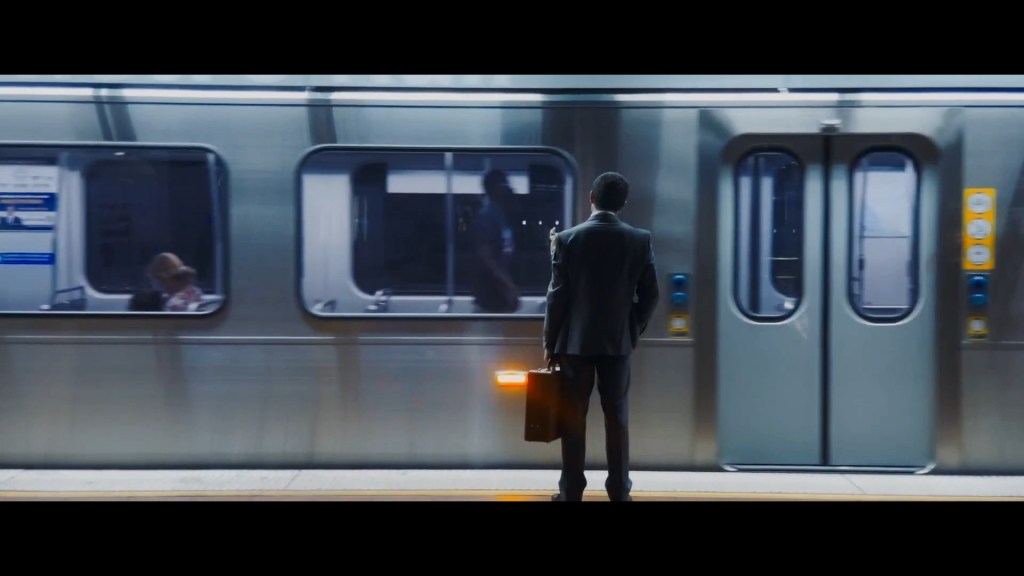
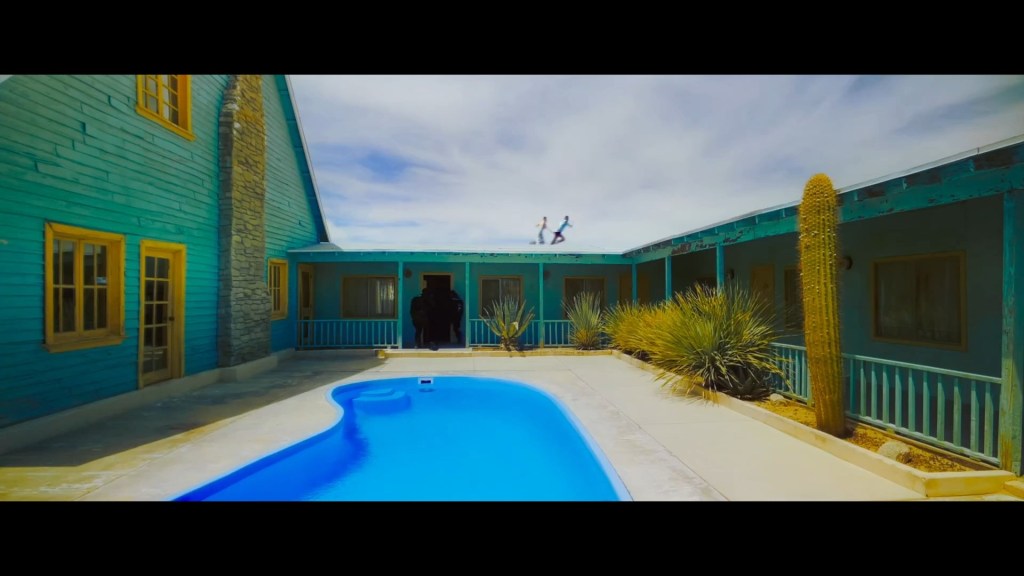
Clisé but...A thrilling exit from an escape artist like Besson
 Pantagruel´s liquor
Leave a comment