稻草人
Directed by Wang Tung
★★★★½
Reviewed by Fernando Figueroa
Wang Tung’s testimony is doubly ironic, not only because he uses a talkative scarecrow as his alter ego narrator, who softens the contradictions of Japanese colonialism in China with sporadic flashes of humor in scenes that are cruder than they appear at first glance, but also because with the release of 稻草人 in 1987, the New Wave of Taiwanese cinema was inaugurated, coinciding with the apparent end of the Martial Law of the Kuomintang regime that ruled despotically for almost 40 years. Even without KMT censorship, Wang Tung had to use Mandarin instead of Taiwanese as the language of the film as a kind of non-negotiable political correctness. In any case, the sarcasm is transparent, however naive and comical the script may be. The outlook is bleak because it shows that the protagonist brothers Ah Fa and Big Mouth, like all the other rural inhabitants, are disposable under the rule of authoritarian governments. In perspective, we will see that the Taiwanese had to supply cannon fodder—all the men—to the Japanese militia against the Allies, and as if that were not enough, the children were indoctrinated in schools with slogans such as “we will not lose the war, like the rays of the sun, power is everywhere.”
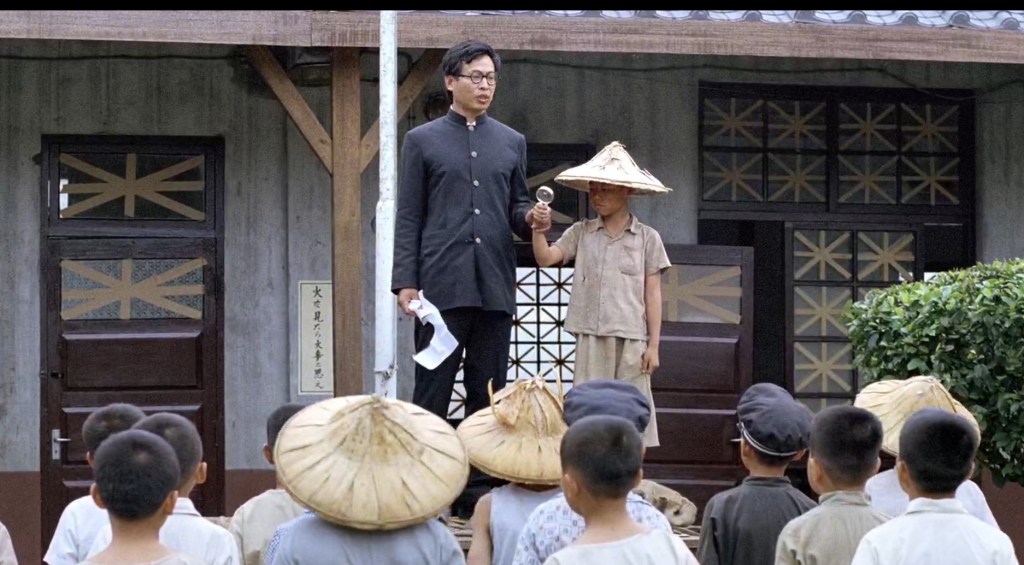
Then the tutor asks Ah Fa’s son, nicknamed “shit,” 狗屎, gǒushǐ in the language, and taking a magnifying glass, he burns a piece of paper in front of the children saying “the Japanese Emperor is like the sun, we are like that, we are his children, we will not lose the war.” At the moment the teacher says this, a girl pulls a cow into the classroom or outdoor classroom. I don’t think it’s fair to compare Wang Tung and Nobel Prize winner Mo Yan when I think about how Wang Tung used Chinese rural superstition to shield the child from bad luck and unnecessary misfortune by giving him an offensive and insulting name, while Mo Yan uses derogatory names that show his minority subversion, such as Spotted Neck or “Nine Lives” in Red Sorghum (1986) to ridicule feudal adversity, or another example, Wang Gan “king’s liver.”
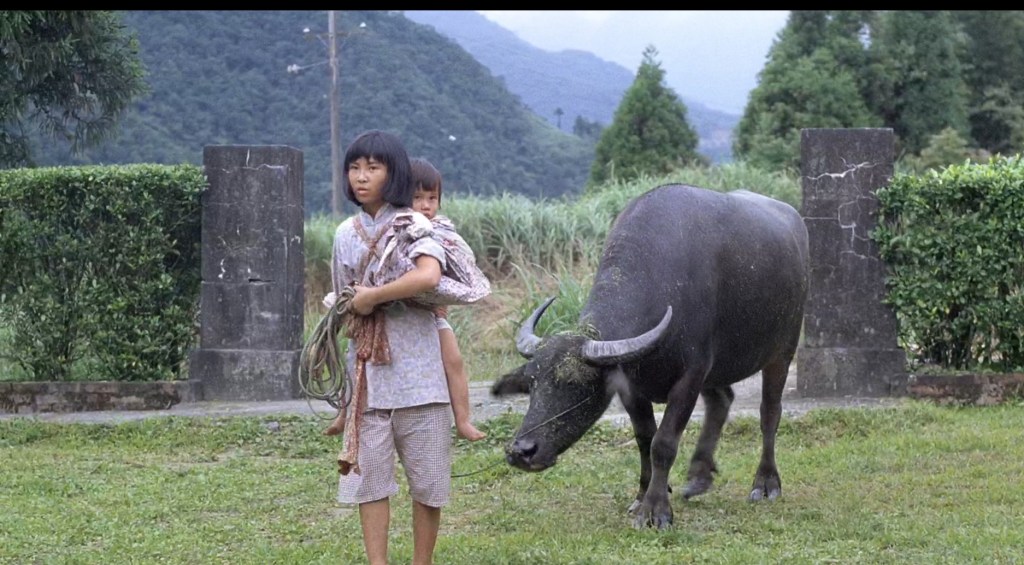
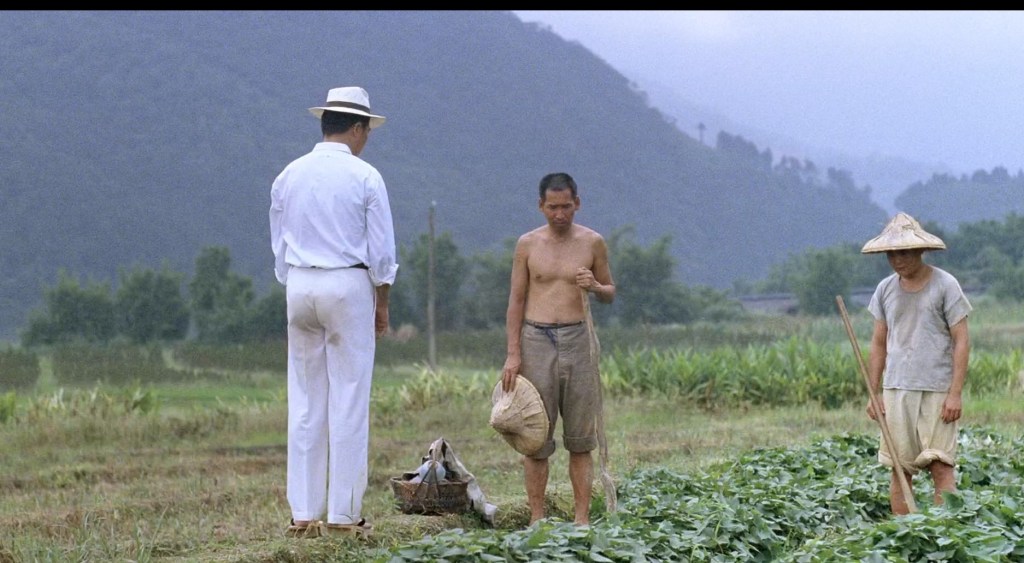
It is not enough that scarcity is getting worse and worse and that the men are being taken to a war they do not understand, but the families of A Fa and Big Mouth, who work the land, suddenly have their land taken away when the newcomers from Japan, Yueh Ning and her husband, notify them that they have sold their land to the sugar factory. While this news hits them like a bolt from the blue in the middle of their work in the fields, a stranger arrives at their miserable home, the Japanese Yamamoto Sang, who brings a government safe-conduct pass notifying them that the state has decided to take their cow, six months earlier than planned, because the war has intensified. In an act that is as absurd as it is shameful, both brothers are asked to attest to this by signing the government document with their thumbprints. The two brothers have already been notified that they must enlist for the war, and their nervous tension is mounting. But the unfortunate family, sad and not knowing what to do in the cursed humid climate, is still in shock from the expropriation of their cow when, at night, someone breaks into their humble hut. It is a soldier who is cornered by the grandmother and, shouting, immediately cries to them about his pregnant wife and the reasons why he does not want to go to war and is able to sing. And in fact, far from despising him, the family feeds him. But in this farming village, it was impossible to get bored, because the next day, during a bombing raid, one of the bombs got stuck in a kind of ditch or hole in the ground.
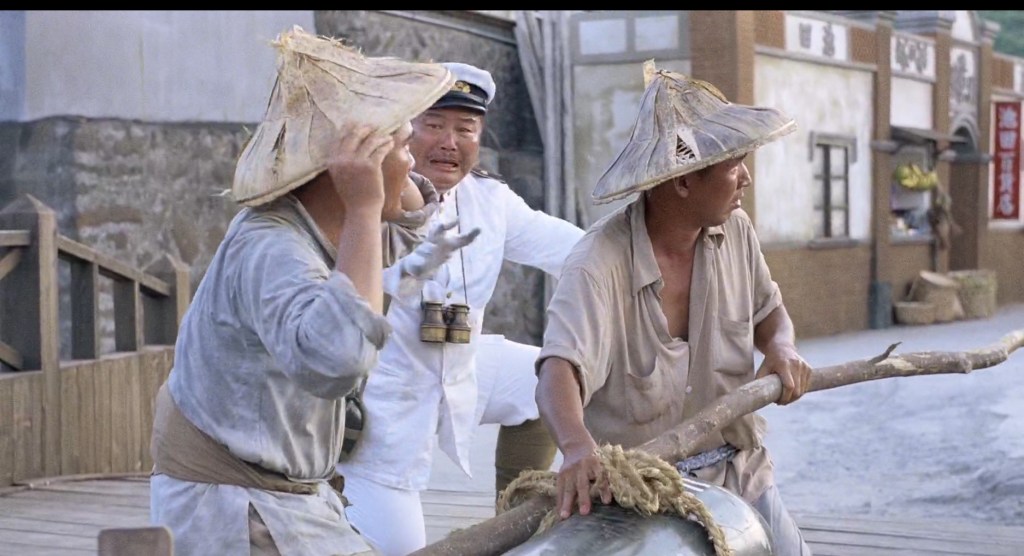
The village children, playing around, found it and called the adults to witness the event. This absurd event brought vain hope to A Fa and Big Mouth because they mistakenly believed that they would be able to profit from the war for the first time. Unfortunately, instead of a reward for bringing in the bomb, they were punished. And to think that in order to get close to the bomb, A Fa and the villagers first threw stones at it, testing their luck. In fact, using the scarecrow to touch the bomb in case it explodes, the brothers manage to put it out of danger. If anyone doesn’t believe in tenderness, they should enjoy watching the villagers join forces and work together to carry the huge bomb. They will receive no reward other than buckets of fresh fish, but at least the chief or boss, Yueh Ning’s husband, informs them that the owners of the sugar factory never came and that only after about two years will he reconsider whether or not to sell the land. It’s time to eat fish for dinner.
 Pantagruel´s liquor
Leave a comment