Sesės
Directed by Laurynas Bareiša
★★★
Review by Fernando Figueroa
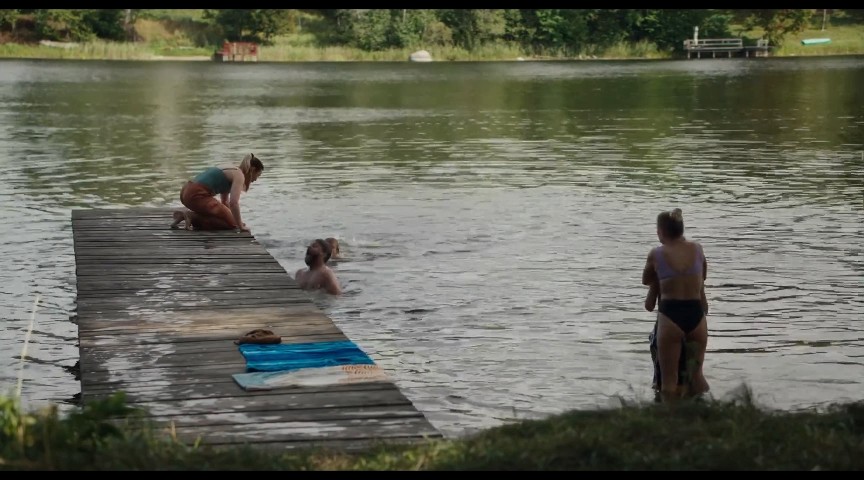
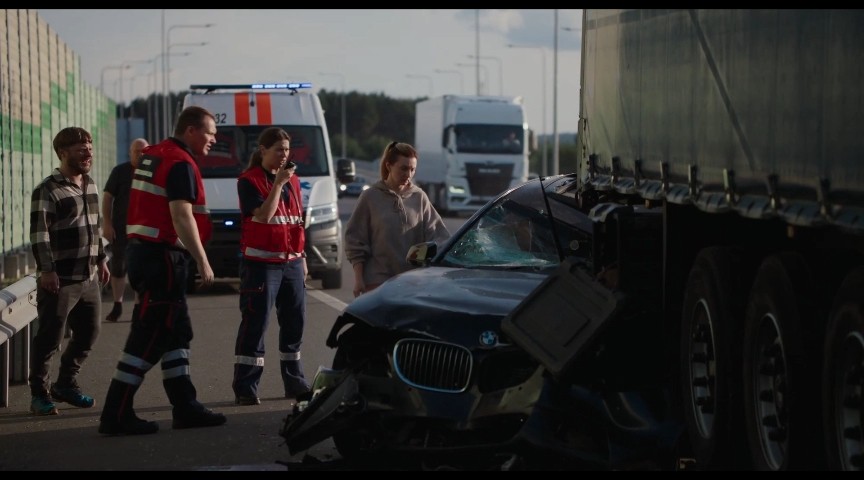
The unfortunate ellipsis in this work prevents me from confidently connecting the events to grasp their motif. For example, Lukas and his wife are going through marital conflict, which explains the martial artist’s physical rejection. We will never know. Ellipsis. And the same but in reverse with Justé, the sister: was Thomas unfaithful, hence her reluctance to have sex with her husband, or does the silence simply require male imagination? We don’t know, ellipsis. A fully justified elliptical drama—for example, in Antonioni—becomes evident either when the seemingly inexplicable leaps in time have a subsequent narrative solution that underscores the crux of the plot by linking the parts, or when the silences between the characters, rather than dialogue, highlight one or more obvious signs of the central argument and thus preference is given to ostensible sequences, proxemics, and bodily dramatization to suggest, rather than mention or explicitly state, what is happening in the story. In Drowning Dry, there is no effective ellipsis. What we have is an editing of the narrative timeline, alternating between the before and after of the extreme or limiting event when the daughter almost drowns and, following this incident at the summer house, the emergency services are called and the car accident occurs in which the reckless Lukas and his wife are traveling. The ellipsis does occur at the end, because fortunately the car crash with the trailer is omitted and we only see the shock of seeing the car smashed behind the truck. It may be cold or unscrupulous to show the exact leftovers of the meal before all the events, but beyond that and the drama of the two sisters, the film is far from engaging. I gave it a 6/10 because of the irony of Lukas saving the girl with mouth-to-mouth resuscitation only to die himself a couple of hours later.

 Pantagruel´s liquor
Leave a comment